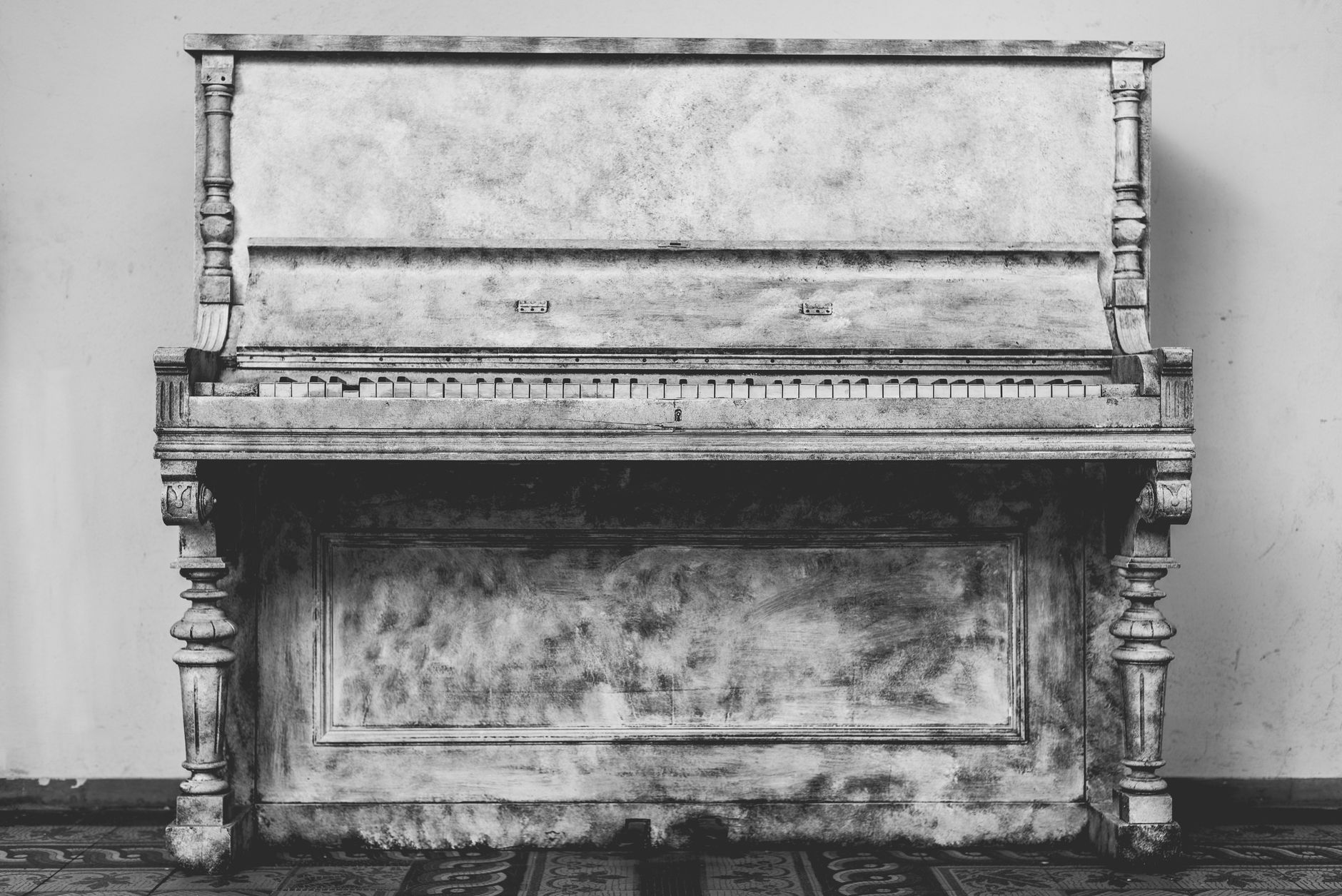
The Piano on the Porch in the Rain
Kim
I had not told my father. But I had not thought about Kim Bowers.
Kim was a nurse on the fourth floor. She had sung alto in our church choir for twenty years, and she was at church every Sunday, and she had been at the Wednesday supper when people were talking about the six pickups going down Main Street.
On Friday, a week and two days after the stroke, she was helping him sit up for lunch, and she said, “Dennis, did you hear the men from Thursday group moved Karen’s piano over to the fellowship hall?”
She did not know he did not know. She thought it would cheer him up.
By the time I got there at three thirty, he had not eaten his lunch, and his heart rate had been up all afternoon. Kim was at the nurses’ station with her hands over her face. She saw me coming down the hall and came to meet me.
“Megan, I’m so sorry. I thought he knew. I thought it was a nice story.”
“It is a nice story,” I said. “It’s all right, Kim.”
I went into his room. He was propped up with his left hand gripping the bed rail. When he saw me, he started trying to talk before I even sat down.
“Dad, it’s all right. It’s safe. It’s at the church.”
He shook his head hard. He was not upset about the church. He kept looking at the door.
“Ruh,” he said. “Ruh. Ruh.”
“Renee?”
“Yeah.”
“She’s not here, Dad. She comes in the mornings.”
He hit the bed rail with his left hand. Not hard. Just once. Then he closed his eyes, and a tear came out of the corner of the one on the good side and ran down into his ear.
I sat with him until he slept.
What Renee said in the parking lot
Renee was sitting in her car in the hospital lot when I came out at six. The engine was off. She was not doing anything, only sitting there with both hands on the steering wheel.
I could have walked past. I thought about it. Then I went over and knocked on the passenger window, and after a second she unlocked the door, and I got in.
We sat there a while.
“Kim called me,” Renee said. “She told me what she said to him.”
“She didn’t mean anything by it.”
“I know she didn’t.” Renee looked straight ahead at the brick wall of the hospital. “Did he ask for me?”
“He did.”
She nodded slowly. Then she said, “Do you know what it’s like to live in another woman’s house for eleven years?”
I did not answer. I did not think she wanted me to.
“Her curtains,” Renee said. “Her dishes. Her recipe cards in the drawer in her handwriting. Her picture on the hallway wall, and I can’t take it down, because what kind of woman takes down a dead woman’s picture? And that piano, right there in the middle of the living room, where you have to walk around it to get to the couch.”
“Renee.”
“And every night,” she said. “Every single night before bed, he sits down at it and plays that song. Her song. I’d be in the kitchen drying the dishes, and he’d be playing her song. Eleven years. I used to turn the water on so I didn’t have to hear it.”
Her voice did not rise. It got quieter.
“I’m not a bad person, Megan. I married a widower, and I knew I was marrying a widower. I thought after a few years it would be our house. It never was.”
“And then he went down in the garden, and the doctor said he might not come home, or he might come home in a chair and never say another word. And I thought, if he doesn’t come home, I’ll be living in her house alone for the rest of my life.”
She wiped her face with the back of her wrist.
“So I started moving things. And I couldn’t stop. And the piano was the biggest thing, so I called that man, and he said it was junk, and I believed him because I wanted to.”
“You put it in the rain,” I said. I said it quietly. I was not trying to hurt her.
“I know I did.”
“With a sign on it.”
“I know.” She turned and looked at me for the first time. “When those men came up the steps with their hats off, I wanted to die. Every light on the street was on. Linda Gill called me at nine o’clock to ask if I was all right. I knew what she meant.”
I sat with that a minute.
“I’m not going to tell you it was all right,” I said. “It wasn’t. That was the only thing of my mother’s I had left that you could put your hands on.”
“I know.”
“But I didn’t know about the song,” I said. “I didn’t know he played it every night.”
“Every night,” she said. “Even the night before the stroke.”
Neither of us said anything else. After a while, I got out and walked to my own car. When I looked back, she was still sitting there with her hands on the wheel.