The Umpire Who Called His Son Out
So I called it. I came up out of my crouch and rang him up, the same way I rang up every other batter, the same way Dale had taught me in that community room with the bad coffee.
“Strike three.”
The bleachers went quiet. Both sides. You could hear a tractor somewhere off past the trees, and the flag halyard slapping against the pole in center.
Then the Bloomington coach, the one with the gray goatee, started clapping. Not loud.
Just slow, three or four times, from the corner of his dugout. He looked straight at me and gave me a nod.
Jace stood there in the box for about one second. I braced myself for the look, the one every kid gives the umpire when he thinks he got robbed. I would not have blamed him for giving it to me.
He didn’t give it. He tucked his bat under his arm, turned around and walked back to the dugout without a word.
He set his bat in the rack, took off his helmet and sat down on the end of the bench.
Behind me, through the fence, I heard my mother say quietly, “Good call, honey.”
I don’t think she meant for anyone else to hear it. I’m not sure she meant for me to hear it either.
When Jace came back out to catch in the fifth, he crouched down in front of me and, without turning around, said, through his mask, “That was a strike, Dad. I just didn’t think you’d call it.”
“Told you I would,” I said.
“Yeah,” he said. “You did.” Then he put down a sign for a curveball, and his pitcher struck the next kid out on three pitches.
After that, the Bloomington parents stopped yelling. Not all at once, but by the fifth inning, nobody was asking me if I wanted a Thunder jersey anymore. They just watched the game.
It was a good game, too. The Thunder went ahead two to one in the fifth on two walks and a two-run single up the middle.
Bloomington tied it in the top of the sixth on a ground ball that got past the second baseman.
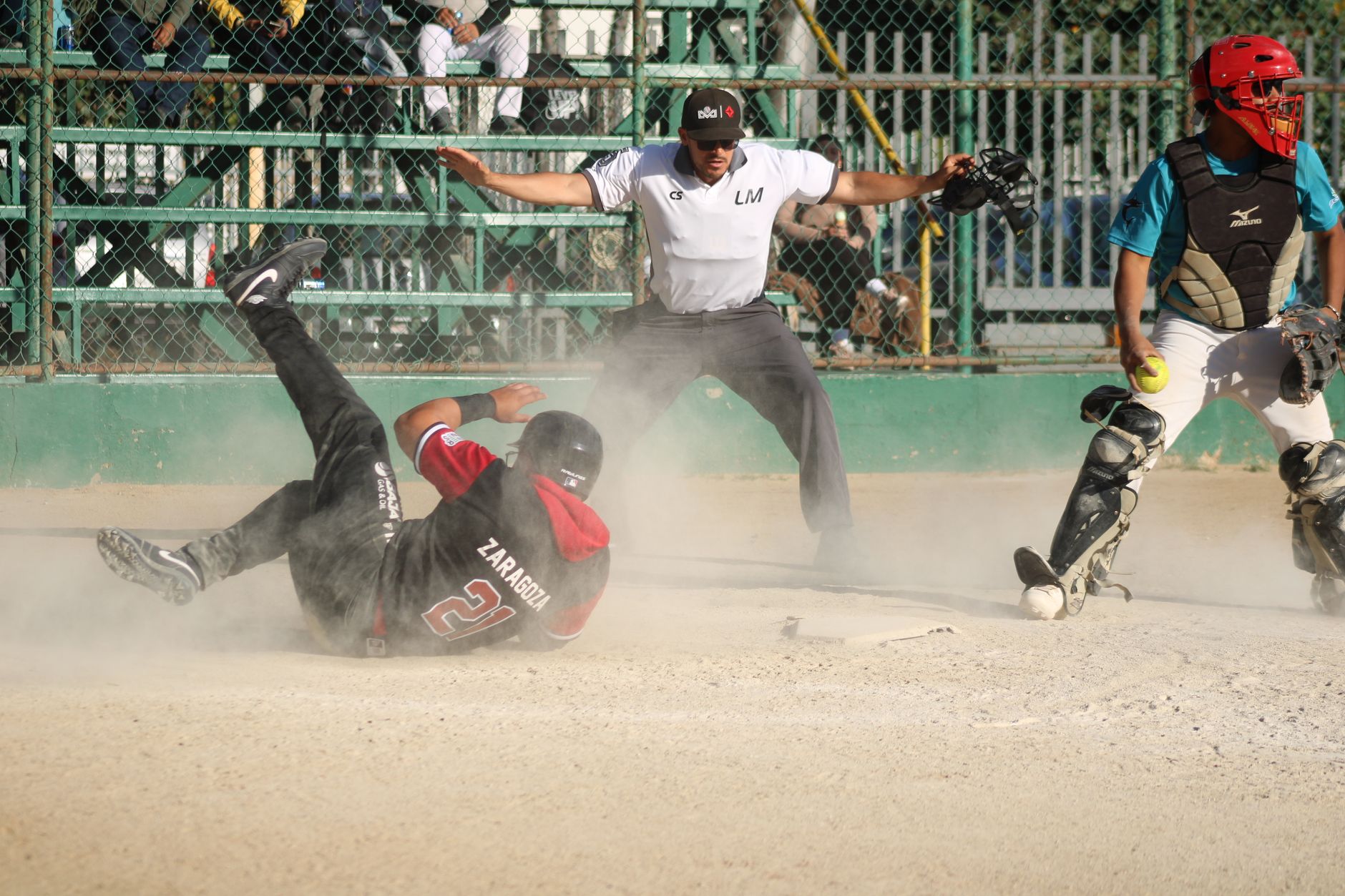
I called a close play at the plate in that sixth inning.
A Bloomington runner tried to score on a fly ball to right, and the throw came in to Jace on one hop. He caught it and swept the tag down.
The runner was safe by half a step, and that run put Bloomington ahead. Jace’s tag came just after the kid’s foot touched the corner of the plate.
I called it safe, and I called it loud, and two Thunder dads came up out of their seats.
Mike Daly didn’t. He stayed in the dugout and told the dads to sit down. Jace didn’t argue either.
He just stood up, flipped his mask off and threw the ball back to the pitcher. Then he looked at me and shrugged, like, you saw it.
So the Thunder came up in the bottom of the sixth, the last inning in that tournament’s twelve-and-under rules, down three to two.
Two outs. Runner on first. And Jace stepped up to the plate.
He didn’t look at me. He dug in, tapped the far corner with his bat the way he’s done since T-ball, and looked out at the pitcher.
The afternoon sun was full on the field, and the outfield grass was as green as I have ever seen it.