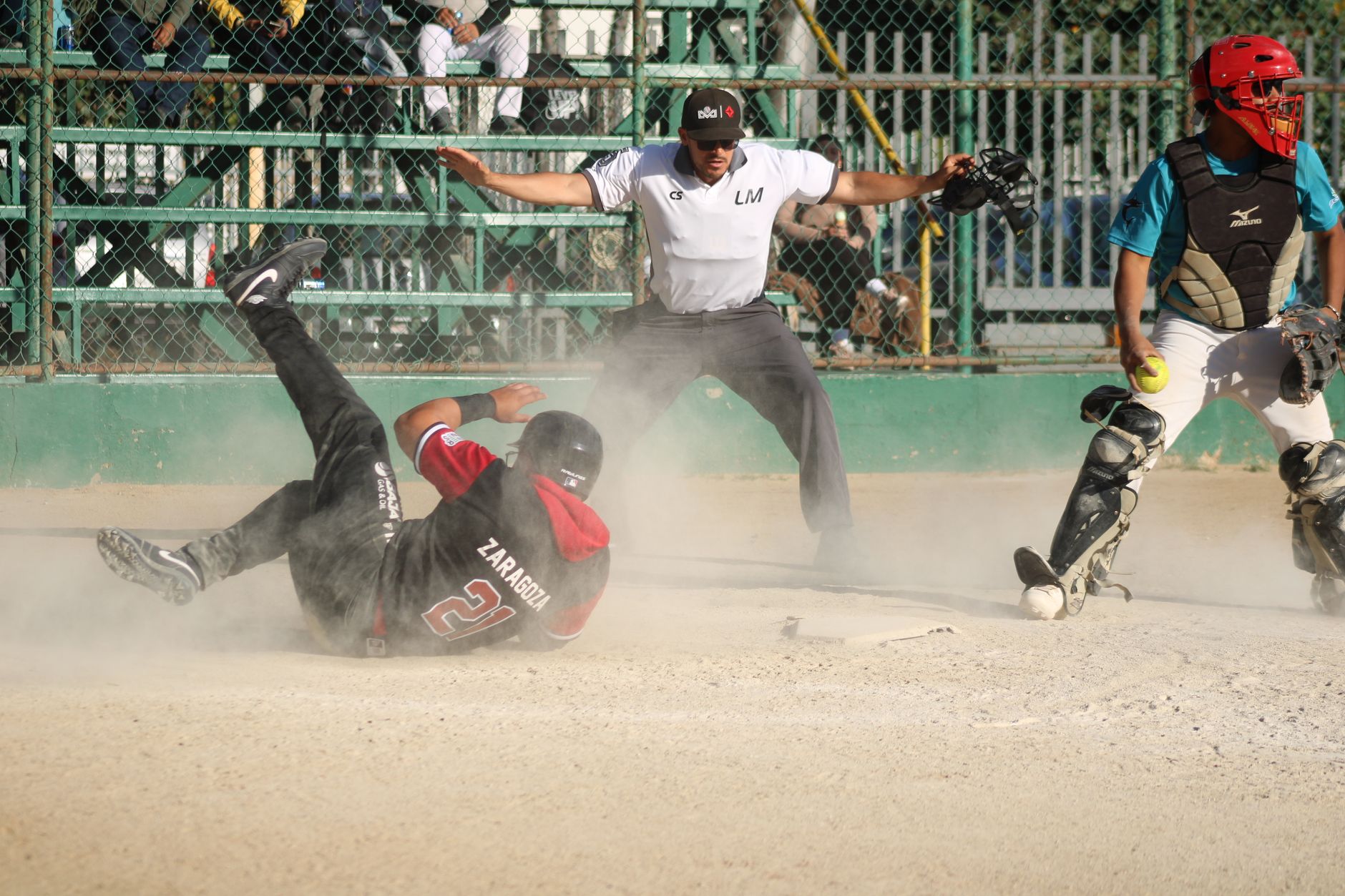
The Umpire Who Called His Son Out
“I know what you thought,” I said. “But my mother is living on a teller’s pension, Court. She’s not your mother. And she was about to write you a check she couldn’t spare, just so nobody would be upset.”
“You don’t have to do it this way,” she said quietly. “In little envelopes. Like I’m some kind of bill collector. You could just Venmo me or whatever when you have it.”
“I’m doing it this way so you know where it came from,” I said. I didn’t say it to be mean.
I just wanted her to see it. “It comes from Saturday mornings. Every one of these has a Saturday in it.”
She looked at me for a long moment. Then she rolled the window up, and I walked back to my truck, where Jace was pretending he hadn’t been watching the whole thing in the side mirror.
He waited until we were out past the grain elevator before he asked. Twelve-year-olds think they are subtle. They are about as subtle as a combine on a county road.
“What was in the envelope, Dad?”
“Grown-up stuff, bud. Money for your travel ball. It’s handled. You don’t need to worry about it, and I mean that. You just worry about blocking balls in the dirt.”
He was quiet for a mile or so. Then he said one of his buddies had seen me at the park on Saturday, wearing umpire stuff, and had sent him a picture. He held his phone up so I could see it.
“Are you an umpire now?” Jace asked. He sounded half proud and half embarrassed, which is the way twelve-year-olds sound about almost everything their fathers do.
“Saturdays,” I said. “Rec league. The little kids, mostly. It pays forty dollars a game, and it beats sitting around the duplex watching the washer walk across the floor.”
“Is that what the money is for? The envelope? Did Mom make you pay for travel ball?”
I thought hard about how to answer. I have tried my whole life not to put that boy in the middle of anything, and I was not going to start in a truck on Route 9 on a Sunday night.
“Your mom and I split the cost of your baseball, like we split everything for you,” I said. “I’m umpiring to pay my part. That’s all it is, and I’m glad to do it. Okay? It’s a good thing, not a bad thing.”
He nodded. He didn’t ask anything else about the envelope. But a few miles later he asked me something I have thought about every day since, and he asked it like he had been working up to it.
“Dad, if you ever umpired one of my games, would you call a strike on me?”
“If it was a strike,” I said.
“Even if it was close? Even if it was, like, two strikes and I was up and the game was on the line?”
“Especially then,” I said. “That’s when it matters most. If I can’t call it straight on you, I can’t call it straight on anybody, and then I have no business being back there at all.”
He thought about that for a while. Then he said, “Okay. That’s fair,” and put his earbuds in, and that was the end of it. I didn’t think about it again until a Saturday in May.
Every Saturday in April and into May, it went the same way. I was at the park by eight.
Mom was there by eight fifteen with the red thermos and the lawn chair, and she sat right behind the backstop for every inning.