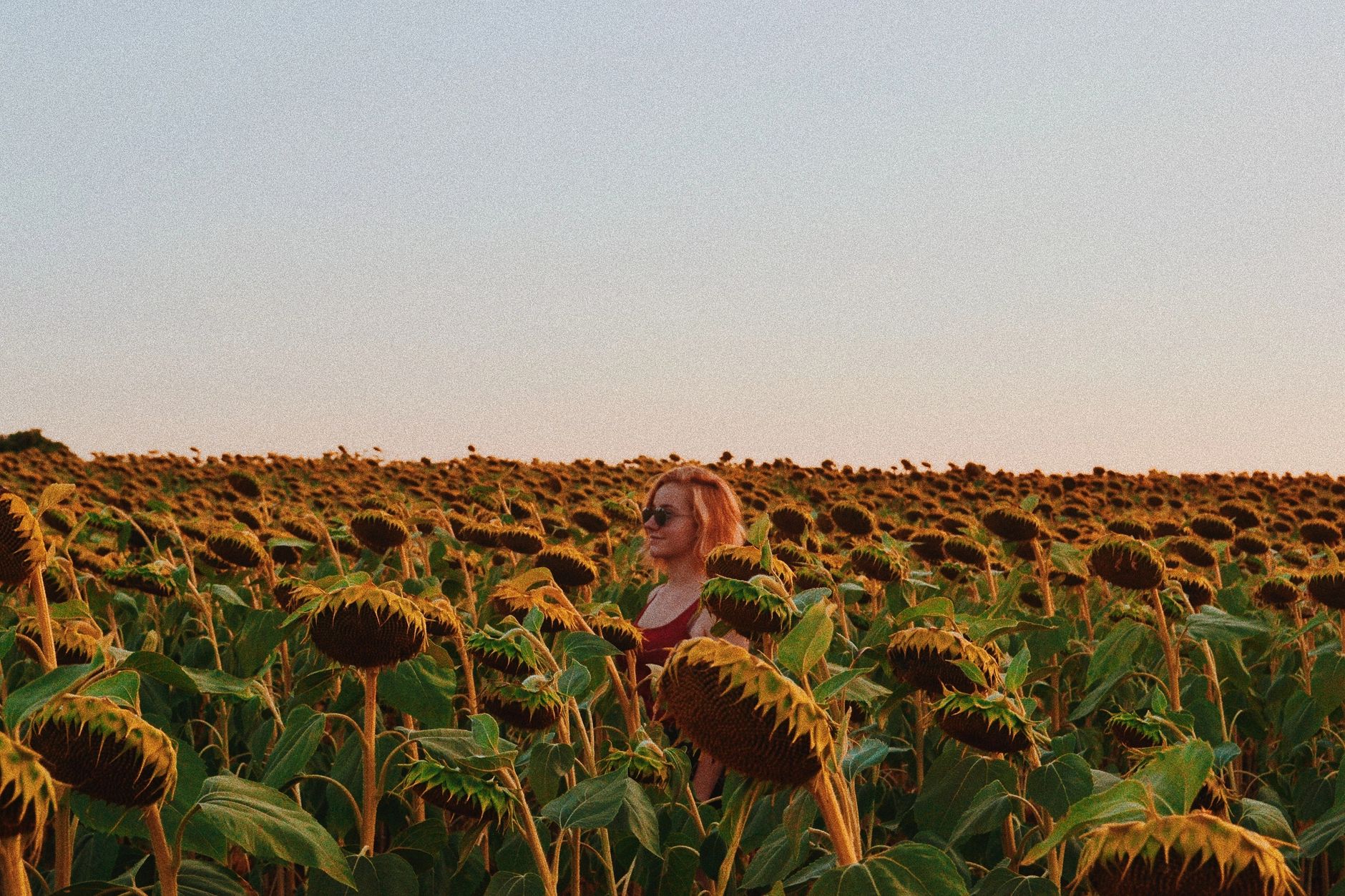
The Sunflowers on Grandpa’s Twenty Acres
Planting
Ben worked it out with a pencil on the back of a co-op scale ticket. Twenty acres, five pounds an acre for the black oil seed, and a few of the big ornamental kinds mixed in along the road where people would see them up close.
The seed came to about nine hundred dollars. It was most of what we had left in the house fund. I did not care, and neither did he.
A neighbor down the road, a man named Jim who farmed eight hundred acres of corn and beans, lent Ben his old planter and a tractor to pull it. He would not take money. He said he had always wanted to see what a field of sunflowers looked like from his kitchen window.
Ben disked the pasture the week after the horses left. On a warm Saturday at the end of April, with the soil just finally warm enough, he planted. Grandpa rode along in the cab of Jim’s tractor for the first two rounds, holding on to the door, grinning like a boy.
“Your grandma would be tickled,” he told me afterward, climbing down very slowly with Ben’s hand under his elbow. “Tickled pink.”
Then it rained. A good, soft, three-day spring rain, the kind every farmer in Missouri prays for. And a week after that, Sam and I drove out and found the first little green rows coming up across the whole field, like somebody had drawn them with a ruler.
Sam got out of the car and stood at the gate with his mouth open.
“Mama,” he said. “Are those the flowers?”
“Not yet,” I said. “Those are the babies. They have to grow first.”
The Second Graders
I told my class about it. I could not help it. We were doing a unit on plants, and I brought in a sunflower seed for every child, and we planted them in paper cups on the windowsill.
Every Monday, I told them how tall the field had gotten. Ankle high. Knee high. Taller than Sam. They drew pictures of it and taped them on the wall outside our classroom, a whole hallway of crayon sunflowers in every color, some of them with faces.
A little girl named Hailey asked me, “Can we come see them when they bloom?”
“Everybody can come,” I said. “That’s the whole point.”
That was when I decided how to say it.
The Post
I wrote it on the county community page on the last night of school, in late May. I kept it simple. I read it out loud to Ben three times before I hit the button.
“Our family planted twenty acres of sunflowers on Route K, two miles south of the Ames dairy farm. When they bloom, the field is open free to every family in the county, every day, sunup to sundown. Park along the blacktop. Take all the pictures you want. Bring your grandparents. Please close the gate behind you.”
By morning, it had been shared four hundred times. By the end of the week, it was a thousand. People asked when. I said I didn’t know, the flowers would decide. Probably July.
Somebody from the Sedalia paper called. I told them I didn’t want to be in the paper. They came anyway and took a picture of the field from the road, all green and waist high, and put it on page three.
I did not say one word about horses. Not in the post, not to the paper, not to anybody. That was between us. It always would be.