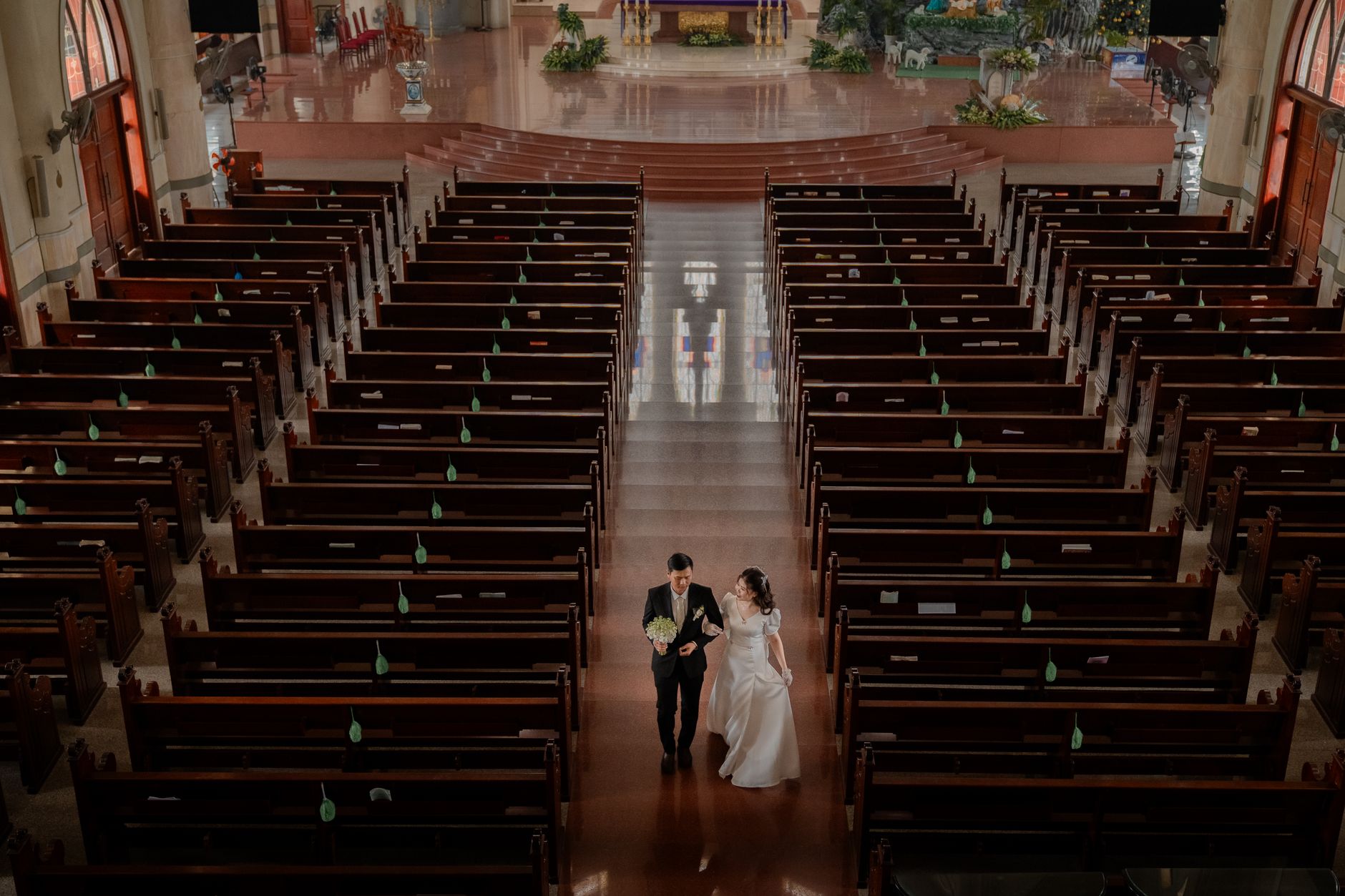
The Day Dad Gave Me Away
I went to see Dad every Wednesday and every Sunday. Connie and I were polite. We didn’t talk about the money again.
She always had coffee on, and she always set out a plate of something, and I always ate it so she wouldn’t think I was punishing her.
It was on a Sunday in May that I asked her the other thing.
We were on the back step, watching Dad in his wheelchair at the edge of the garden.
The physical therapist had given him a rubber ball to squeeze in his right hand, and he was working it with a look of terrible concentration.
“I want Dad to give me away,” I said.
Connie didn’t answer right away. She looked at him for a long moment, and then down at her coffee cup.
“Honey,” she said. “He gets tired. You know how he gets by afternoon. And there’ll be a hundred and fifty people looking at him.”
She turned the cup in her hands. “He was a proud man. He is a proud man. I don’t know that he’d want everybody staring at him in that chair.”
“Then I’ll push him,” I said. “He can sit, and I’ll push him. We’ll go slow.”
“What if he has to use the bathroom halfway through? What if he gets upset and can’t say why? What if he tips?”
Her voice went up a little. “I’m the one who has to manage all of that, Haley. Not you. Me.”
It was a fair question. I want to be honest about that. Every one of her questions was a fair question, and she was the one who’d been lifting him in and out of bed for four months.
But I also saw what she wasn’t saying. That she’d pictured him in the front pew beside her, a little gray and quiet, safe and out of the way. That she’d already decided what he couldn’t do.
“Let’s ask him,” I said.
We walked out to the garden. I knelt down beside his chair on the grass so I was looking up at him. He stopped squeezing the ball.
“Dad,” I said. “I want you to give me away. At the wedding. I’ll push the chair. All you have to do is ride down the aisle with me. Do you want to?”
For a second he just looked at me. Then he lifted his left hand off the armrest and brought it down on the metal, hard. Twice.
Two taps. In our house, since January, two taps meant yes.
Connie made a sound behind me, not quite a word. When I turned around she had her hand over her mouth, and she went back into the house without saying anything.
I stayed out there with Dad until the sun went orange over the shelterbelt. He went back to squeezing the ball. Every few minutes he’d look over at me and nod, as if we’d settled something.
That summer, every Tuesday, Connie drove him to Fargo for speech therapy. Sixty miles each way on I-29, in the gray minivan with the ramp that folded out the side.
She took the whole day off from the co-op every week to do it.
I never asked what they worked on. I knew the general idea. Sounds, then words, then short phrases. The names of things. How to get around the words that wouldn’t come.