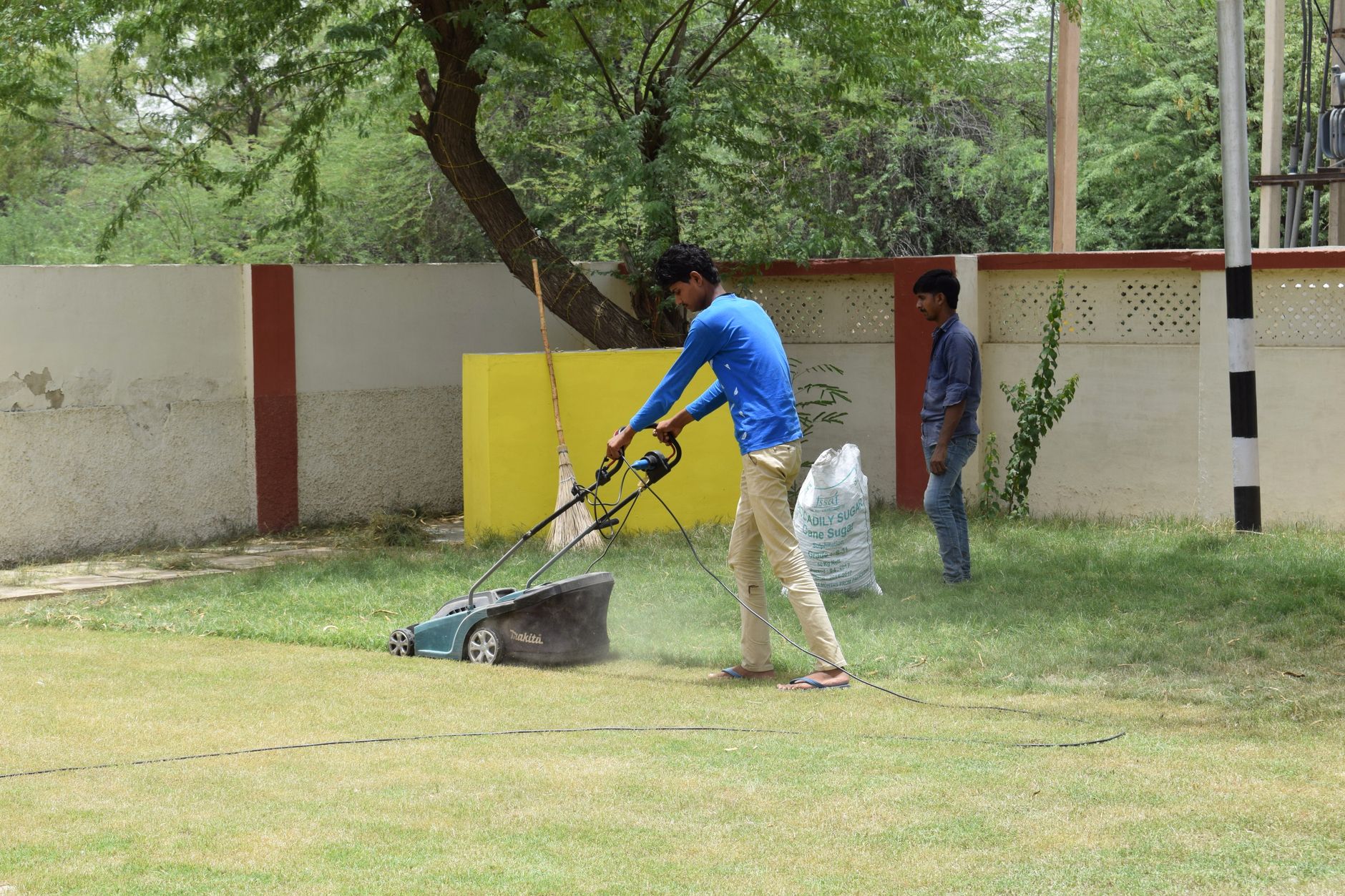
The Street I Mowed the Day I Got Home
What The Column Said
I should tell you who we are, so you understand why that column hit me the way it did.
Grandma Lou raised me more than anybody did. My dad was her boy too, her youngest, and he passed when I was nine.
My mom did her best, but she worked two jobs over in Rolla. So from about the fourth grade on I spent my summers and most weekends at Grandma’s little white house on Sycamore Street.
It is a town so small the one stoplight blinks yellow after nine.
She taught me to mow that yard when I was eleven. Stood on the porch and watched me do it wrong, let me do it wrong, then showed me the straight lines.
She fed me cornbread and beans. She drove me to practice in a Buick that smelled like peppermints.
When I told her I had signed with the Marines, she did not cry in front of me. I know she cried later, because her eyes were red at the bus.
But in front of me she just held my face in both hands. “You come home to me,” she said.
So I came home to her. And the first thing her kitchen told me was what my uncle Ray had done while I was gone.
He had been taking four hundred dollars a month off her to cut the same grass she taught me to cut for free.
Four hundred dollars. I did the math a boy from a town like mine does without trying.
Her Social Security check was a little over eleven hundred. Ray was taking better than a third of it to run a mower around a quarter-acre lot for maybe forty minutes a week.
I knew what a yard like hers went for. The Hobbs kid down the block did three lawns on our street for thirty-five dollars each, and he weed-whacked the fence line too.
Four hundred a month was not a price. Four hundred a month was a man helping himself because he figured nobody was watching.
Morning Coffee
I did not say anything that first night. You do not wake an old woman up to tell her you found her hurt.
You let her sleep. You figure out how to carry it so she does not have to.
Saturday morning she was up before me, which I should have expected. I came out in a t-shirt and found her at the stove in her housecoat, frying eggs, humming something from church.
When she saw me she put the spatula down and just looked at me a second, top to bottom. Like she was counting to make sure all of me came back.
“There’s my boy,” she said. “You got thin.”
“They feed us, Grandma.”
“They do not feed you like I do.” She pointed the spatula at a chair. “Sit.”
I sat. She put a plate in front of me that could have fed three men.
She poured coffee into the cup that had been mine since I was tall enough to reach the table, the one with the faded tractor on it.
She sat across from me with her own cup and watched me eat. That plain happy look on her face almost made me put the checkbook out of my mind.
Almost.