The Street I Mowed the Day I Got Home
The Whole Street
I want to tell you it was easy but it was not. It was the hottest part of a Missouri July.
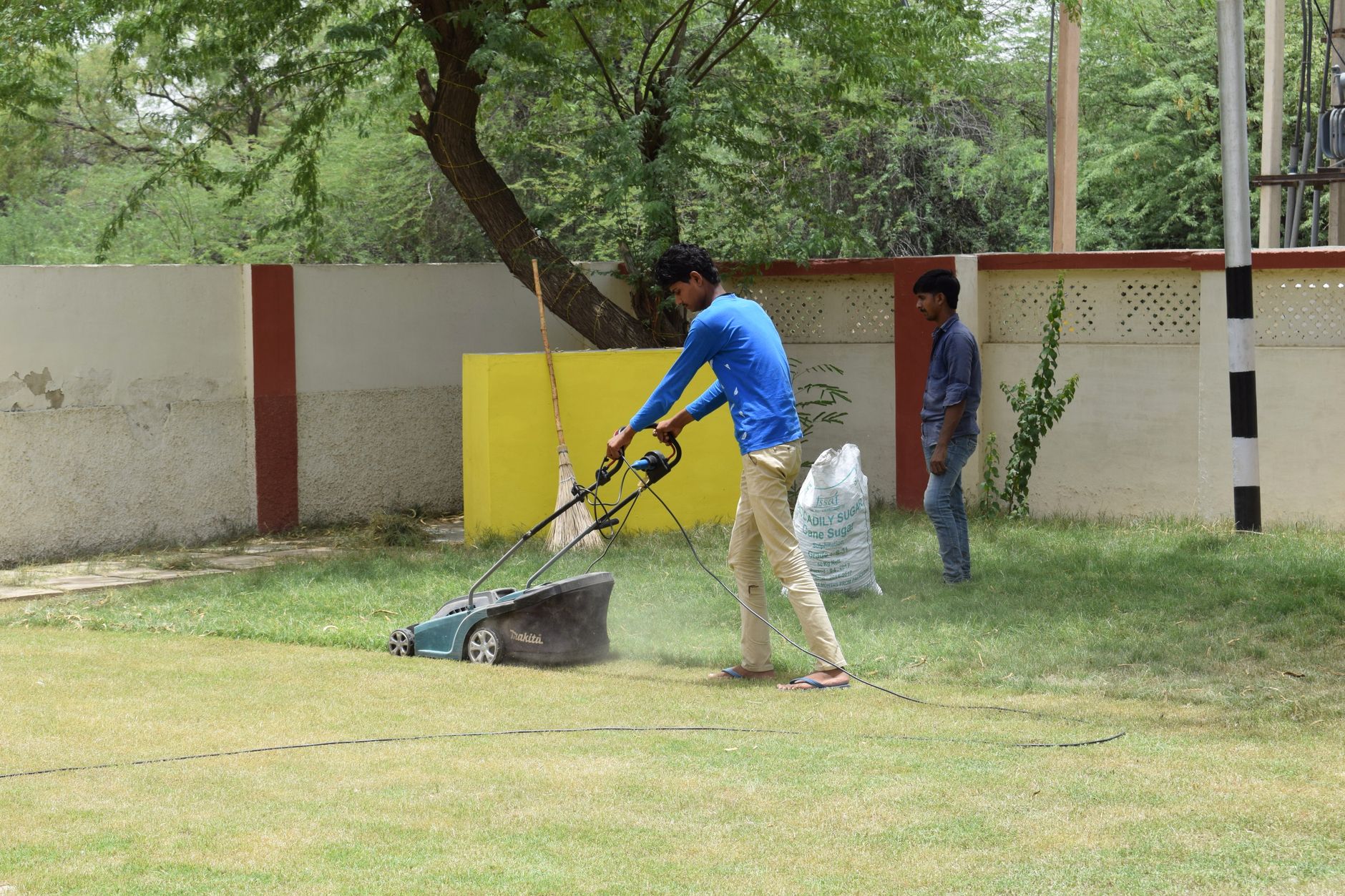
That was ten yards counting Grandma’s, most of them run wild. On a push mower with a bag I had to keep emptying, because the grass was so thick it clogged.
I took my shirt off after the fourth yard and wrung it out and put it back on wet. A wet shirt is cooler. Any Marine will tell you that.
I drank everything anybody handed me. By noon there were four glasses of tea lined up on Grandma’s porch rail that I had not even gotten to yet.
Dorothy Kincaid sent out a plate of ginger cookies. Mrs. Pruett sent her grandson, who was about ten, to run the trimmer behind me on the ones that had a trimmer.
I let him. A boy ought to learn.
The old women came off their porches. They stood in little clusters in the shade and they talked.
Every time I finished a yard and shut the mower off I could hear them. And they were not talking about Ray anymore.
They were talking about their husbands, and about the year the creek flooded, and about my dad, and about me.
Miss Edna told the one about me falling in the baptismal font at six, which I have never once been allowed to forget.
Dorothy Kincaid told them I had been the slowest reader in my dad’s old third-grade room and look at me now. The Settle place had a dog that walked the fence with me the whole length of the yard.
Mrs. Pruett’s grandson got better with that trimmer by the fourth lawn than I was at his age. I told him so, and he stood up a little straighter, and I understood why old men say things like that to boys.
Grandma stayed in her chair on the porch the whole morning. She did not go in once.
Brenda carried her fresh tea, and somebody brought her a sandwich. She sat in that aluminum chair with her hands folded and watched me go up the street yard by yard.
Every time I looked back she was looking at me.
I know what she was seeing. She was seeing a skinny eleven-year-old doing the lines wrong.
She was seeing her youngest boy, my dad, who used to cut this same street for the widows for nothing, because that was how she raised him, before he was gone.
She was seeing all of it at once, the way the old ones do. She sat in the sun and let it fill her up.
If that is not worth more than four hundred dollars, I do not know what money is even for.
Around one o’clock I was three yards from the end of the street when I heard a truck slow down behind me.