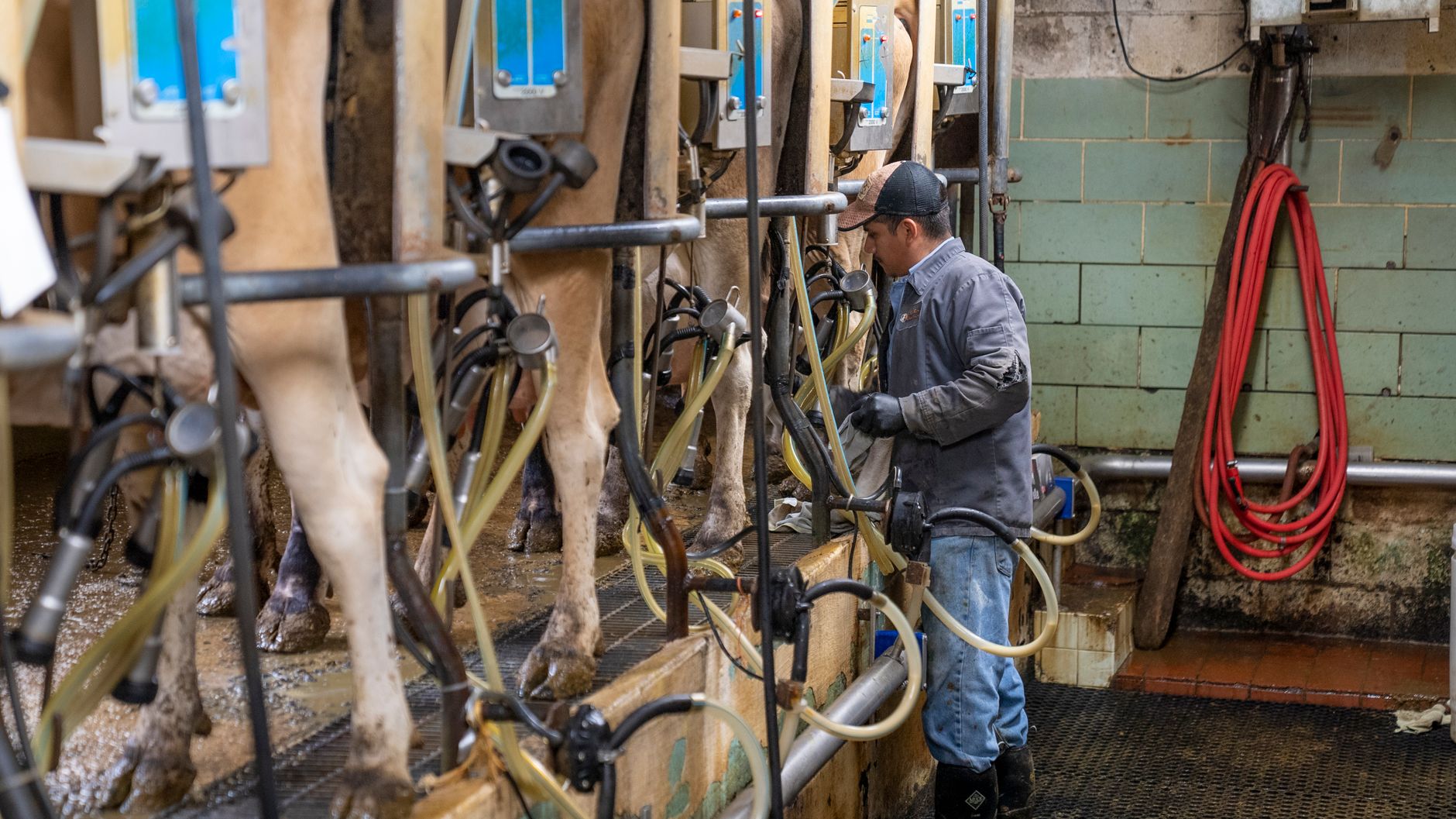
The Cows I Milked One Last Time
The Offer at the Elevator
Here is the thing Kurt did not know. Three weeks before Christmas, a man named Ray had offered me a job.
Ray runs the grain elevator in town, the big one by the rail spur where the whole county brings its corn in the fall.
I had known Ray for years, from hauling our own corn in, and he knew what I was.
In December he was short a yard man and a scale operator, somebody who could run the dryer and keep the legs and augers going and not get himself killed around that equipment, and he asked me, half joking, if I would ever leave the cows.
I told him no. I told him the cows were my life.
But he said if I ever changed my mind the job paid twenty-four dollars an hour to start, with overtime in the fall, and health insurance, the real kind, and a retirement match.
He wrote the number on the back of a feed ticket and he said the offer would keep a while.
I had put the feed ticket in the junk drawer in our kitchen and told myself I would never need it.
Twenty-four dollars an hour, forty hours, is over four thousand a month.
More than twice what Delbert paid me, and with insurance we had been doing without, and a Saturday off now and then, and a Christmas morning I could spend watching my own kids open presents instead of standing in a pit.
I had never let myself want it. A man does not leave his family for money.
But Kurt had just stood up and told me, and told my children, that I was not family.
He had told me I was a hired man.
Well. A hired man can quit.
I did not sleep that night.
I lay in the dark and listened to the furnace and at some point Joy put her hand on my chest and said, “You’re awake.”
“I am,” I said.
She was quiet a minute. Then she said, “You’re thinking about Ray’s job.”
I have never been able to keep a thing from Joy. “I am,” I said again.
She sat up against the headboard. I could see the shape of her in the light off the yard lamp. “Then take it,” she said.
I told her it was not that simple. I told her the herd would suffer.
I told her her father could not run that parlor alone, not at sixty-nine, not anymore, and that if I left he would have to hire somebody green or sell out, and that either way it would break his heart.
“I know all that,” Joy said. “And I’ll tell you what I know that you don’t want to hear.
My father has let my brother talk to you like that for years, in little ways, and tonight it was a big way, and my father sat there and ate his potatoes.
I love my dad.
But he has taken you for granted because you let him, because you love this place, and a man can be loved and still be used.”
I did not say anything.
“You have given him fourteen years,” she said. “You have given him the best of you.
And he will not miss the water till the well runs dry. So let it run dry, Marty. Not to be cruel.
Just to be done being cheap. Take the job that pays what you’re worth and let my father find out what he had.”
“And the cows?” I said. The cows were the only thing I could not leave behind in my mind.
Joy was quiet for a long time. Then she said, “You can milk them one more time. You can leave them clean and fed and right.
And then they’re his cows, Marty. They were always his cows. That was the whole point tonight, wasn’t it.”
I lay there in the dark and I knew she was right, and I knew I would do it, and I knew it would hurt worse than anything I had done since the bank took my father’s farm.
“I’ll call Ray on Monday,” I said.
“I’ll drive you,” Joy said. “Your first morning. I’ll drive you to the elevator myself.”