The Cows I Milked One Last Time
He looked at me a while. Then he said, “Be here at three-thirty tomorrow morning. We’ll see if you’re still here at seven.”
I was there at three-fifteen. I have been early every morning since.
That first year he taught me everything. How to read a cow before she tells you she is sick.
How to pull a calf when it is coming backward and the night is cold and the vet is forty minutes out.
How to run the parlor so the cows come in calm, because a calm cow milks out and a scared cow holds up.
He taught me the way a father teaches, with his hands over mine, and somewhere in that first year I stopped thinking of him as Joy’s father and started thinking of him as mine.
Joy and I married that fall in the church in Casco.
We moved into the little house across the yard, the one Delbert’s own folks had lived in. We raised our two there.
And every morning of those fourteen years I walked across the yard in the dark to milk another man’s cows, and I never once felt like a hired man, until Kurt said it.
Fourteen Years of Chores
Let me tell you what fourteen years in a dairy parlor is, so you understand what Kurt was calling cheap.
It is up at three.
It is the walk across the yard when the snow squeaks under your boots because it is twelve below and the stars are hard and white.
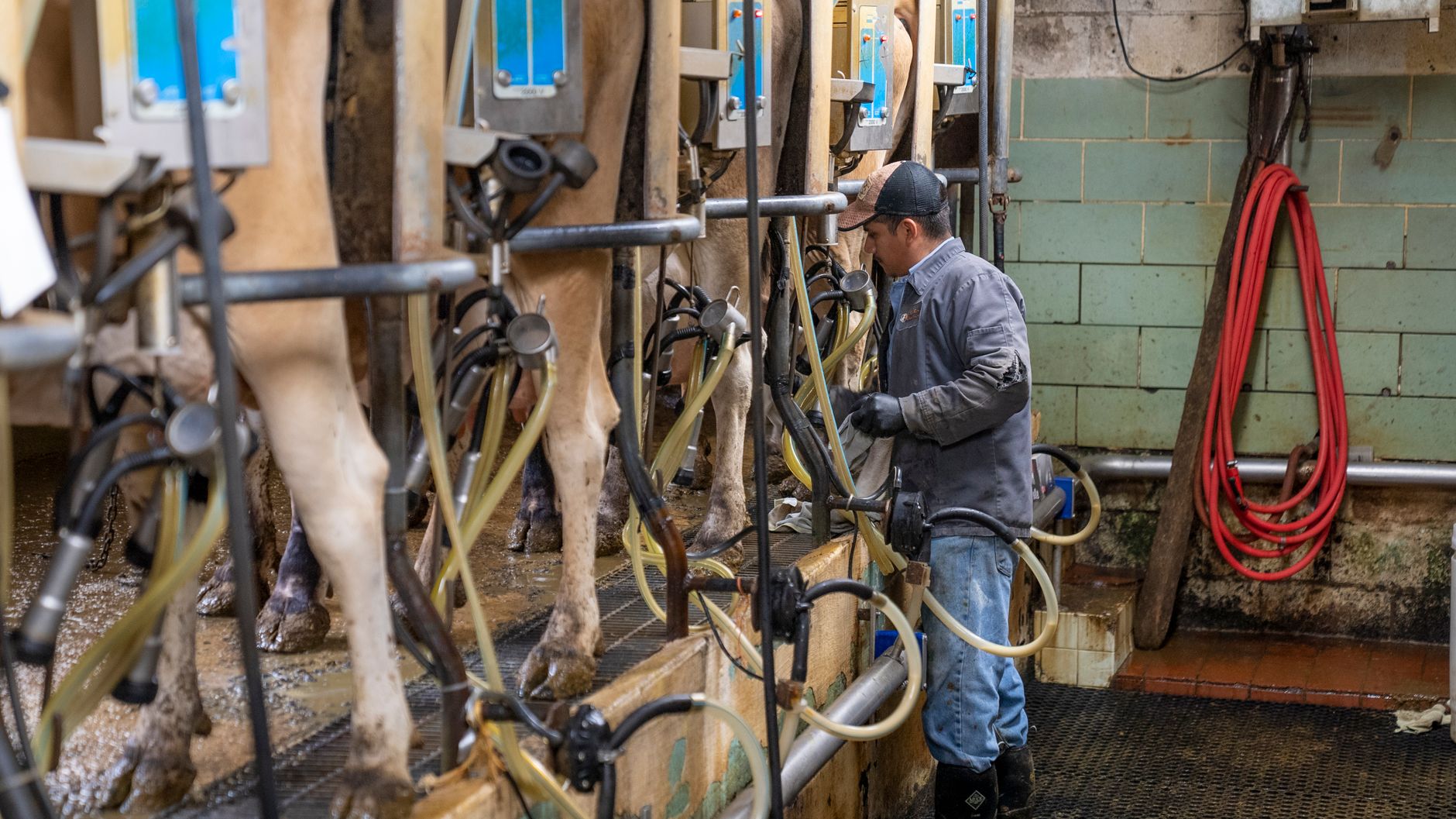
It is the cows waiting at the holding pen, their breath fogging, and you bring them in twelve at a time and you wipe and strip and dip and attach, and you do it again and again until a hundred and sixty are through, and then you feed and scrape and bed, and then it is nine in the morning and you have a few hours before you do the whole thing over at three in the afternoon.
It is Christmas morning and the Fourth of July and the day your daughter is born, which I spent in the parlor at five and in the hospital by eight because cows do not know it is a holiday and a dairy does not close.
It is calving all through February, the hard month, when a cow will go down at two in the morning in a storm and you are out there in the calving pen with your coat off and your arm in up to the shoulder, turning a calf that does not want to turn, and you get it and it coughs and breathes and you want to cry from the plain relief of it.
It is keeping the somatic cell count down so the milk check does not get docked.
It is the day the compressor on the bulk tank quits and you are on the phone to the repair man at four in the morning praying the milk does not spoil.
It is mending fence and fixing the skid steer and hauling manure and chopping silage in the fall with the neighbors, because a dairy is a hundred jobs and the man who runs it does all of them.
I was paid two thousand dollars a month to do it. Plus the house, Delbert always said, like the house was wages.
Joy worked part time at the clinic in town to make the rest of it stretch. We did not take vacations. We did not go out.
I bought my boots at the farm store and wore them until the soles let go.
I never asked Delbert for more. He was not a rich man.
The farm carried debt like every dairy does, and the milk price went up and down and mostly down, and I knew the books because he showed them to me, which is a thing a man does not do with a hired hand.
I told myself the farm was ours in every way but the deed, and that the deed would come, and that a man does not nickel and dime his family.
Kurt, meanwhile, came out twice a year and left with a cooler of beef and a complaint.