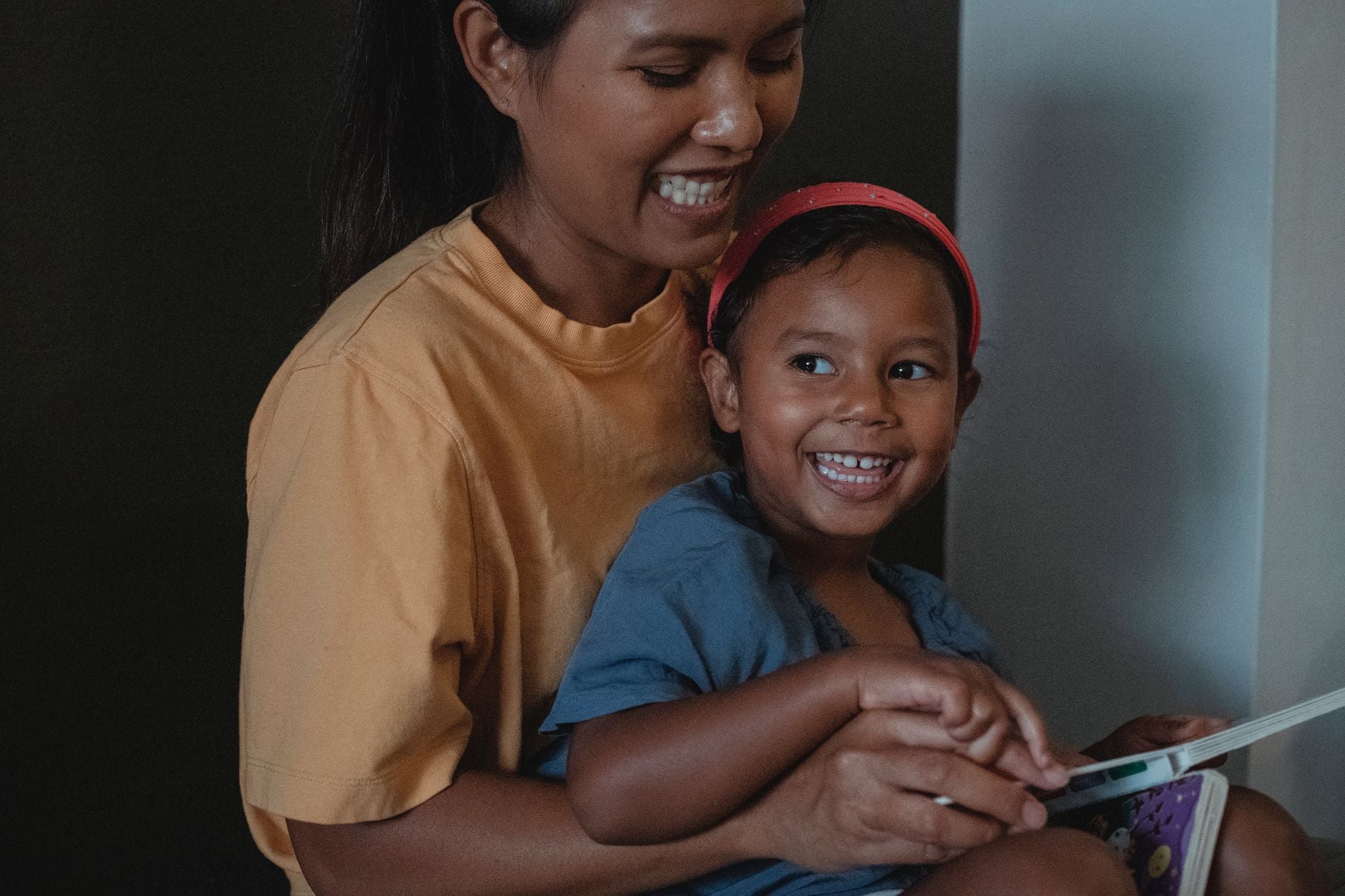
The Story Hour In My Front Room
The first Saturday
Four children came the first Saturday.
Faye brought Kayla’s two, a boy and a girl, Micah who was five and his sister who was three and would not say a word to me but would not leave either. And the Holcomb girl came because her mother worked Saturdays at the Dollar General in Clarksville and had nowhere to put her. And one more, a neighbor boy down 9, barefoot, who heard there were apples.
Because I had cut up apples. I did not know what you were supposed to do for a story hour that was not a church and had no budget and no system, so I did what my own grandmother did, which was you do not have children in your house without feeding them something. I cut two apples into a blue plastic plate and set it on the coffee table and I thought, if nobody eats these I will feel like a fool, and every slice was gone before the first book was done.
I read them Blueberries for Sal. I have had that book since 1974. The spine is held with tape.
Micah sat right up against my knee. The little three-year-old sat on the far edge of the rug with her back half to me, but I noticed she had turned her head so she could see the pictures, and I did not make anything of it, because I learned a long time ago that some children come to you sideways and you must never once let them see you notice, or they will bolt.
By the end she had turned all the way around.
I read them two more and then I said that was all for today, and nobody wanted to go home, and Faye looked at me over the children’s heads with her eyebrows up, and I knew what she was thinking, which was the same thing I was thinking.
This was going to be bigger than four.
It did not grow because I advertised it. I am not on the computer much. It grew the way things grow out here, which is one mother tells another at the feed store, in the line at the pharmacy, in the pickup lane at the school.
The second Saturday there were seven. The third Saturday there were ten, and I moved Harold’s chair against the wall to make room on the rug, and I cut up four apples and added a sleeve of saltines because ten children eat more than four.
By the fifth Saturday I had to borrow folding chairs from Faye for the mothers who had started staying, because some of them had nowhere better to be either, and it turned out a front room with a pot of coffee and a story going is a thing grown women will drive a gravel road for too.
I want to tell you about the mothers, because they are the part nobody expects.
A young woman named Steph started coming with her twins, the Tate boys, who were four and a double handful. Her husband drove a truck, Little Rock to Memphis and back, gone four and five days at a stretch, and she told me once, quiet, while the boys were on the rug, that Saturday morning used to be the hardest two hours of her week. The boys climbing the walls and her phone with nobody on the other end of it.
“Now it’s the best part,” she said. “I don’t even know how to tell you.”
She did not have to tell me. I knew exactly.