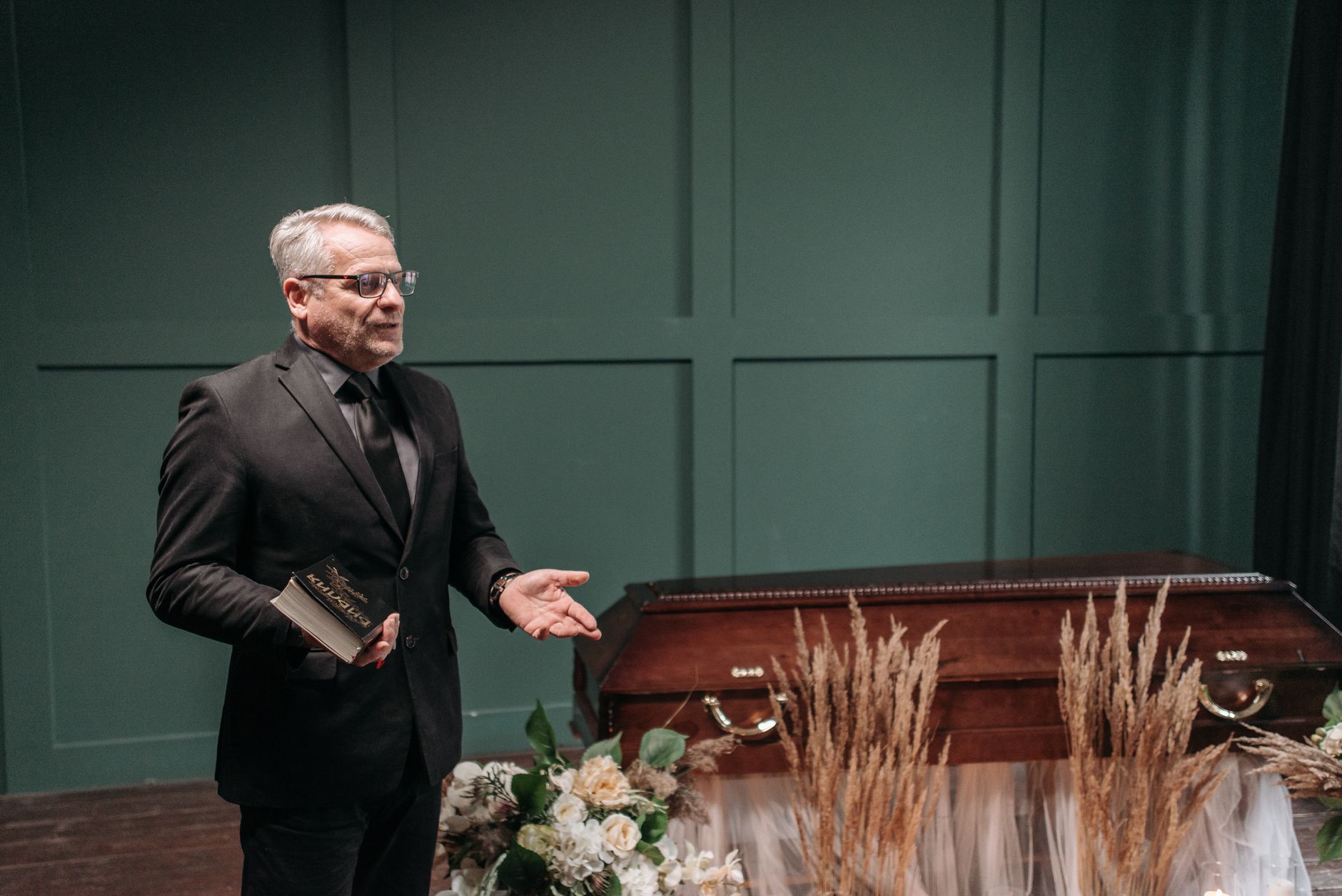
The Plain Pine Box Mama Asked For
Then I heard an engine labor up the cemetery road behind us. An old tan Ford pickup pulled in at the end of the line, and three old men got out of it slowly, one at a time, helping each other.
Orville Lindgren. Hap Dressler. Lester Voss.
They came across the grass in their good black coats and best caps, leaning on canes, three old men with a combined age of two hundred and fifty-nine years. They did not go to the folding chairs. They went straight to the casket.
Each of them took off his cap. Each of them laid one hand flat on the pine lid. They stood there, shoulder to shoulder, the way men stand when they have done something together before.
I heard Noreen make a small sound.
“Orville,” she said. It was hardly a whisper.
Orville Lindgren turned around, with one hand still on the lid, and looked at my sister.
“Honey,” he said. “Do you remember the box we built for your dad?”
The whole hill went quiet. Even the wind seemed to stop.
“I remember,” Noreen said.
“I thought you might. I thought you might have been carrying it around a long time.” He took a slow breath. “Come stand by me. It’s time somebody told you the rest.”
She came. I don’t believe she knew she was walking. She crossed the grass to the casket in her black coat and stood on the other side of the three old men, with her gloved hands at her mouth.
“Your father died on a Tuesday,” Orville said. “You were in Ames. The bank had a note on this place, and the note was due in March, and your mama had the funeral home bill sitting on the table next to it. Harold Teague, Gordon’s daddy, was a good man. He told her to pay what she could, whenever she could. But she wouldn’t have it. She was proud. She said she’d pay it to the penny, and she’d do it without anyone’s charity.”
He looked down at the pine.
“We were at the Methodist church that night. Me and Hap and Lester and about forty other men. Somebody said, Irene won’t take money. And Hap said, no, but she’ll take a box.”
Hap Dressler nodded. He is a thin, bent man with enormous hands.
“We pulled the boards off the old hog house on your place,” Hap said. “Good pine. Hundred years old. We took it to Orville’s shed, and we worked two nights straight. Forty-one men signed the underside of the lid in carpenter’s pencil. We didn’t have a cent. We had hands.”
Orville’s voice had gone thick. “Your mama stood in the door of that shed in her coat at midnight, and she couldn’t say a word. She put her palm on that lid, just like I’m doing now. And I’ll tell you what she said. She said, I have never in my life been given anything so fine.”
I was crying then. I didn’t notice when it started.
“Then there was the lunch,” Orville said, “in the basement after the service. And you were in the kitchen, honey, getting the coffee. And Alma Pettibone was standing by the door with two other women, and she said it plain as day.”
“Orville,” Noreen whispered.
“She said, poor Irene, couldn’t even afford a proper box for him.”