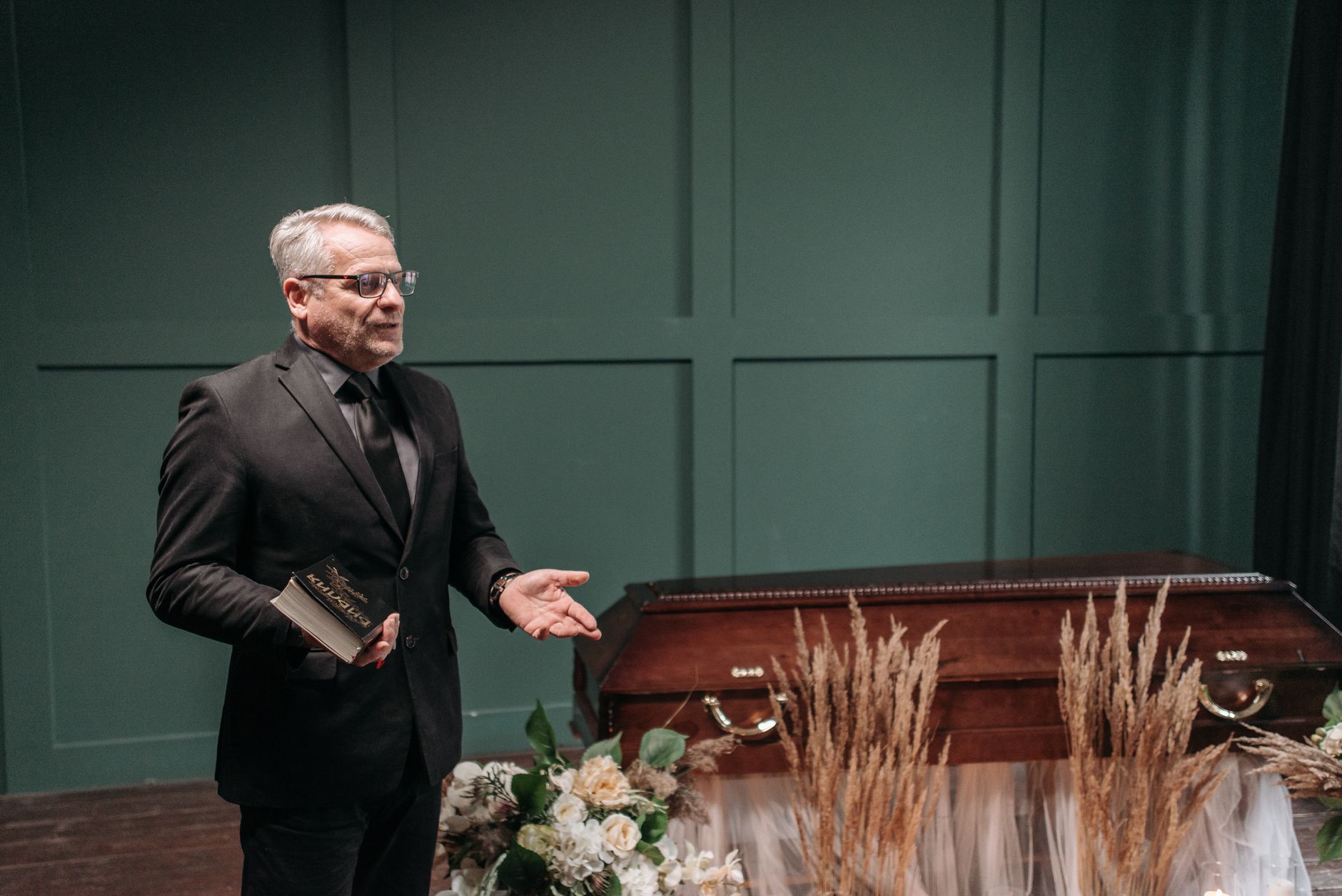
The Plain Pine Box Mama Asked For
At about seven, Orville Lindgren came through. He is eighty-six, a retired farmer with a bad hip and a cane, and he was a pallbearer for my father. He stood by the casket a very long time without touching the lid. Then he looked across the room at my sister, a long, level look, and Noreen looked back at him, and what passed between them I could not read. He took my hand in both of his.
“I’ll see you at the cemetery, Glenda,” he said. “Me and Hap and Lester. We’ll be there.”
“Thank you, Orville.”
“Don’t thank me yet,” he said, and he went out leaning on his cane.
I had no idea what he meant. I thought he was an old man talking.
Noreen left at a quarter past seven, before the end of the line. I watched her go out through the door with Gary’s hand at her back, and my heart went with her.
The funeral was Thursday at eleven at the Aldous Methodist Church, and the town stopped for it.
I stood on the church steps at ten-thirty and looked out across the county, and there was not a combine moving as far as I could see. It was the middle of harvest, one of those dry, perfect October days farmers wait all year for, and every machine in the township sat still in the field while the men came in their church clothes with their hats in their hands.
Pastor Marv preached from Matthew twenty-five. I was hungry and you fed me. He spoke ten minutes and did not need more. He told about the dollar on the lunch tray, and about the day she sat in his study and told him exactly what she wanted done with the money, and I saw people nod all through the sanctuary.
Noreen sat beside me in the front pew, straight as a fence post, and I could feel the cold coming off her. She sang every hymn. Her voice shook on the third verse of Abide with Me and she stopped, and then I felt her little finger touch mine on the pew cushion. I did not look at her. I only held still, so she would not take it back.
Six of the grandchildren carried Mama, Travis and Cole and the others, in dark suits, with their jaws set tight. They carried her down the aisle and out into the bright air, where Gordon Teague’s long black hearse waited at the curb.
The procession to the Aldous Cemetery is a mile and a half out Highway 9, up a long hill where the stones face east. Every pickup in the line had its headlights on, and the farmers who were not in the line parked on the shoulder and stood beside their trucks with their caps in their hands as we passed.
At the top of the hill I got out of the car and could not see where the line of vehicles ended.
Noreen stood apart from us at the edge of the grass, in her black wool coat, with Gary hovering a step behind her. She had her arms wrapped around herself, and I thought it was the anger, one last stubborn stand. I would be wrong about that, too.
She was not looking at me. She was looking at the casket as the grandchildren set it on the straps over the open grave. Her face was white. It was not the face of a woman ashamed of the box. It was the face of a woman who had seen a ghost.