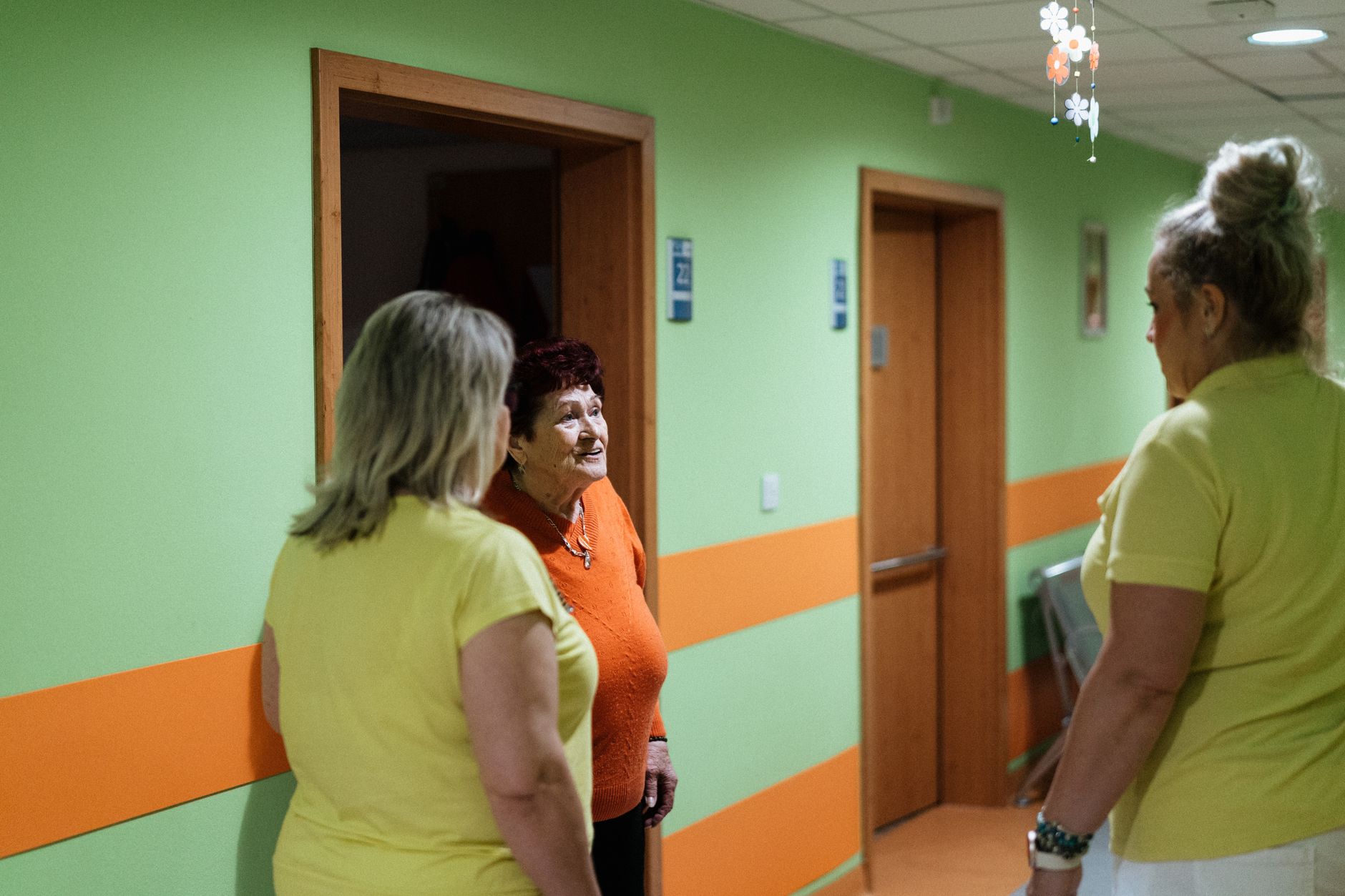
The Chair in the Hospital Hallway
She stopped in front of me and looked me over the way I used to look over a child who had skipped lunch.
“You’re Marcia,” she said. “You’ve been out here since Sunday.”
“Yes, ma’am.”
She said, “Hold on,” and went away, and came back with a real wool blanket from the linen closet, a clean pillow in a white case, and a cup of hot coffee from the staff room, the good kind and not the vending machine kind.
“These didn’t come from me,” she said.
“I understand.”
“I can’t open that door,” Renee said. “I would, if it were mine to open. It’s not. The patient’s agent has made her wishes known, and I’m bound to honor them while he can’t speak.” She lowered her voice. “But Joyce told me what you asked for. If he wakes up, I will ask him. And I will write it down in the chart in his own words, and I will sign my name next to it.”
I took the coffee in both hands. “Thank you,” I said. And then, because the dam was suddenly leaking and I could not stop it, I said, “Is he comfortable?”
“He’s comfortable.” She sat down in the chair beside me. “I turn him and I talk to him the whole time like he can hear me, because I believe he can. You know what I tell him? I tell him his wife’s right down the hall, and she’s not going anywhere.”
I put my hand over my eyes. She let me. She patted me twice on the arm, the way you pat a horse you respect, and got up and went home to sleep.
That was not the day the clouds broke. At eight Kristen came out for coffee and passed within six feet of me and did not look in my direction. Her eyes were red-rimmed and her good blouse was wrinkled. She stood at the machine pressing a button that did not work, over and over, and finally she put her forehead against the cool glass front and stayed there.
I had a thermos in my tote bag, still hot from the morning. I poured the cup full and set it on the little table at the end of the row of chairs, three feet from where she stood. And I went back to my seat and looked out the window.
I heard her breathe in. I heard nothing else for a very long time.
“Don’t,” she said finally. It was barely a voice.
“It’s just coffee,” I said. “It’s not anything else.”
She did not pick it up while I was watching. But when I looked back, ten minutes later, the cup was gone from the table, and so was she.
Ellie found me that afternoon.
She is nine years old, with her father’s quiet manner and a stubborn braid, and her mother had sent her out to the waiting room to read a book while the grown-ups talked to Dr. Rao. She walked straight over and sat down two chairs away with her book clutched against her chest.
“Hi, Mamaw Marcia,” she said.
Ellie had called me Miss Marcia her whole life, because that was the model she had been given. It struck me dumb for a second.
“Hi, sweetheart.”
“Why are you sleeping out here? That’s dumb.”
“The hospital has some rules about who can visit while your Papaw is so sick,” I said. “And your mama is doing the best she can. When people are scared they hold on to things tight. It doesn’t make her bad. You be gentle with her, all right? She’s carrying a lot.”