The Name That Stopped the Legion Hall
She put her head down on her arms on top of all those rejection letters, and she cried like I had never once heard her cry, not even at my wedding.
I got up and went around the table and put my arms around her from behind.
She was so much smaller than I remembered. When did that happen? When did my mother get small?
“I didn’t mean to take it away from you,” she said into her arms.
“The cake. The whole thing. I didn’t mean to make it about me. I just got so scared, Whitney. I got so scared that you wouldn’t need me anymore.”
“I’ll always need you,” I said. “You’re my mama.”
“Opal,” she said, and lifted her head and wiped her face with her palms.
“It’s a good name. I meant that. I said it in the hall and I meant it. That old woman deserves it. I’ve watched how she treats Josh. I’ve watched how she treats you.”
“She told me to come see you,” I said. “Sunday. She said you weren’t mean. She said you were scared.”
My mother stared at me. “She said that?”
“She said a mean woman puts her hands on her hips. She said you were holding yourself together.”
Mama laughed, a real one this time, and wiped her eyes again. “Well,” she said, “that’s a lunch lady for you. They see everything.”
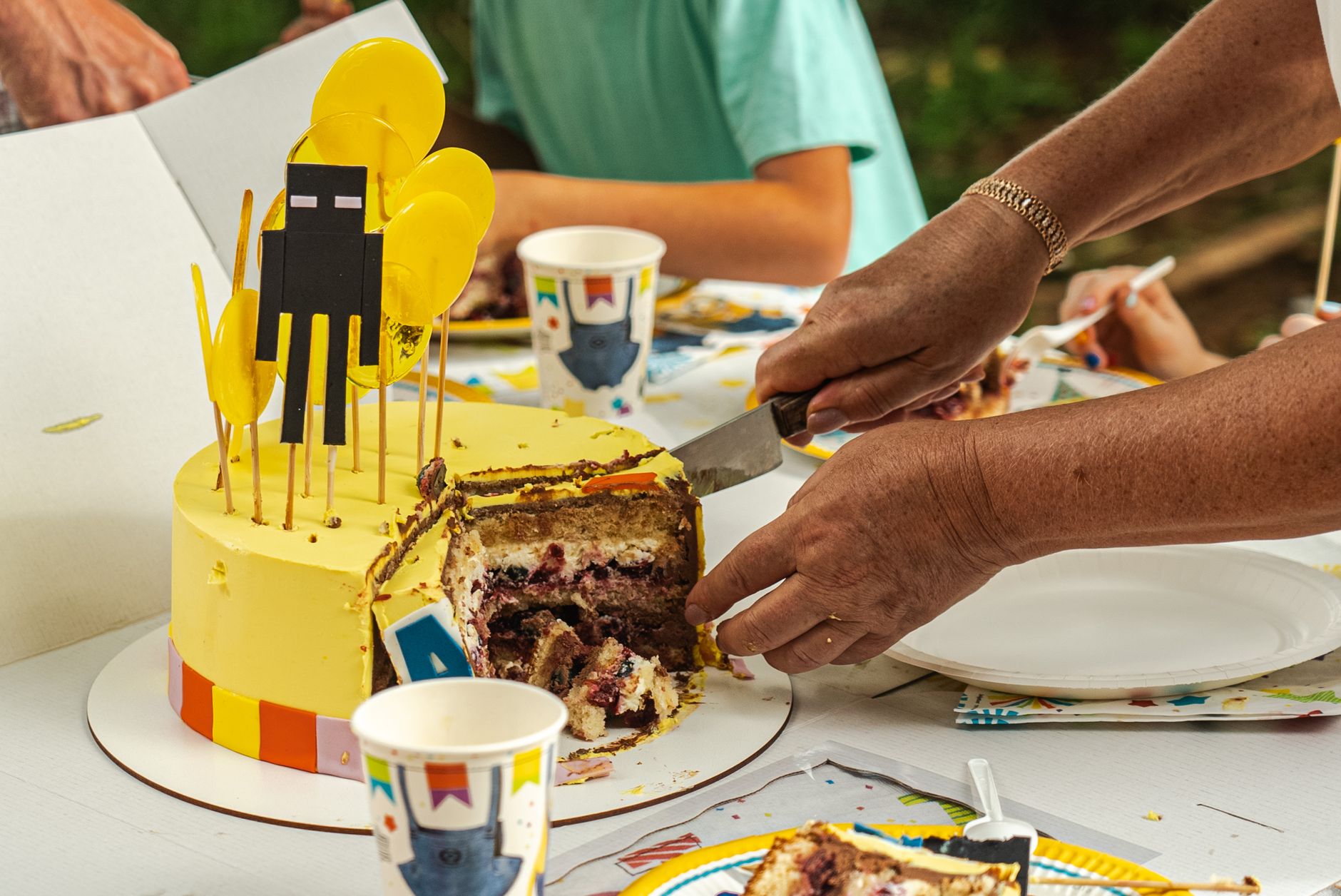
We ate the cake together at her kitchen table, the two of us, with two forks off the same paper plate.
It was a little dry from sitting out. It was the best cake I ever ate.
Before I left, my mother walked me out to the car, and she stood there in the dusk in her sweatpants with her arms crossed against the evening chill, and she said one more thing.
“I’m going to go see Opal,” she said. “This week. I’m going to take her a pie and tell her I’m sorry I made a fool of myself at her great granddaughter’s party.”
“You don’t have to do that, Mama.”
“Yes, I do.” She lifted her chin. “I was raised right. I just forgot it for a minute.”
She went that Thursday. She took a cherry pie, from scratch, because my mother does not believe in store pie. Opal told me all about it on the phone afterward.
“She sat at my table for two hours,” Opal said. “We drank a whole pot of coffee. She told me about the plant. I told her about my first husband’s paper mill closing in 1974 and how I went to work in the school kitchen because I had to.”
“You never told me that,” I said.
“You never asked. Nobody your age ever does.” I could hear her smiling.
“Your mother’s a good woman, Whitney. She’s just proud. Proud people break harder than the rest of us, and they do it alone.”
At the end of those two hours, Opal had done something nobody else in our family had thought to do.
She called the head cook at the high school, a woman she had trained herself back in the nineties, and asked if they needed any help in the kitchen.
They did. They needed a part time cook, three days a week, Monday, Wednesday and Friday, six in the morning until one in the afternoon. My mother started there in October. Tuesdays and Thursdays, she pointed out, were still open. For the baby.
She hated it for about two weeks. Then she loved it.