The Name That Stopped the Legion Hall
I put my hand on his arm. I did not squeeze it. I just let it rest there, and he stopped.
He looked at me, and I gave him the smallest shake of my head, and he nodded once and stayed put.
This was my mother. It was mine to handle. If Josh corrected her in front of fifty people, she would never forgive him, and she would never forget it, and every Christmas for the rest of our lives would have that afternoon sitting at the table with us.
I could have said it myself. “Mom, we never agreed to any of that.” Seven words. I thought them.
But I was not going to stand in a Legion hall and argue with my mother over money in front of half the town.
I was not going to have people at the Casey’s tomorrow morning saying Sheila’s girl told her off at the baby party.
So I did something else. I did not plan it. It came to me the way the right answer sometimes does, all at once and already finished.
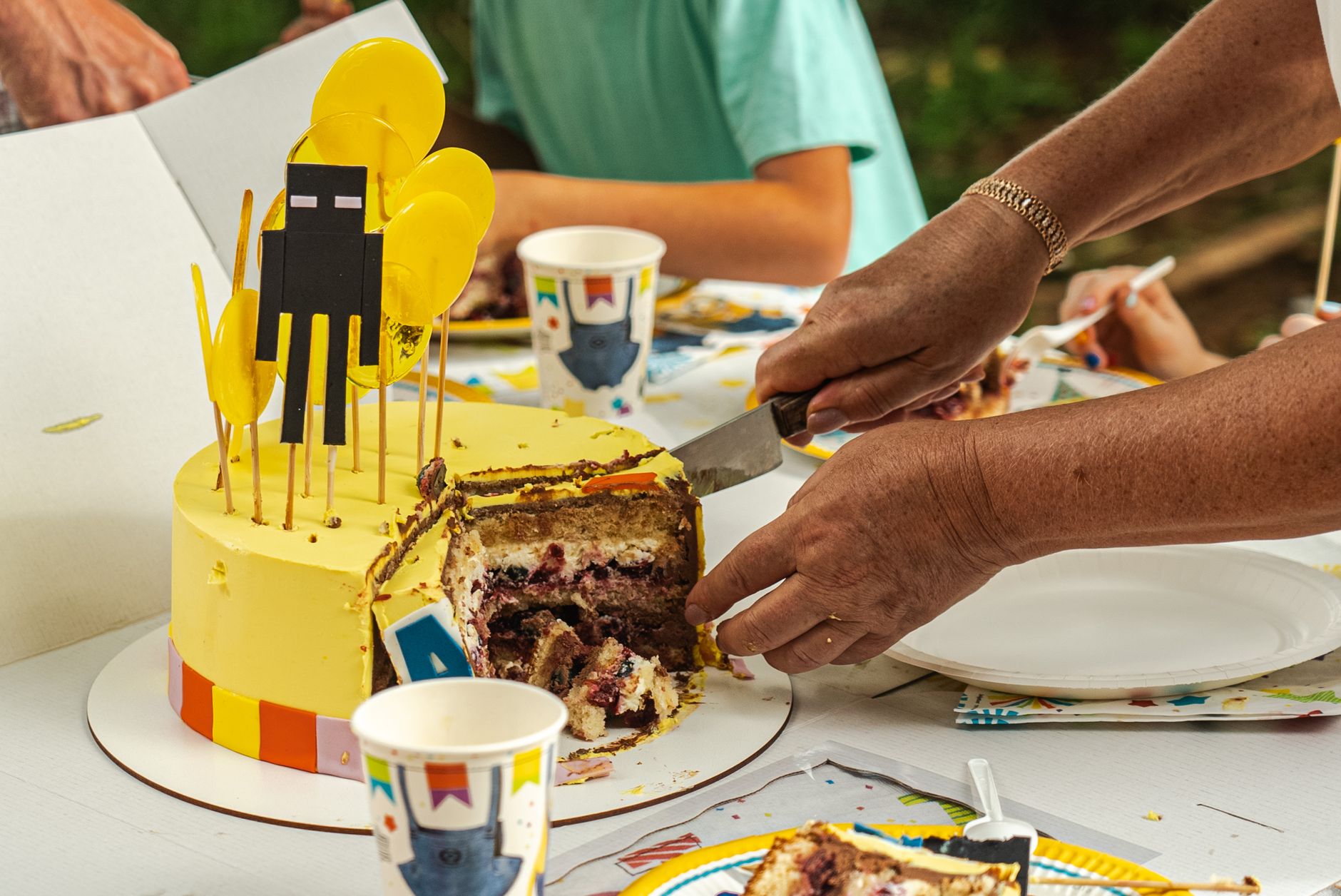
I stepped up beside my mother and held out my hand, palm up, for the knife. I did not grab it.
I did not say a word. I just held out my hand the way you do for a child who has something she should not.
Mama looked at my hand. She looked at my face. For a second I thought she would not give it to me.
Then something in her shoulders let down, and she laid the handle in my palm, and she let go.
I wiped the blade clean on a paper napkin. I did it slowly.
The hall had gone quiet behind me, fifty people trying to figure out what came next, the kids even stopping their running to watch.
Then I turned and walked the knife to the front table, to Opal.
Let me tell you about Opal Clay. She cooked lunch at the elementary school in Josh’s town for thirty years. Head cook for twenty of them.
She fed three hundred children a day, five days a week, on a budget that would make a grown man cry.
She knew every child by name. She knew which ones got free lunch and made sure nobody else ever found out.
She kept a box of crackers in the back for the kids who came to school hungry on Mondays, and she paid for it out of her own pocketbook.
Every Friday she baked a sheet cake for whoever had a birthday that week. Chocolate with white icing, every time.
She cut it herself, three hundred even squares, with a long knife she sharpened on a stone she kept in her apron.
Back then she was Mrs. Dunn, her first husband’s name. Josh was one of those kids. He told me once that the best day of second grade was the Friday Mrs. Dunn came out of the kitchen, found him at his table, and set his birthday square down in front of him with a candle stuck in it.
That was before his grandpa married her, late, when they were both widowed. Josh was twelve.
When Josh’s mother died of cancer the year he turned nineteen, it was Opal who drove to his apartment every Sunday with a casserole.
It was Opal who sat with him at the kitchen table and let him not talk. He has told me that more than once.