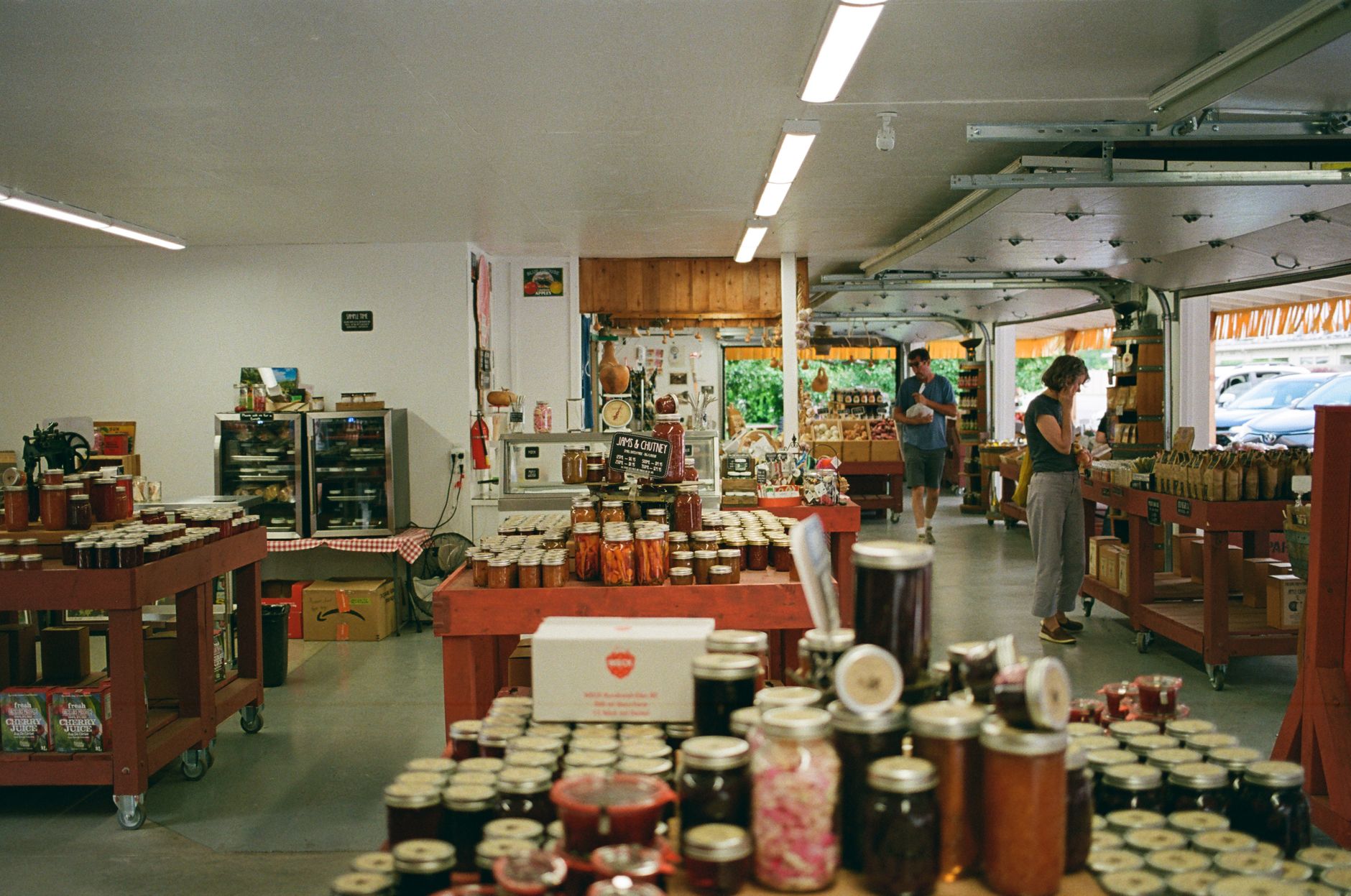
The Chow Chow Table Under the Oak
I had thought it would. I had sat in my car the week before and pictured it. But when it came, it just made me feel tired and old and sorry for both of us.
I almost went over. Twice I took a step. Both times I stopped.
I told myself she had to come to me. If I went to her, I would be the one with the speech, and I did not want to make a speech. I wanted her to decide something.
Mr. Purcell stayed the whole morning. Somebody brought him a folding chair and he sat in it beside my table with his sack in his lap, like a deacon at a door.
At noon the egg man started taking down his canopy, and then everybody else did, the way they do. The square started to empty out.
Ashlyn put her unsold jars into a cardboard box, one at a time. There were a lot of them. Forty-one, I found out later.
Then she picked the box up. It was heavy. She held it against her belly with both arms, and she took the few steps over to my table.
Her hands were shaking. I could hear the jars clinking against each other in the box.
She set it down on my table, right next to Mama’s picture. Then she looked at the picture, and then at me.
“Miss Renee,” she said. “I need to tell you why I did it.”
“All right,” I said.
She took a breath. I watched her decide where to start.
“The first Saturday I only brought twelve jars,” she said. “I didn’t even make a sign. I just wanted to see if anybody would buy one. Wes’s hours got cut and the roof is leaking over the baby’s room and I thought, I can do this. I can make a little.”
“And they bought them,” I said.
“They bought all of them. In twenty minutes.” She almost smiled, and then she did not. “And a lady asked me, ‘Honey, whose recipe is this?’ And I just stood there.”
She looked down at the box.
“I have never in my life had anything that was mine,” she said. “Not a recipe. Not a dish. Not a quilt. Nobody ever handed me anything down. Everything I own, I bought at a yard sale or somebody gave me because they were throwing it out.”
“And she asked me whose it was, and I heard myself say, ‘It’s mine. It’s my family’s.’ And she said, ‘Well, your family knows what they’re doing.’ And I felt so good, Miss Renee. I felt like somebody.”
Her voice broke on that word. She put her hand flat on the table to steady herself.
“Then I couldn’t take it back,” she said. “Every Saturday I told myself I’d fix it. I’d change the sign. I’d tell you. And then it was four hundred dollars, and Wes was working six days, and I thought, I’ll tell her after the baby comes. And I printed the stickers. And then I couldn’t.”
“Does Wes know?” I asked.
“He thinks I say it’s his grandmother’s recipe,” she said. “He’s never come. He works Saturdays.” She shut her eyes. “I lied to him too. I didn’t say anything, and that’s the same as lying. I know it is.”
She opened her eyes and looked straight at me, which I had never seen her do when she was in trouble.