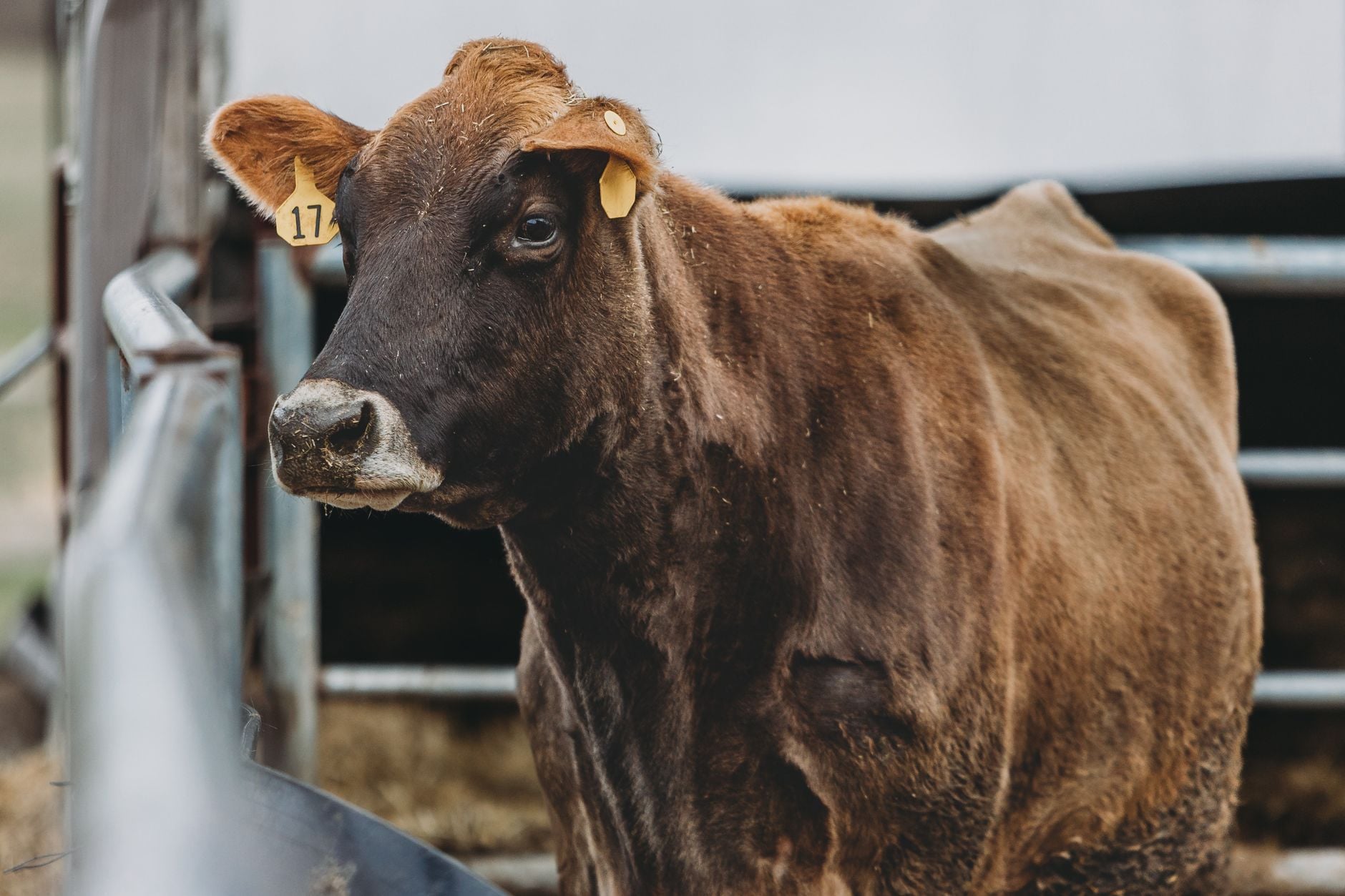
The Calves My Kids Sold Themselves
“Sure, honey. What for?”
He did not answer. I gave him a dollar bill out of my purse. He took it, and he walked down to the end of the table where his grandpa was sitting alone with his coffee.
He held it out.
“This is for you, Grandpa,” he said. “For the feed. The first dollar. Because you fed Bess for a long time before we had her.”
Vern looked at that dollar bill for a long time. He did not take it at first. The café had gone quiet, the way a small room does when everybody in it is listening and pretending not to.
Then he reached out and took it. His hand was shaking. He folded the dollar bill once, very carefully, and put it in the inside pocket of his canvas coat.
“Thank you, Sammy,” he said. His voice cracked on the name.
Sam nodded seriously. Then he said, “Did you need it, Grandpa? The money from before?”
I almost stopped him. Cody put his hand on my arm. I let it be.
Vern set down his coffee cup. He looked at Sam, and then down the table at Cody, and then at me. I think it was the first time he had looked me in the eye since March.
“Yes,” he said. “I did.”
Nobody said anything. He went on, slowly, like a man pulling a stuck post.
“Twenty twelve, the drought. You remember, Cody. Grass burned up by the Fourth of July. I sold down half the herd and bought hay from Kansas at two hundred a ton, hauled. Then twenty twenty-two, the same thing over again, worse.”
Cody nodded slowly. He remembered.
“I ran up a bill at the co-op,” Vern said. “Eleven thousand dollars, the second time. Your mother was gone. I didn’t tell you. I didn’t tell anybody. A man doesn’t.” He turned his coffee cup in a slow circle, exactly the way Cody does. “I used the calf money to pay it down. All of it. Every year.”
“Dad,” Cody said. “Why didn’t you just say so?”
“Because I’m the one who’s supposed to hold this place together.” Vern looked at the table. “My dad never gave me a dime till I was twenty-five. I figured kids don’t need money till they’re grown. I figured I’d square it up later. And then later kept getting further off.”
He was quiet a moment.
“I was wrong about that part,” he said. “About the kids not needing it. I watched those three today and I was wrong.”
Then he looked at me again.
“Jodie,” he said. “You asked me one time. About the camp. I treated you poorly. I’m sorry for it.”
I had waited six years to hear something like that. I thought I would feel like I’d won. I didn’t. I just felt sad for him, sitting alone at the end of the table with Joan gone and his pride gone and Sam’s dollar folded in his coat.
“Thank you, Vern,” I said. “Come to Sunday dinner. It’s at our house this time.”
He nodded. He didn’t say anything else. But on the way out of the café, he put his hand on top of Ellie’s head for just a second, the way he used to when she was small.
He came to Sunday dinner. He came every Sunday after that. He brought pie from the café in town because he cannot bake, and he sat at the end of our table and talked to Sam about the cattle market until I told them both to eat.