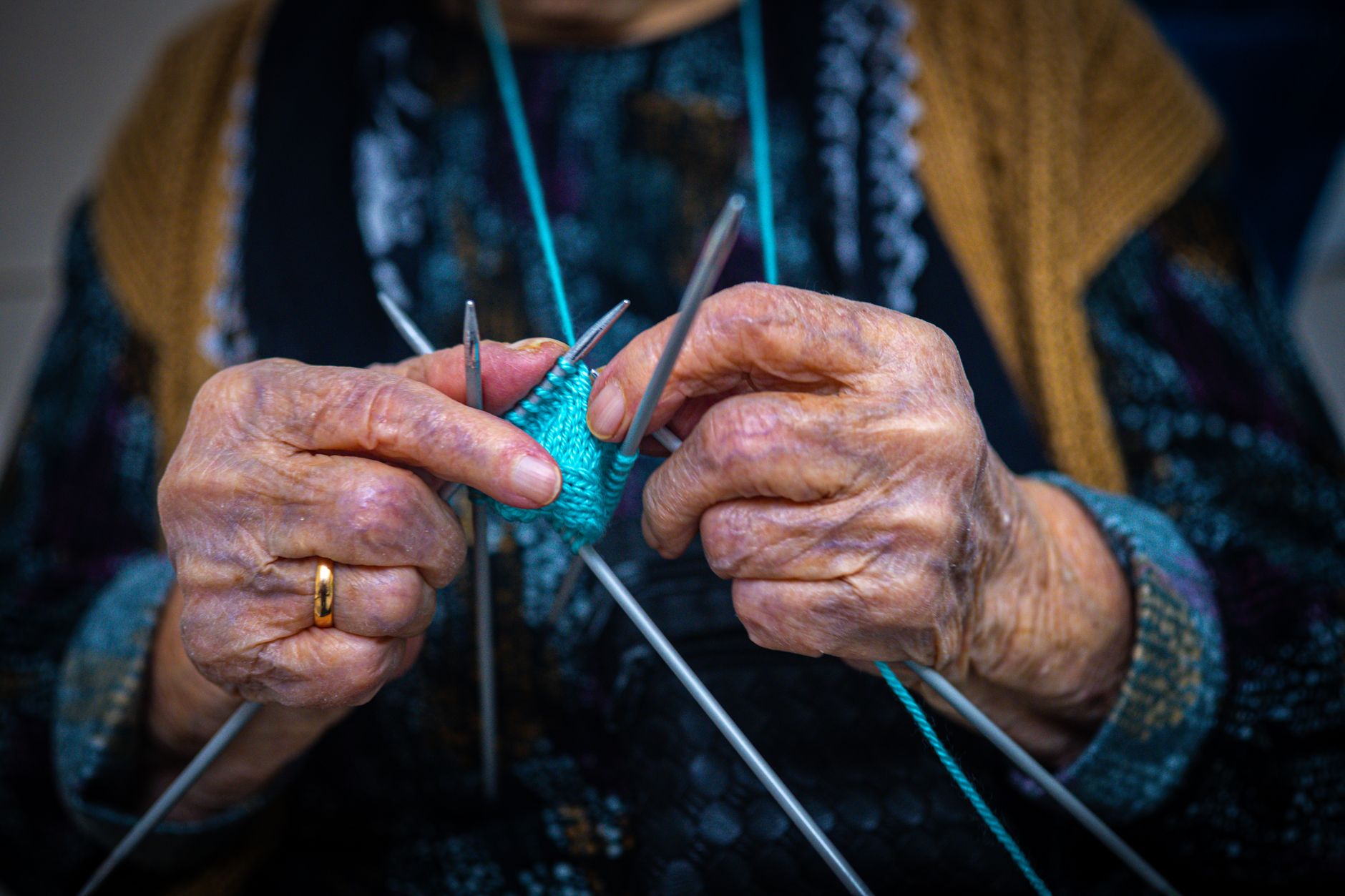
The Tiny Caps I Knit for the Nursery
Jenna learned to hold her skin to skin against her chest, with a blanket over the two of them. The nurses call it kangaroo care. Jenna sat in a recliner next to the box for three hours at a time, not moving, not eating, not even going to the bathroom until a nurse practically ordered her.
By the third week, Josie was off the breathing machine. By the fourth, she was taking milk through the tube and trying a bottle. She weighed three pounds, eight ounces, then three pounds, thirteen.
On the thirty-fifth day, a doctor with a kind, tired face told us she was doing well enough to go home. Not home home. Home to our county hospital, where they have a special care nursery for babies who are growing and learning to eat. The doctors call it a feeder and grower unit. Everyone in Haven calls it the baby nursery.
“She just needs to get bigger,” the doctor said. “And learn to eat all her meals by mouth. That’s all she has left to do.”
That’s all, I thought. Gene said later he nearly laughed, because it sounded like the list of an easy chore.
They moved her on Sunday night, October fourth. A special ambulance with a heated box inside took her, and Caleb rode in front. Jenna stayed in the back with the nurse. Gene and I followed the whole way in our truck at fifty-five miles an hour, which on that highway is a kind of prayer of its own.
By ten that night, she was settled in. Jenna called me.
“She’s in, Mom. She’s in the nursery at home.”
“Is she all right?”
“She’s perfect. She slept the whole ride. The nurse is named Rosa. She’s been there since before I was in high school. She knew Dad.”
“Everyone knows your dad,” I said.
“Come Tuesday,” Jenna said. “Rosa says you can have the first visit. Monday is settling in. They don’t want a lot of faces.”
So I went to bed that night and lay awake. At six in the morning on Tuesday I got up and found the box I had packed, nine caps in tissue, and set it by the door.
It would be my first morning in five weeks without a long drive to somewhere. I did not know what to do with the quiet.
I stood in that hallway with the cap in my hand, and Rosa stood beside me with her hands folded in front of her, and neither of us said anything for a while. A man from the kitchen went by with a cart. The ice machine rattled somewhere behind the wall.
“I want to tell you how I got this,” Rosa said, “and I want you to hear the whole thing before you decide how you feel about it.”
I told her I was listening.
“You know about the basket,” she said.
“I know about the basket.”