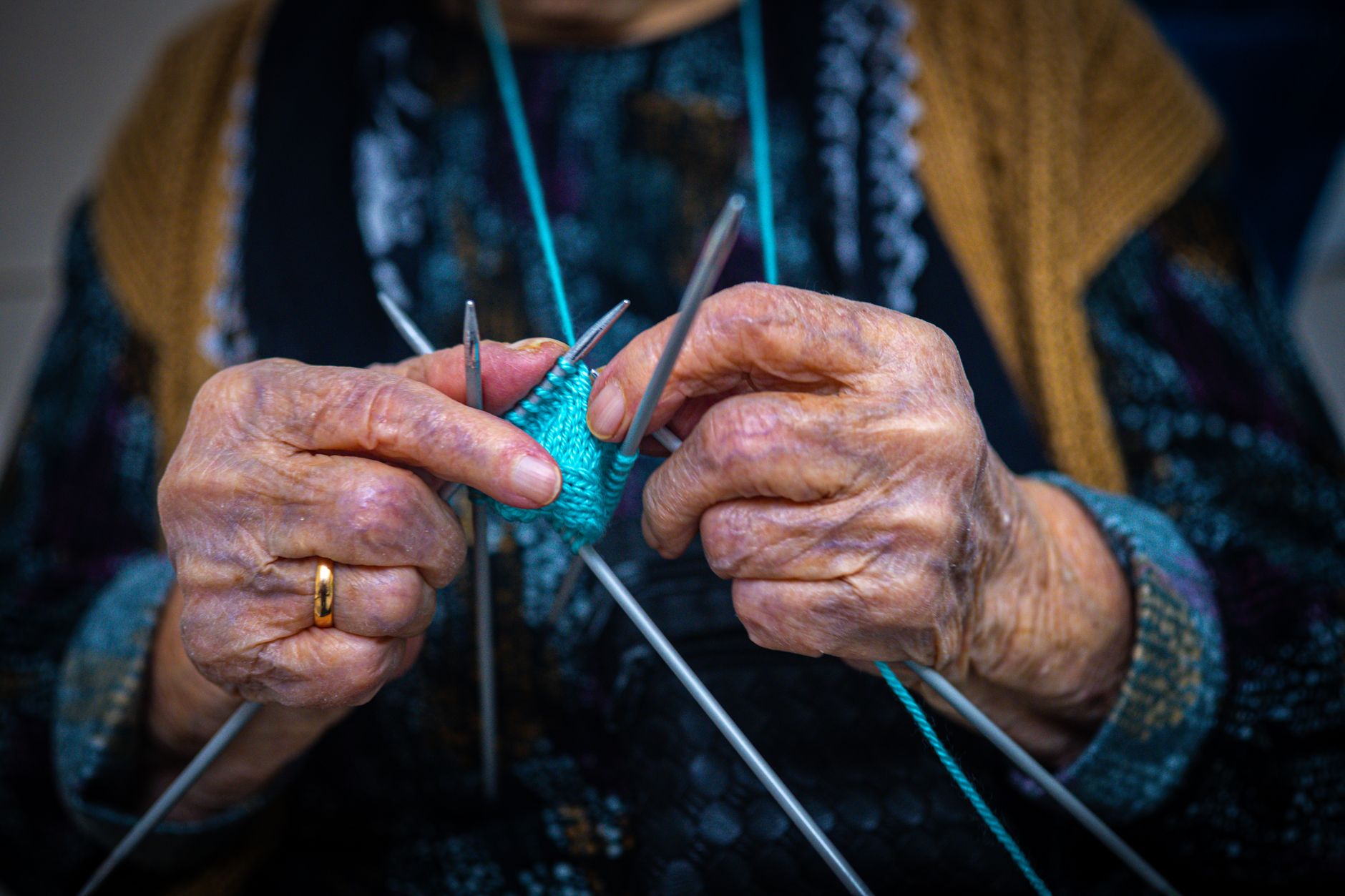
The Tiny Caps I Knit for the Nursery
I bring a box on the first Tuesday of the month. I leave it with Bev at the front desk of the nursery, and I go home.
I never asked who got them. That was the part I settled early on and never reopened.
The auxiliary has a rule, too, that we do not ask. Families who deliver at a hospital are in the middle of the hardest and happiest week of their lives, and a woman with a grocery sack of knitting has no business in the middle of it. Once I came in on the day a young man was weeping by the vending machine with his cap in his fist, and I turned and went back down the stairs and sat in my truck for twenty minutes.
I figured it was like the offering plate at church. You put your dollar in the plate and you do not follow it down the aisle to see where it lands.
Gene keeps my count. He does it in an old elevator ledger from the co-op, a green clothbound book with columns meant for bushels and moisture. Every cap I finish, I say the number out loud and Gene writes it down with the date.
Last time I asked, we were at 3,412. Not one of those lines has a name beside it. Just the number and the date, and sometimes a note about the yarn.
I will tell you something I have only ever said to my pastor, and he said it was the most sensible thing he had heard all week.
When I cast on a cap, I say a short prayer. I say it in my head, not out loud, because I am not a woman who prays out loud in her own kitchen. It is always the same words.
Lord, whoever she is, keep her warm.
Or he. I switch it depending on the color of the yarn, which is not scientific, but it keeps me honest. I have said that prayer more than three thousand times, and I have never once known who I was saying it for.
That was fine with me. Mostly.
Now I have to tell you about the yarn.
In the spring of 2012, the yarn shop in Hutchinson closed. It was a little place on Main Street with a bell on the door, run by a woman named Phyllis who had been selling needles and skeins since before I could knit.
On her last week she had everything marked down to half price, and in the back, under a table, she had the last of a washable baby yarn that the manufacturer had stopped making, stacked floor to ceiling in what had been her stockroom. It was a soft cream with a fleck of pale green twisted through it. The band on the skein called it Spring Meadow, which Gene said sounded like a cemetery.
I bought the whole back room. Six hundred skeins. I paid with a check and Phyllis wrote me a receipt on the back of a paper sack.