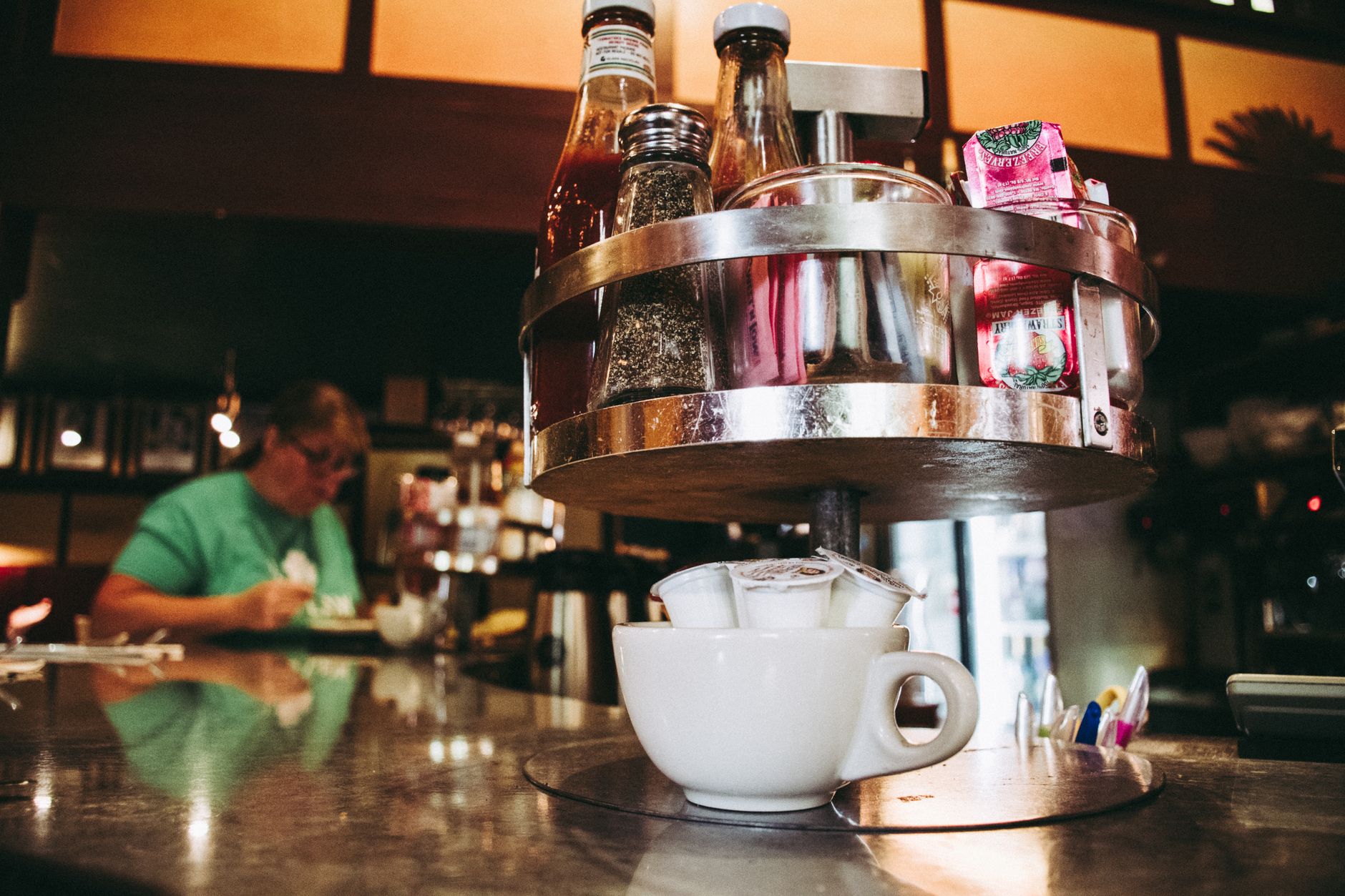
The Mason Jar by the Pie Case
But I noticed things, and I did not connect them.
Men who had never lingered at the register began lingering. A man would pay his check, put his wallet away, and step to the back counter while I was across the room. A small paper sound. The click of a lid.
When I walked up, conversation near the jar stopped, and started again a half beat too bright.
People called it the tip jar. “Throw it in the tip jar,” Sig told a trucker passing through. I thought, that is for Darlene. A cook never sees a dime of tips. It would be exactly like this town to start a tip jar for the cook and not tell the cook.
I even told Darlene she ought to get something out of it. She gave me a look I could not read and said, “I’ll tell you when I do.”
She was not lying. She was only keeping her mouth shut, which in Darlene’s case is a real achievement.
Plow drivers I had never seen carry cash put folded checks through that slot. Ione, in her church coat, came in on a Thursday with an envelope and dropped it in with her back to me. Sig put in a check from the feed store. I saw the corner of it. I told myself it was a business donation.
Here is the part I am embarrassed by. I am a waitress with thirty years of watching rooms, I had a hospital bill the size of a used car, and a mason jar was filling up thirty feet from my hands. I missed it. Not because I was dense. Because it never crossed my mind that anybody would do for me what I had spent thirty years doing quietly for them.
Friday
The last Friday in October, the mail brought the letter I had been dreading since September.
It was from the hospital’s billing department, on heavier paper than the statements. My account was past due. No payment plan had been established. If I did not make contact by November first, the account would be referred to an outside agency for collection.
It was not written unkindly. That was almost the worst of it. It was a letter that had said the same thing to a lot of people, and I was just the name in the box.
I read it at the mailbox with the wind coming across the bean stubble. Then I folded it into quarters and put it in my apron pocket instead of the house.
Rolf came home at five-thirty. He took one look at me and said, “What.”
I handed him the letter. He read it twice. He took off his cap and sat down across from me, and for a while the only sound was the refrigerator.
“I’ll call my brother,” he said.
“Your brother has his own troubles. I’m going to ask Harvey for an advance on my pay. Three thousand. I’ll work every double he’ll give me through the holidays, and we’ll make the first payment on the first.”
“Harvey doesn’t have three thousand dollars.”
“Then I’ll ask for two.”
He looked at me with his big chapped hands flat on the table. He clears the county roads at three in the morning in January so strangers can get to work, and in thirty-one years he has never said a thing that was not meant for my good.
“Could you let somebody help you?” he said slowly. “Just once?”
“I’m letting Harvey help me.”
“Harvey’s your boss.”
“It’s the same thing.”
It was not the same thing, and we both knew it. He let it go. That is one of the reasons I married him.
I did not sleep. I lay there and listened to the furnace kick on and off and rehearsed it again. At two in the morning I decided to go in early, before the customers, and get it over with.
Rolf was awake too. He stared at the ceiling all night, because he knew what I did not. In September, in the cab of his truck at the elevator, a man with a great deal on his mind had told him everything, and made him promise to keep his mouth shut.
He kept it shut until his wife had to walk into a dark cafe on her own two feet. I forgave him. It took about a minute.