The Mason Jar by the Pie Case
The second Monday in September
I went back to work on the second Monday of September, six weeks and a day after I fell down.
I was not supposed to. The surgeon wanted another week. But the first of the month had come and gone and the hospital had its hand out, and I did the math on what a week was worth, and I put on my apron.
Harvey was at the register when I came in. He looked me up and down and said, “You’re too thin.”
“You’re too old to be telling anybody how to look,” I said.
He grinned and went back to counting his drawer, and that was our whole welcome. It was perfect. I could not have stood a banner.
The regulars were another matter. Sig had saved me a stool at the counter, as if I were the customer. Ione set a plate of butterscotch bars by the register with a look that said I was not to refuse. Gus Nyberg, who raises hogs south of town and has not said more than eleven words in a row since the first Bush administration, stood up and said, “Good to have you back, Gail.”
On Wednesday, around two in the afternoon, when the place is dead, my cell phone rang in my apron. It was the billing office, a different woman this time, reminding me that my first payment had not been received.
I had not signed the plan. I did not have the $520. I stood by booth six in the empty middle of the afternoon and tried to explain this to a stranger.
I was not careful. I talked the way you talk when you are embarrassed and want it over, which is loud and fast, over the hum of the pie case and the exhaust fan above the grill. I said “twelve thousand four hundred” twice. I said “I’m sorry, I don’t have it.” I said “I’ll call you Friday.”
I hung up and went to refill the sugar.
Gunnar Dahlberg was in booth four.
I want you to understand about Gunnar. He has sat in that booth every morning since 1994, when he was running the elevator. After his wife Ardis passed six years ago, he started coming twice a day, eggs in the morning and pie in the afternoon, because the house got too quiet.
He wears hearing aids and turns them down when he reads, and he was reading the Fergus Falls paper through his pie. I took it for granted he had heard nothing.
He did not look up. He turned a page. I refilled the sugar.
The jar
On Friday morning there was a mason jar on the back counter.
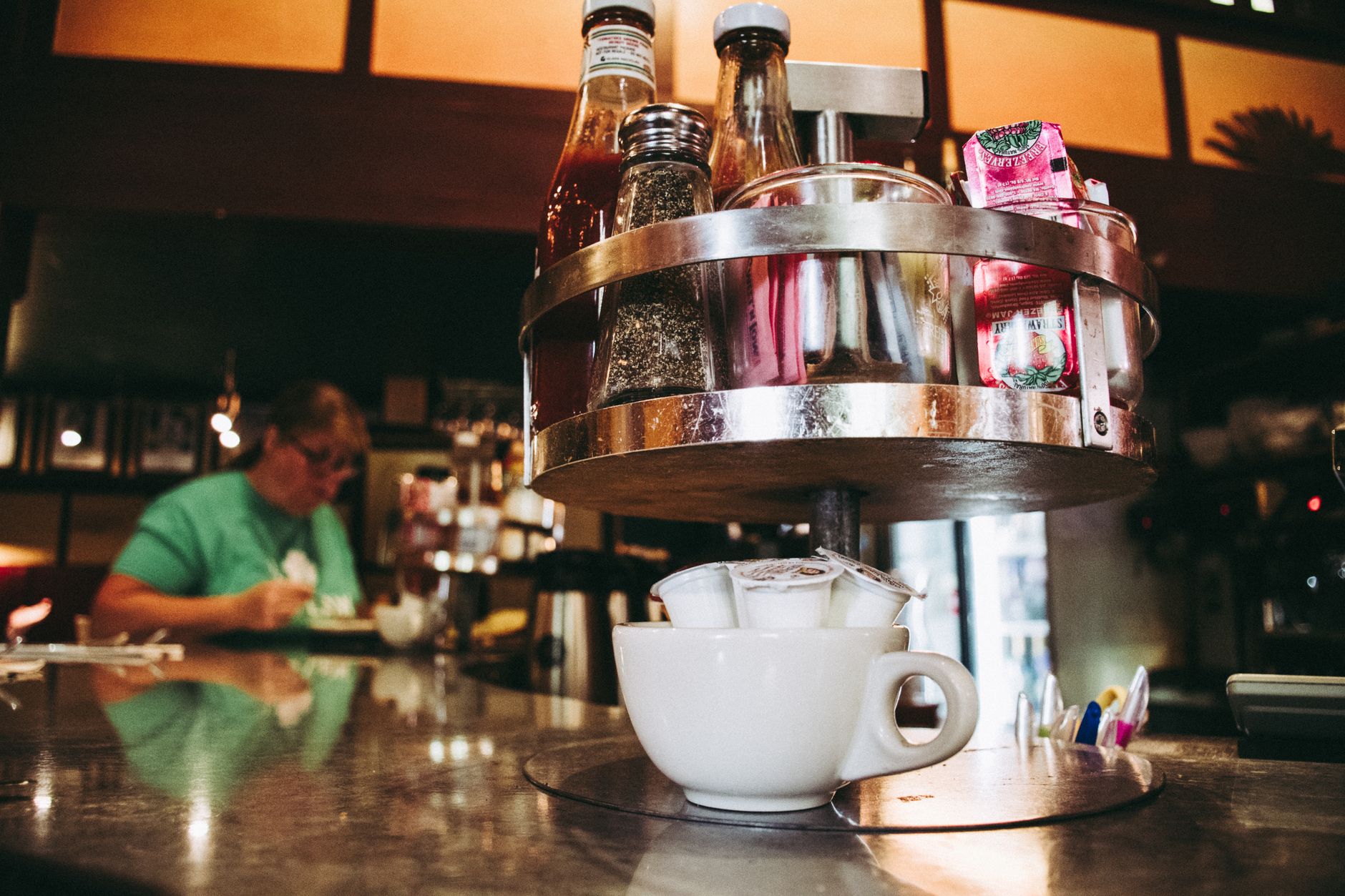
It sat between the pie case and the napkin dispenser, a plain Ball quart jar with the blue tint, the kind my mother canned beans in. Somebody had cut a slot in the lid with tin snips. The edges were still bright where the metal had been cut.
There was no sign on it. No tape, no label, no name.
“What’s that?” I asked Darlene, through the pass window.
She did not turn from the grill. “Harvey’s thing.”
I asked Harvey. He kept his eyes on the bills. “Lions, I think. Norbert’s got some fund going.”
Now, I have known Harvey Quam for thirty years, and he is a fine, decent, honest man, and he is the worst liar in Otter Tail County. When he fibs, his ears go pink. They were pink as a ham.
But Norbert is treasurer of the Lions, so it was believable, and I let it go. I figured they were doing something for the fire hall, or the Christmas baskets, or the school’s new scoreboard. There is always something.
I put a dollar in it myself that first morning.
I want that on the record. I had four dollars in tips in my apron by eight, and I thought, the Lions drove my aunt to dialysis for two years, and I dropped one through the slot. Norbert, two stools down, studied his plate with great interest. Gus coughed into his fist.
For the next six weeks that jar was a fixture of my life, and I walked past it forty times a day. I gave it about as much thought as the napkin dispenser.