The Man Who Drove the Harvest Share
Tuesday
He was there at four-thirty. I want to say that I was up half the night expecting he would not be.
It was dark and a few degrees above freezing, with a skin of frost on the church lot and the one light over the basement door making a yellow circle. His white pickup was parked at the far end. He was standing next to my truck in a canvas work coat that was too clean and boots that looked bought on Sunday.
“Morning,” Kent said.
“Morning.”
“Where do you want me?”
“Passenger side,” I said. “Don’t touch the radio.”
We drove up Highway 37 with the heater going and the sky going gray over the bluffs. For the first forty miles nobody said a word. It was like driving with a man you had known for twenty years and just met.
At the food bank dock in Eau Claire, a young fellow in a hooded sweatshirt came out with a pallet jack, the way he does every Tuesday. “Morning, Mr. Bergstrom,” he said. It was Tanner.
Tanner looked past me.
“Who’s this?”
I turned. Kent was standing next to the tailgate with his hands in his pockets, and for one second I watched him weigh it. A man who has been introduced by his name for forty years has a way of waiting to be introduced.
“Helper,” Kent said. “I’m the helper.”
Tanner nodded, and handed him a pair of gloves.
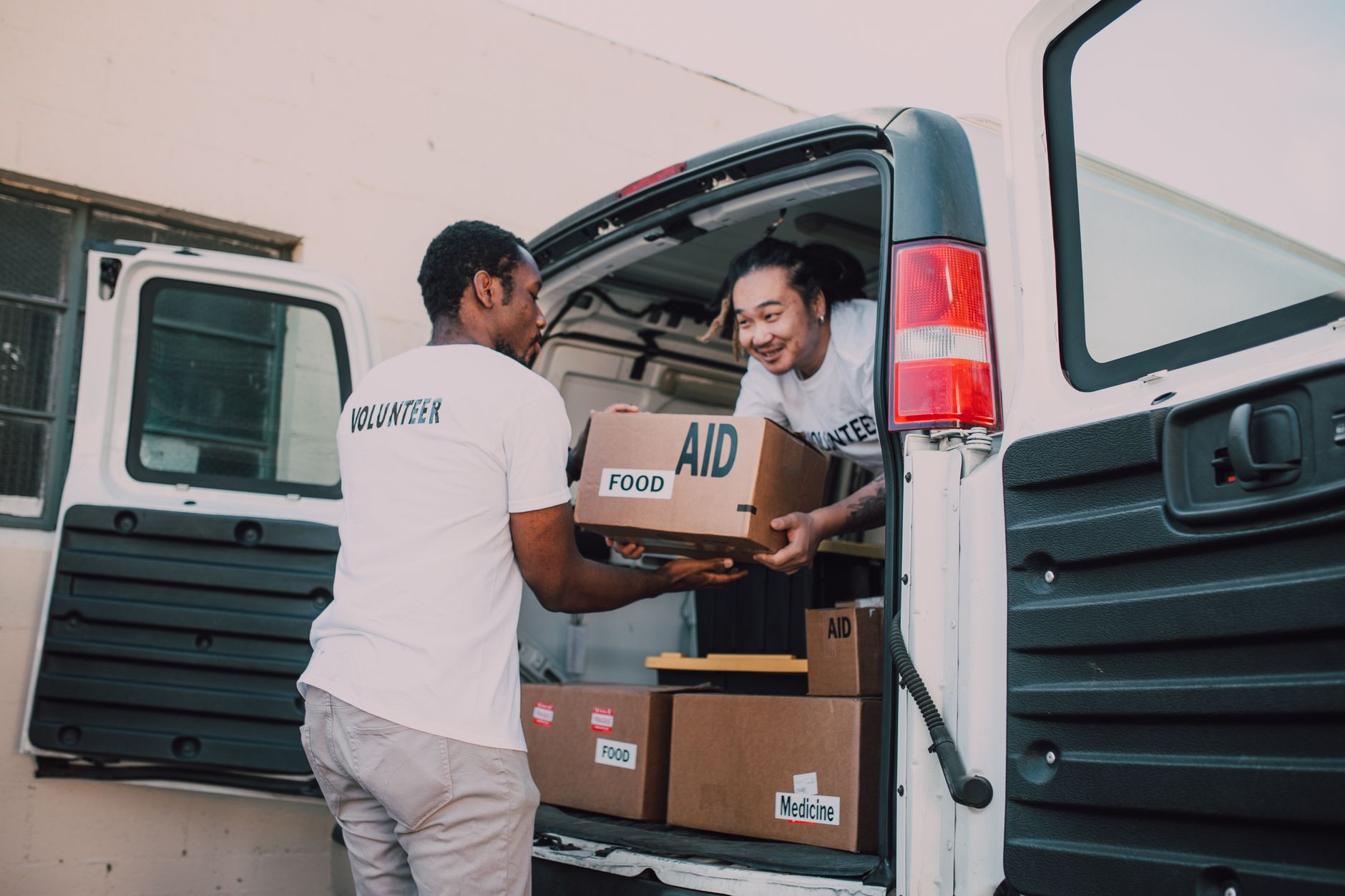
We loaded nineteen hundred pounds that morning. Kent carried every case he could lift, and he was not good at it. He had no idea how to stack. About halfway through he stopped on the dock with his hands on his knees, a sixty-three-year-old man who sat behind a desk, and breathed. I did not say anything. I did not offer to take the next one.
On the way home I let him drive the back half.
Thursday
I took him on the ridge route that Thursday.
I had not decided to. I came out of the church basement at seven with the boxes loaded, and he was standing in the lot again in the same clean coat, and I said, “Get in,” and that was all the discussion there was.
We did eleven stops before noon. He was not good at it. He tried to make small talk the way he does at the Chamber, and an eighty-year-old man on Teske Ridge gave him a look of such perfect politeness that I had to turn and pretend to check a strap.
Then we went up Hauge Coulee.
Edna was waiting in her kitchen door the way she always does. She had on her housecoat, and her chin was up. She watched me climb out of the truck with the box. She watched Kent climb out of the other side, and I do not know that I have ever seen a man look so much like he wanted to be somewhere else.
“Mr. Hallstrom,” Edna said.
“Mrs. Tollefson.” Kent took his hat off. “I wanted to come say thank you. For Saturday.”
“I did not do it for you,” Edna said.
“No, ma’am. I know.”
She looked at him for about as long as she had looked at me, fourteen years ago, on this same step. Then she stepped back and held the screen door open.
“There is coffee,” she said. “You will wipe your feet.”
We sat at her kitchen table, the three of us, with the clock ticking over the stove. She put out the molasses cookies in the same coffee can. Kent ate three and told her they were the best he had ever had, which was true, and she told him he was a flatterer, which was also true.
When we left, Kent carried the empty box to the truck. At the bottom of the steps, he stopped and looked back at the little house and at the old woman in the doorway.
“I should have come to her years ago,” he said.
“Yes,” I said. “You should have.”
I did not say it softly. But I did not say it the other way either.