The Man Who Drove the Harvest Share
Thursdays on the ridge
The part of the work that I would not trade is the Thursdays.
Buffalo County is bluffs and coulees. The town sits on the river, but the people do not. They live up on the ridges and down in the hollows, at the end of gravel roads with names like Hauge Coulee and Teske Ridge, where the school bus turns around and the cell phones do not work. If you are eighty-eight and no longer drive, nothing in the county will get a box of groceries to your back step except a man in a truck.
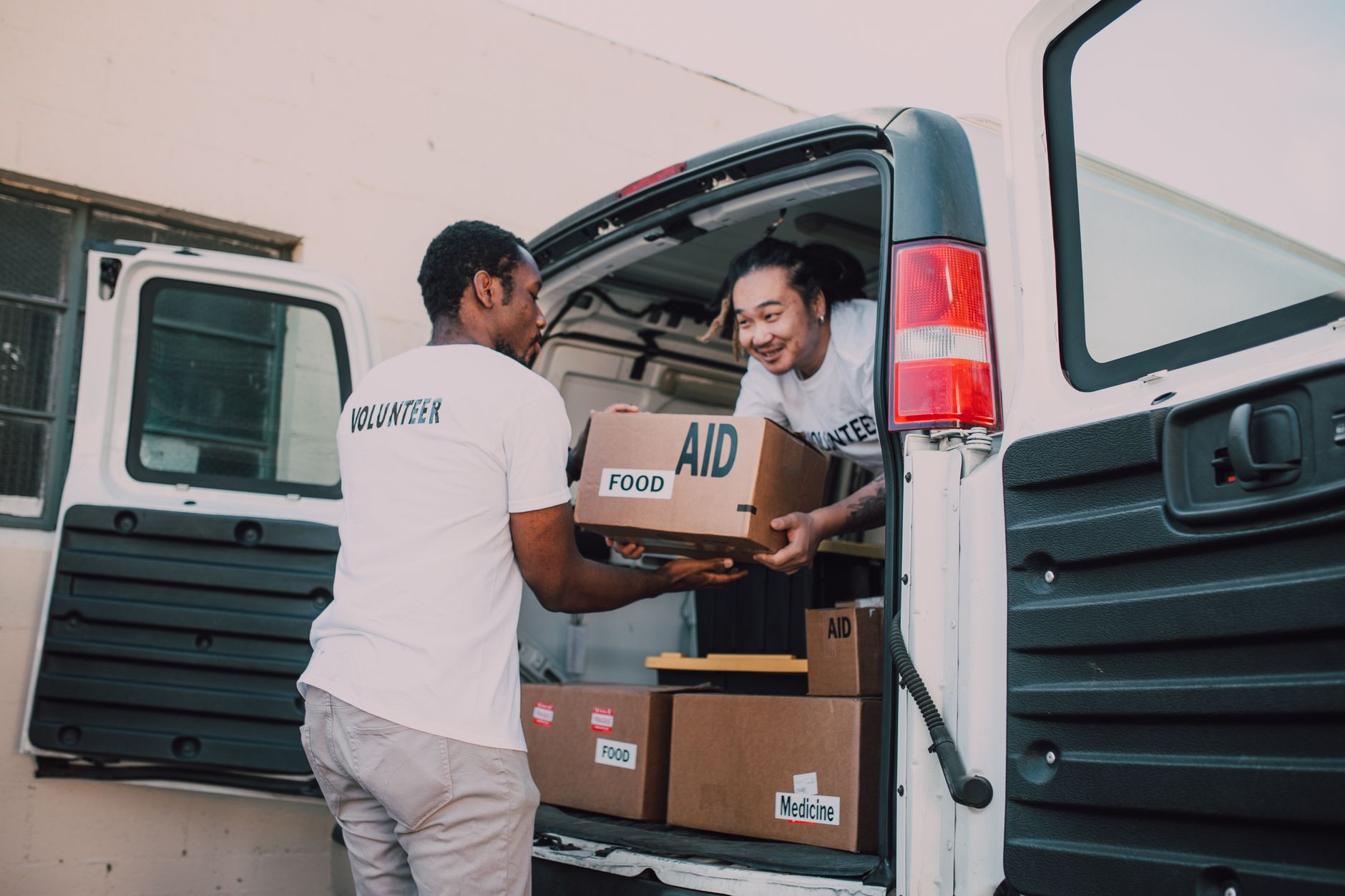
It started at eleven households and is thirty-four now. I load the boxes on Wednesday night in the church basement and leave at seven on Thursday morning. I know which dogs bark and which gates stick. I know the family on Teske Ridge with the three little boys who run out when they hear the gravel, and I know the retired schoolteacher on the Pepin side who asks me to leave her box inside the machine shed so no one sees.
You do not say “charity” at any of those doors. You say “we had some extra.” You set the box on the step and ask after somebody’s hip, and you wait, because they always have something that needs doing, a faucet, a storm window, and you do it, because you have a toolbox and you are already there.
The woman I think of when I think of the Thursdays is Edna Tollefson.
Edna lives alone in a white house on the edge of Hauge Coulee that her husband built in 1958. She is ninety-one now. She was seventy-seven when I first set a box on her back step, and she met me at the door in a housecoat with her chin up.
“I am not a person who takes things,” she said.
“No, ma’am,” I said. “It’s for the church. They’ve got more than they can use, and I’m the one with the truck.”
She looked at me for a good long time. I have never been looked at like that, before or since, by anyone but my mother.
“Then I will take it for the church,” Edna said. “You will take a cup of coffee.”
I have taken a cup of coffee at Edna’s table every Thursday for fourteen years. The winter her hip broke, I shoveled her back steps before I carried the box, and she watched me from the kitchen window, and on my way out she handed me a coffee can full of molasses cookies.
The name on the sign
Now I have to tell you about Kent Hallstrom, and I have to be fair, because Kent is not a bad man.
Kent owns Hallstrom Auto and Implement, out on Highway 35. He is sixty-three, tall and handsome, with a big laugh and a good head of silver hair, and he drives a white pickup with his name on both doors that he trades in every other year. He wears pearl-snap shirts and a hat that has never seen a day’s work. When he walks into the Legion hall, ten people turn around.
He and Lenore and I have been neighbors for twenty-two years. His is the big farmhouse across County Road E from ours. I have pulled his truck out of that ditch twice, and when my mother died he sent flowers to the funeral home that were bigger than the casket.
In the winter of 2014, the walk-in cooler at Bethany Lutheran quit for good.
We had been running the pantry out of two chest freezers and a refrigerator Irene found at a rummage sale. The old cooler was a donated restaurant unit that had been dying for a year. When it finally went, we lost a whole Friday load of milk and eggs and cheese, and Irene sat down on an overturned bucket in the basement and put her face in her hands.