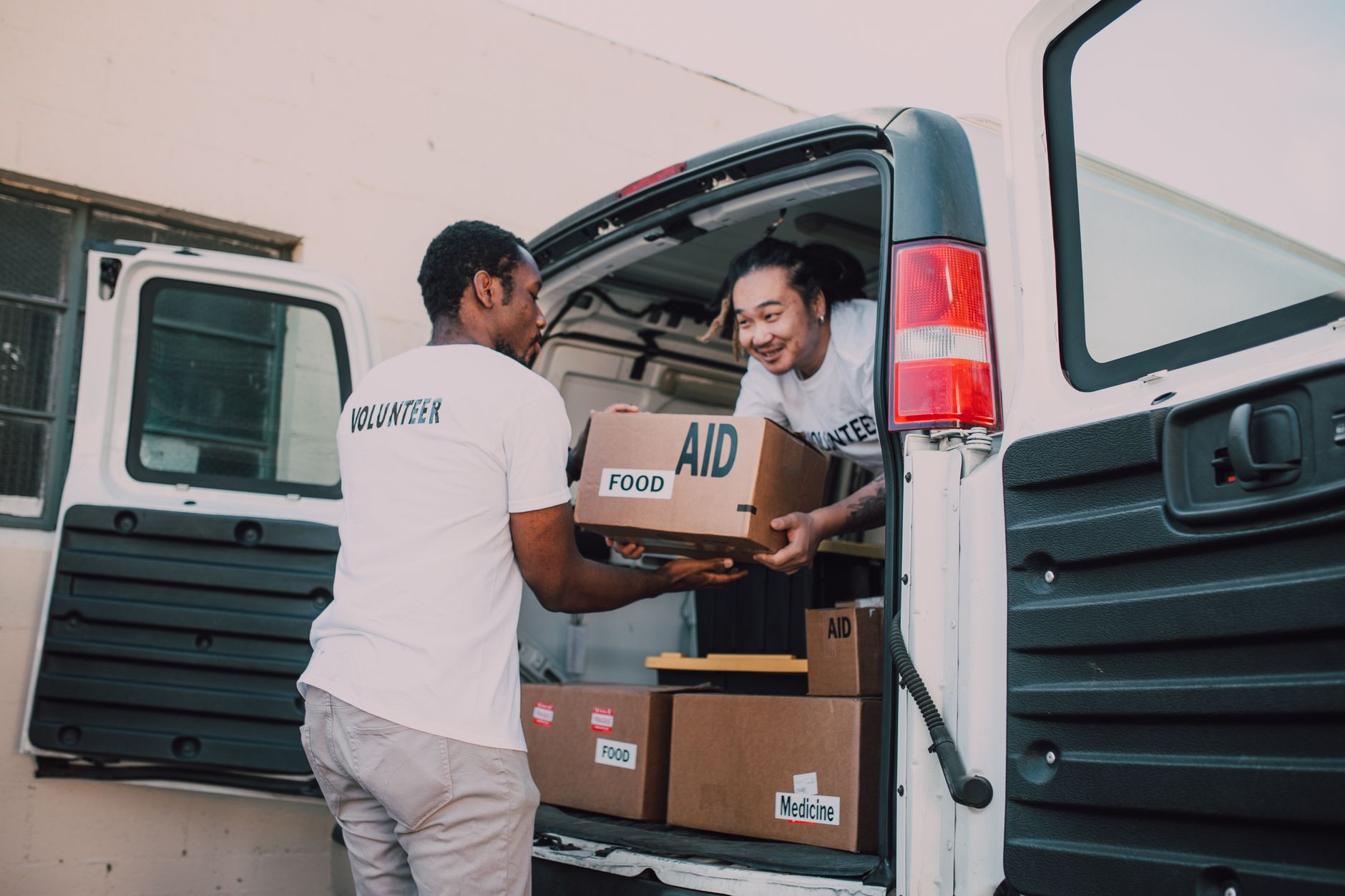
The Man Who Drove the Harvest Share
How I got the truck on the road
In the spring of 2009 an old fellow named Elroy Quam died of a heart attack in his garage in Alma. Elroy had been driving the church’s food run since the church had one, a one-ton Chevy with a bad clutch, every Friday up to Eau Claire and back with whatever the food bank would give a little basement pantry in a town of seven hundred people.
At Elroy’s funeral lunch, I was standing in the church basement with a ham sandwich when Irene Kopp came and stood next to me. She was forty-five then, with a clipboard, which she carried everywhere like a purse.
“Ron, you drive a plow for the county,” she said. “You can drive a truck.”
“I can drive a plow,” I said. “That’s a different thing.”
“Can you come this Friday? Just this one Friday. The cooler at the food bank has a pallet of milk with our name on it, and if nobody picks it up Friday they give it to Menomonie.”
That was the whole conversation. I said yes because I could not think of how to say no to a woman holding a clipboard at a funeral. I was fifty-three years old. I worked four days on the county highway department, and my Fridays were my own.
I drove up that Friday in my 2004 F-250 with a topper I had bought used. I loaded eleven hundred pounds of dairy and bread and dented canned goods, and I carried it into the basement of Bethany Lutheran myself, because there was no one else in the basement to carry it.
I thought it was one Friday. I thought they would find somebody.
They never did, and after a while I stopped expecting them to. It became a fact about my Fridays, like the weather, that I would be on Highway 37 before the sun came up.
The ledger
I keep a ledger. Lenore says I was born with one in my hand.
It is a green cloth-bound book with a red spine, the kind you can still buy at the farm store if you ask. I started it that first Friday because I like to know what I have done. On the left page, the date and the pounds. On the right, the odometer going out and coming back, and the gas.
By the end of the first year, the ledger said I had hauled forty-one thousand pounds. I wore out one pickup and then a second. The third is the one in my yard today, with a hundred and ninety thousand miles on it, a good half of them the same sixty-one miles up and the same sixty-one back.
When I retired from the county at sixty-two, I added Tuesdays. Nobody asked me to. The need had grown, and there was a Tuesday load at the dock that was going to the dump if no one came for it, and I had nothing but time.
Lenore did not say anything about that. She packed me a lunch the first Tuesday, the way she had every Friday for nine years, and set it on the seat of the truck.
“You don’t have to be the only one,” she said.
“I know I don’t.”
“Do you?”
I put the truck in gear. That is how I answer most questions.