The Casket Ottis Built for Arlis
“Arlis’s granddaddy’s barn,” he said, when I asked him where it came from. “Nineteen ninety one.” I remembered it going down. A storm folded it flat as a hymnal one Sunday afternoon, and the next Saturday Arlis stood in his field with a pry bar and told me every board in it was too good to burn.
The county sent a man to haul off the wreck. Arlis ran him off. The rest he told Ottis could have if he’d carry them. Ottis carried them, and nobody said another word.
He measured twice, then three times. The next afternoon he took his folding rule to Arlis’s house, and when he asked Arlis to lie flat so he could run it from heel to crown, Arlis said, “Don’t flatter me,” and Ottis said, “I’m rounding up,” and Janelle, in the doorway, put her hand to her mouth to keep from laughing, and then to keep from the other thing.
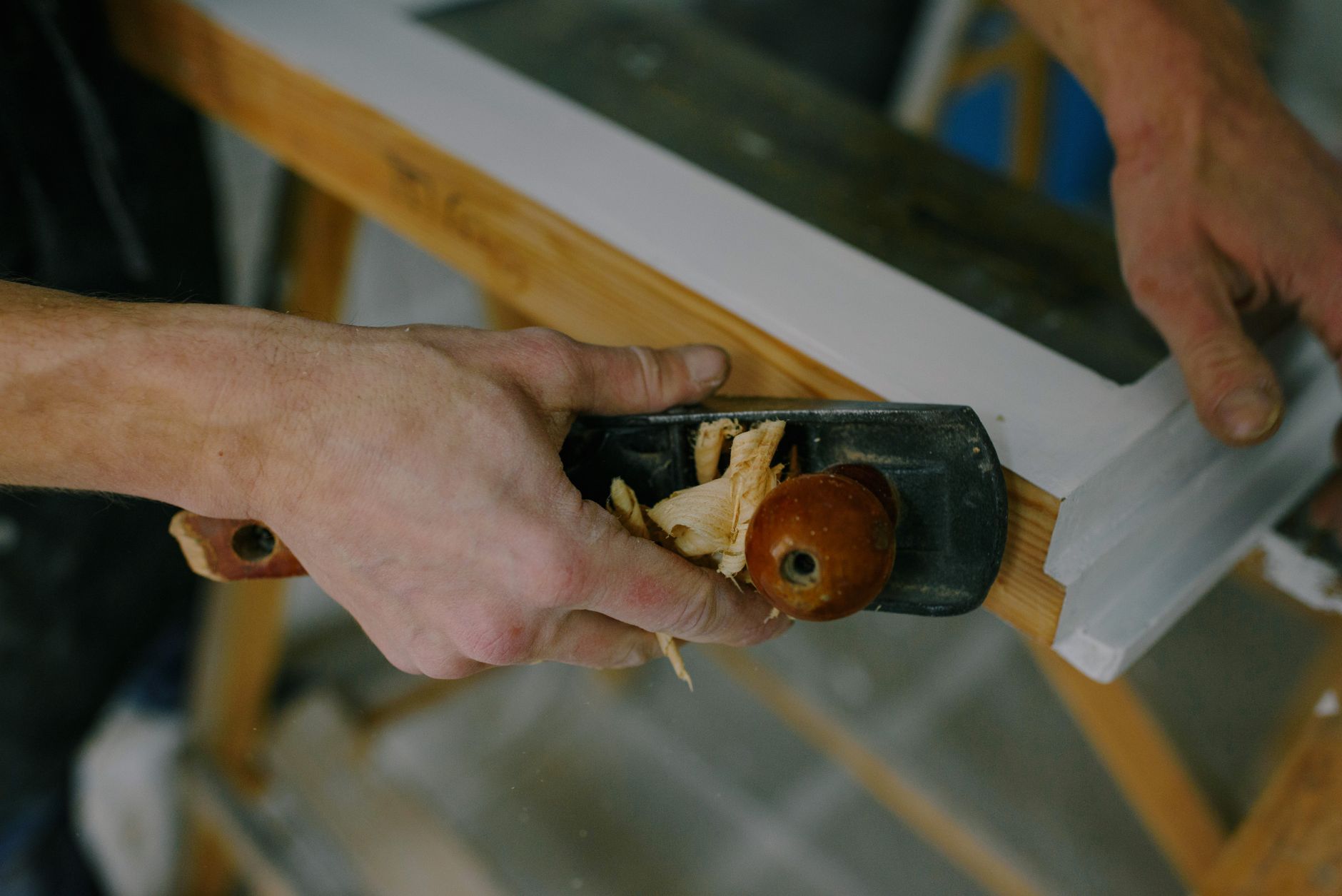
I watched him run a hand plane down a board that had been a barn rafter, and a curl of heart pine rose off the blade thin as a ribbon and dropped to the floor.
It smelled like honey and pepper. Under the dark outer skin was a deep amber I had never known was in that wood, as if the whole barn had been saving it.
Every afternoon at two o’clock he washed his hands at the utility sink, put on a clean shirt, and drove to the Tidwell house to sit by the bed until Darla or Janelle shooed him out for supper.
On the fourth afternoon I went with him and stayed in the truck with a book, in the Tidwell driveway. It struck me that I was in the seat he used to sit in, and the thought was so strange I put the book down. Then I went in.
They were not doing anything. That was what undid me. Arlis was propped on three pillows with the afghan his mother crocheted pulled to his chest, and Ottis was in the straight chair at his elbow, and the television was on with the sound off.
They sat like two old dogs on a porch. Every few minutes one would say a thing. “That fella’s got a bad knee.” “Always did.” “Janelle’s trying to get me to eat a Popsicle.” “Eat the Popsicle.”
It was the sweetest quiet I have ever heard, and for six years I had believed I would never hear it again.
On the seventh day, Ottis ran into trouble.
He called me out to the shop around eleven in the morning, which he never does. He was standing at the bench with a side panel clamped in the vise, and his face was an odd color. At first I thought it was his heart, and my own went cold.
I looked at the corner joint he was staring at. A dovetail cut by hand, so close you could not slip a playing card between the tails.
“I know it’s perfect.” His voice cracked on the second word, and he stopped.
He stood with his hands flat on the bench. In forty six years of finish carpentry, I never heard him call anything he built more than all right. And here he was, looking at the finest joinery of his life.
“I’ve never made anything I was scared of,” he said. “I’m scared of this.” Then, very quietly, “If I get it wrong, it’s the last thing I’ll ever get to do for him.”