The Pinewood Derby in Our Hayloft
I want to be honest that I thought about going, just to sit in the bleachers so nobody could say we ran off, and I decided my pride was not worth my son’s face.
Instead, at eight o’clock, Dad was up in the hayloft with a tape measure and a carpenter’s pencil behind his ear, and Carter was right behind him in his snow boots and his Wolf cap.
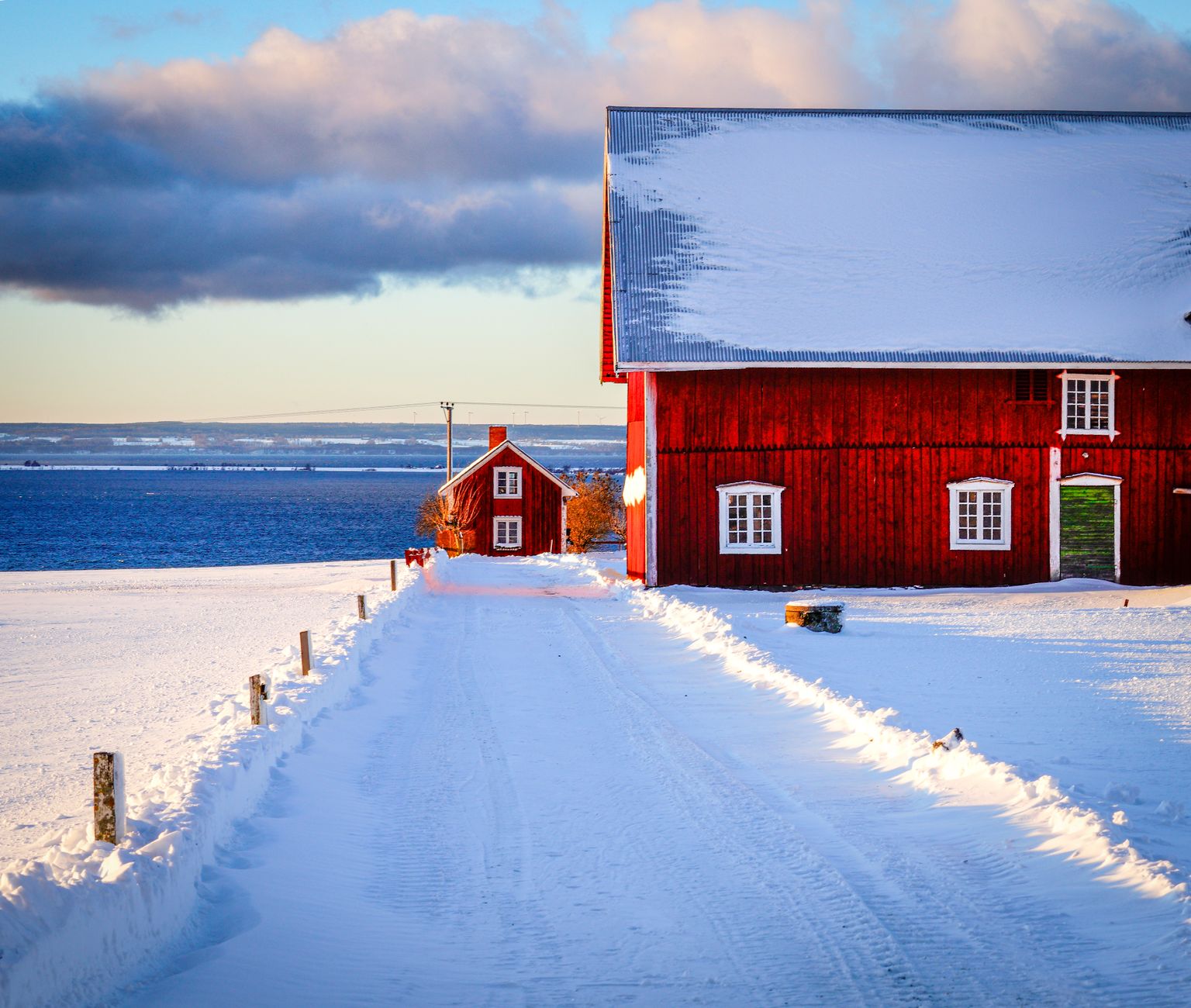
Our barn is older than my father. His grandfather built it in 1916, and when Dad was a boy they put up loose hay in it.
There is a wide plank ramp inside that runs from the loft floor down to the main floor, built for sliding bales and rolling down feed.
Nobody has slid a bale down that ramp in twenty years.
But it is good solid oak, it has a nice even drop, and it runs about thirty feet from the top to where the planks meet the concrete.
Dad stood at the top and looked down it.
Then he took a marble out of his coat pocket, I have no idea why he had a marble, and set it at the top and let it go.
It rolled all the way down, straight as a string, and kept going across the barn floor until it hit a straw bale. Dad nodded like the barn had answered a question.
“A regulation track runs about thirty-five, forty feet,” he told Carter. “Steep at the start, then a long flat run at the bottom where the fast cars pull away. This old ramp’s about as close as you’ll get without buying one.”
“Can we build it today?” Carter asked.
“We can start it today,” Dad said. “We’ll build it right, or we won’t build it. Go get me the big square off the pegboard.”
They worked on that track every day for a week. Carter went to school in the mornings, and I went to work at the front desk, and Dad worked in the shop alone until three thirty.
Then the bus dropped Carter at the end of the lane, and he ran the whole way to the barn.
Dad ripped sheets of three-quarter plywood into long strips on the table saw for the lanes. Two lanes, side by side, each one a little over a foot wide.
Then he ripped thin strips of poplar for the guide rails that run down the middle of each lane.
A Pinewood Derby car does not steer. It rides with its wheels on either side of that little raised strip, and the strip keeps it straight.
If the strip is crooked or too tall, the car bumps and slows down. Dad measured those strips with calipers.
Carter’s job was sanding. Every joint where one piece of plywood met the next one, he sanded smooth, with the same block and the same sandpaper he had used on his car.
Dad would run his palm over each joint after, and then nod, and Carter would move on to the next one.
“You can’t have a lip there,” Dad told him. “Even a little one. A car hits a lip, it hops, and it loses a tenth of a second. Feel that? That’s how smooth it’s got to be.”
Carter felt it. He would close his eyes and run his fingers over the joint like he was reading it.
I watched them from the barn door one afternoon, the two of them bent over that long strip of plywood with the light coming in, and I had to go back to the house for a minute.