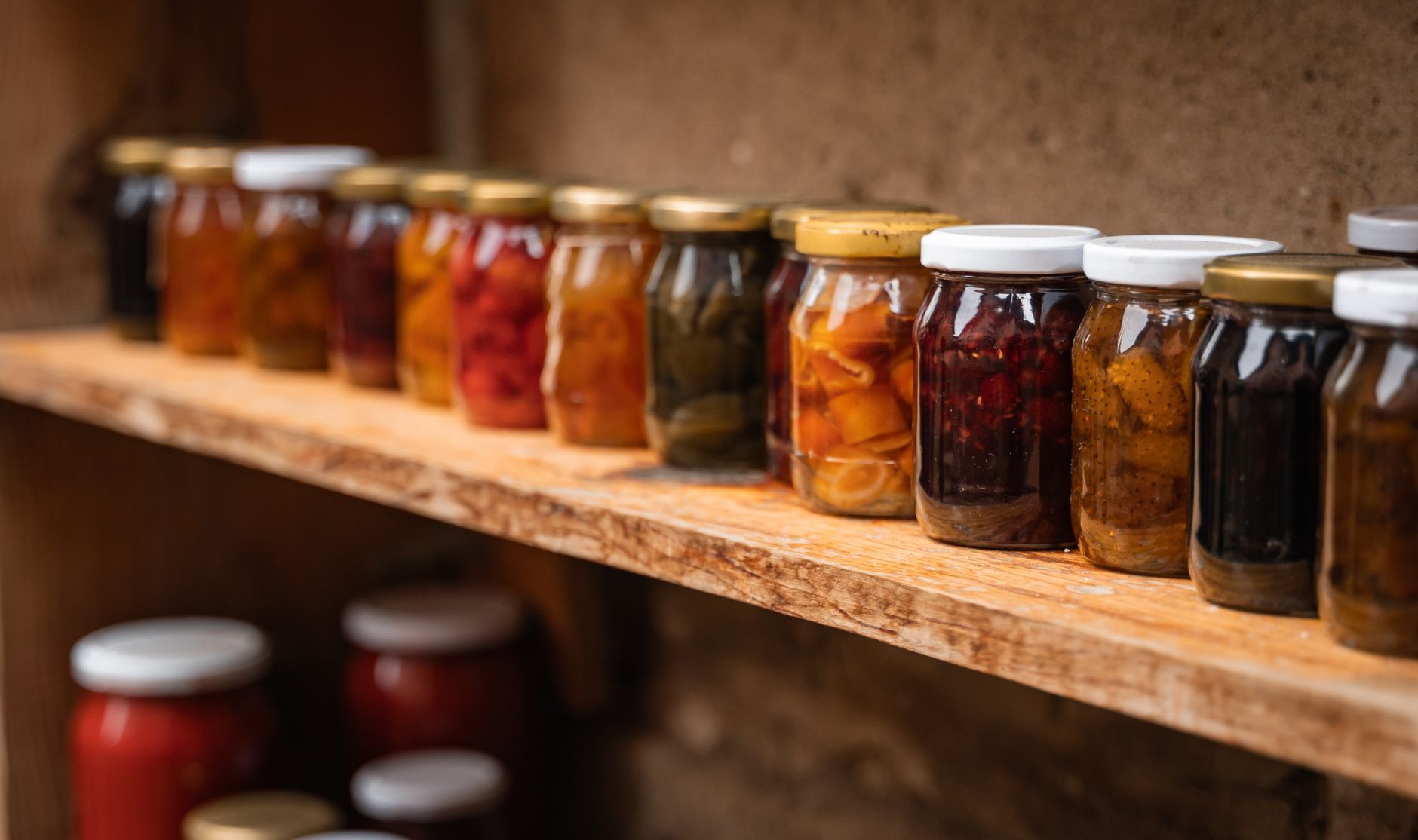
The Jars I Canned for the Food Shelf
She was so hurt she did not speak to me for a week. She said, “I’ve been canning since before you were born, and I never killed anybody.”
And I said, “Mom, you got lucky.” And that was the wrong thing to say, and I knew it the second it was out of my mouth.
So lying there in the dark, I had to admit that I had done to my own mother very nearly what Ashley had done to me.
The difference was that I was right about the beans, and Ashley was wrong about mine.
I got up at three and went down to the kitchen and made a cup of tea and sat at the table and prayed.
I asked God to take the mad out of me, because I did not want to carry it around, and I did not want my grandchildren to grow up with it in the house.
I also asked Him what to do with all the empty space in my basement where those jars were supposed to come from next year. That part, it turns out, He answered faster than the first part.
Two days later I drove past the county food shelf on my way home from the school. It sits in the old implement dealer’s building on the highway, with the faded green paint still showing under the white.
That day there was a piece of poster board taped inside the front window. Somebody had written on it in blue marker, in big careful letters. We need canned vegetables. Thank you.
I pulled in and went inside. Barb was at the front table sorting a box of cereal.
Barb Hanson and I were in 4-H together, and she has run the county food shelf for eleven years, mostly for no pay.
“Marlene Fritz,” she said. “What brings you in on a Thursday?”
“Your sign,” I said. She took me by the elbow and walked me back to the vegetable aisle.
Three cans of corn. Two cans of beets. One can of creamed peas with a dent in the side.
That was the whole wall. The rest was bare metal with a little dust where the cans used to be.
“It’s always like this in September,” Barb said. “Everybody gives at Thanksgiving and Christmas. Then it dries up, and nobody thinks about us till November.”
“How many families?” I asked.
“Around a hundred and sixty a month right now,” she said. “Some of them are farm families, Marlene. Young ones. You’d know their folks.”
I stood there looking at that can of creamed peas.
“Barb, do you take home-canned?”
She looked at me for a long moment. “Most food shelves won’t,” she said. “The big ones that get from the food bank, they can’t. We’re not on that. We’re just the churches and the county, and the board decided a long time ago.”
She told me the rule. She only takes home-canned goods from people whose canning she has seen with her own eyes. Every lid has to say what is in it, the date, and how it was processed.
“I’ve seen yours,” she said. “I judged the open class at the fair with you three years running. I know how you do it. If you bring it, I’ll take it, and I’ll put it on the shelf the same day.”