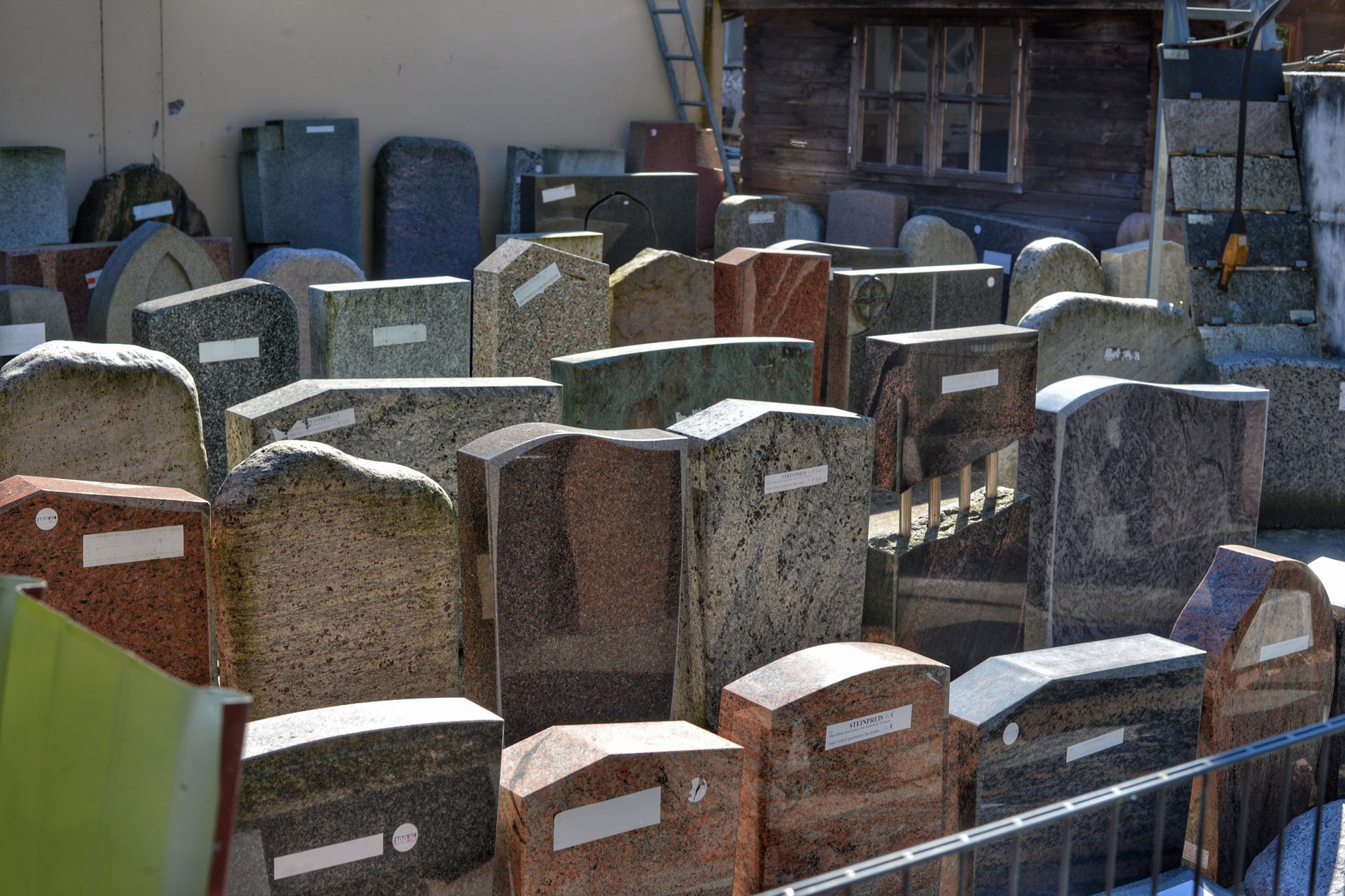
The Word Missing From His Headstone
“I’ll call Kim,” he said.
She came in forty minutes. She had to find someone to cover the front desk at the dentist’s, and I heard her car before I heard her.
Her heels came quick across the concrete, and then the swinging door pushed in and there she was, in her blue office scrubs with a lanyard still around her neck, her cheeks white.
“Mom? What happened? Are you all right? Del said there was a problem with the stone, he didn’t say you were here. Is it the color? Is it the setting date? I can fix it, whatever it is.”
“It isn’t the color, honey,” I said.
“Then what?”
I did not answer. I only stepped aside from the bench so she could see the papers.
“Start with the newspaper,” I said.
She picked it up with both hands, and I watched her read.
It would be easy for me to tell you that I saw guilt. But what I saw first was confusion, the plain kind, like a girl handed a form in a foreign office. Her lips moved on the last line.
“Roy Jr.,” she said. “Fourteen, at home.”
“That’s your father-in-law. That’s the year his father died.”
“I know his father died young. Scott told me. I didn’t know that.”
“Kim,” I said. “Look at your own paper.”
She went close to the stencil. She read the left-hand name, and she read it aloud, very small.
“Roy E. Tisdale.”
Then I held out the discharge form, and she read the first line of it in the typing the color of tea. Roy Eugene Tisdale Jr.
She read to the bottom. She read Specialist Four, and truck driver, and the name of the long road.
“I didn’t know he was a Junior,” she said. Her voice cracked clean in half. “Nobody ever said it. I have been in this family eighteen years and I never once heard anybody say Junior.”
“He was Junior on every invoice he ever signed.”
“I never saw his checkbook.”
“No,” I said. “You wouldn’t.”
“The funeral home form said Roy E. Tisdale. The hospital said Roy E. Tisdale. I put what was on the papers. And Scott said Dad, Roy Eugene, and he didn’t say Junior either.” She turned toward the door. “Scott told me Vietnam, but Dad never talked about it. I thought if he’d wanted it on there he’d have said.”
“I’m sure you did think that.”
“I was trying to take one thing off you. That’s all. You were so sick and so alone and everything was so much money, the funeral home was nine thousand and then the stone, and I thought, she’s counting every dollar. So I kept it to the name.”
“You told me you would not pay for words nobody reads,” I said.