The Free Reunion at the Lake
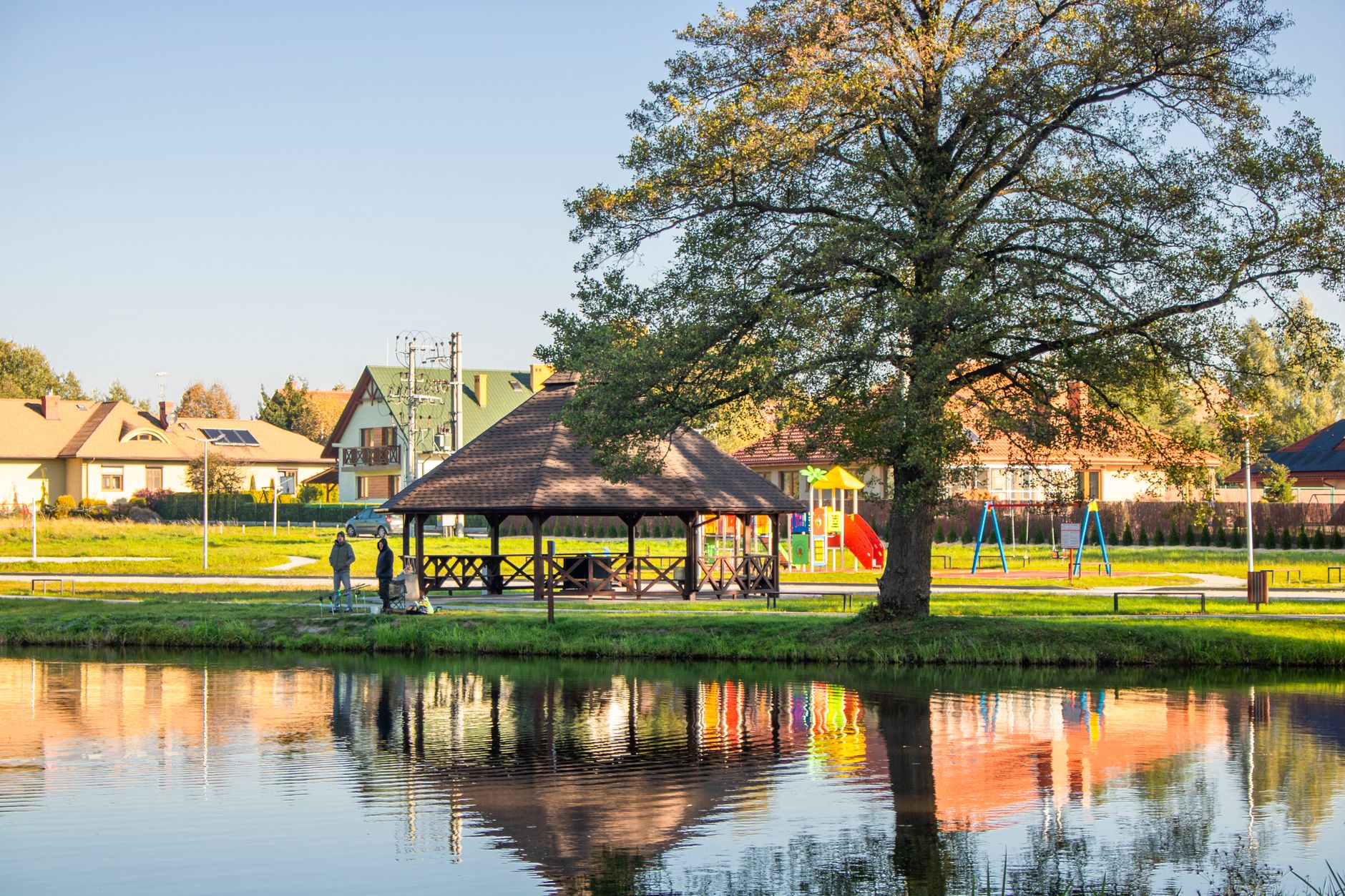
Every year of my childhood, the family photo was taken at the end of the day from the end of the dock, looking back at the pavilion and the hill. My grandfather took it with his Kodak for twenty years, then one of the uncles took it, then nobody did, for a while.
My mother had brought her old camera. Not a phone. A real camera, the one she bought at the Kmart in St. Cloud in 1994 and used for every birthday and graduation since. She had bought a new roll of film for it at the drugstore that week.
“I’ll take it,” she said. “Somebody get Edna’s chair to the middle. Front and center.”
Josh carried Edna’s lawn chair down to the grass at the foot of the pavilion and set it in the middle. Sixty people arranged themselves around her, the tall ones in the back, the kids in front sitting cross-legged in the grass, the babies held up in arms.
Tracy tried to stand at the edge. Edna saw her and pointed at the grass next to her chair without a word. Tracy came and knelt there, next to Edna, and Edna put a hand on her shoulder.
My mother walked out to the end of the dock with her camera, the same dock she had stood on in 1961 in a matching swimsuit, holding her sister’s hand. She turned around and looked back at all of us through the viewfinder for a long time.
“Everybody squeeze in,” she called. “Dale, take your hat off, nobody can see your face.”
“That’s the idea,” Dale called back, and everybody laughed, and my mother took the picture right then, in the middle of the laugh.
She took four more after that, to be sure. But it was the first one we framed. Everybody laughing, Edna in the middle in her white sun hat, Tracy beside her with her face still red from crying, and the lake behind my mother’s back reflected in the eyes of the whole family.
I didn’t know how much I needed to see my mother out on that dock until I saw it. She stood very straight. She looked about thirty years old.
When she came back up the dock she was crying again, and she didn’t pretend it was allergies this time. She just put her arms around me and held on.
“Thank you, honey,” she said into my hair. “Thank you for this.”
“You’re welcome,” I said. “Next year you’re bringing the ham balls.”
“Next year I’m bringing the ham balls,” she said.
We packed up a little after eight, with the sun going down orange over the far shore. Josh and two of the cousins scrubbed the grills. I swept out the pavilion myself, every corner, because I wanted that fifty-dollar deposit back on principle.
Tracy stayed to help. She didn’t say much. She stacked the folding chairs and carried trash bags to the bin and wiped down every table with a rag and a bucket of lake water.
When the last car was pulling out, she came and stood next to me in the parking lot. The mosquitoes were coming out. Somewhere a loon was calling again.
“I’m sorry, Amy,” she said. “You could’ve blown this whole thing up. You could’ve put it all in the family group. Everybody would’ve been on your side.”
“I didn’t want sides,” I said. “I wanted Mom and Edna at the lake.”