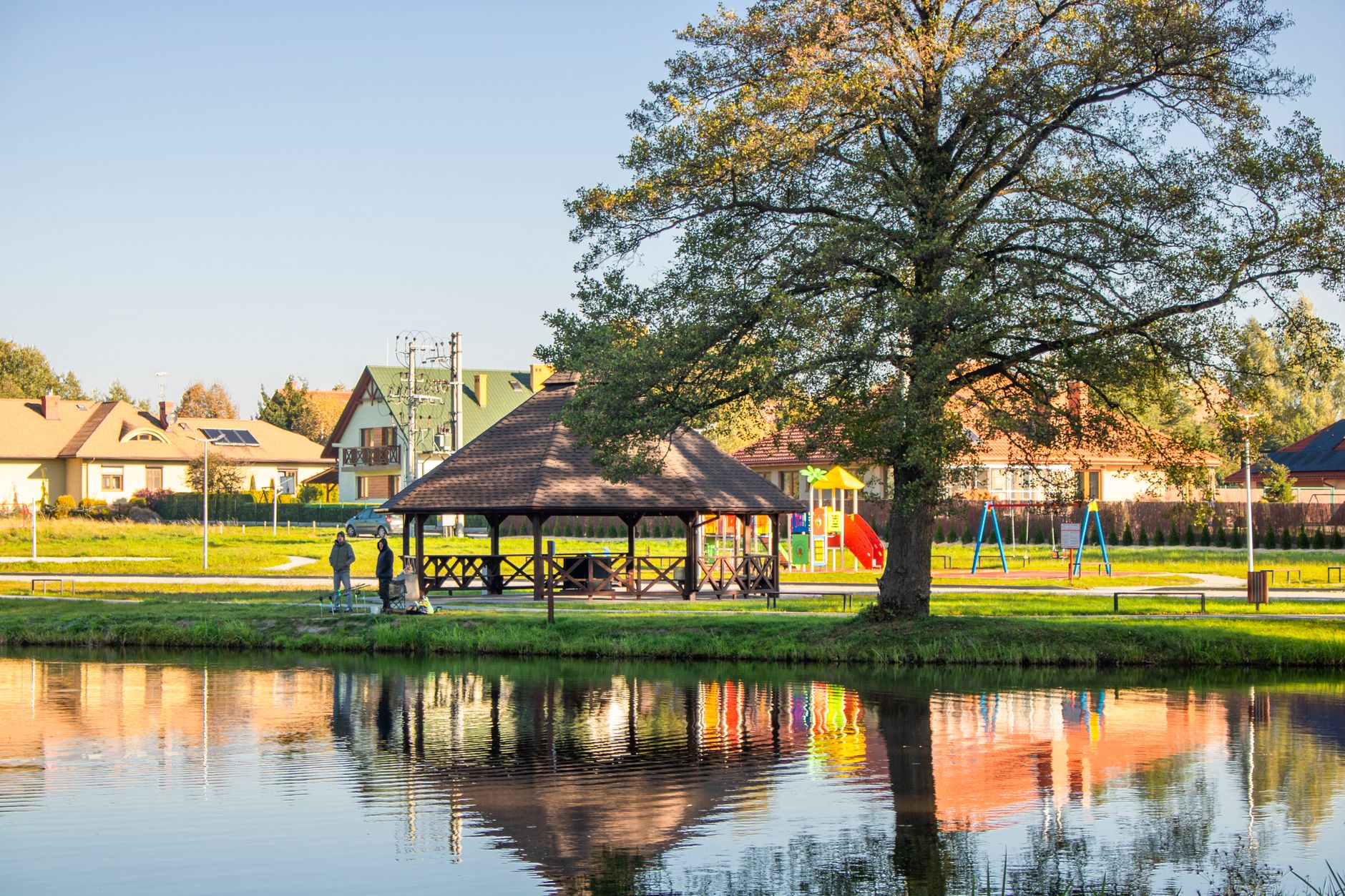
The Free Reunion at the Lake
“Tracy Ann,” she said. She did not raise her voice. Edna never raised her voice. “Come sit with me.”
Tracy came. She walked the length of the pavilion with everyone watching and not watching at the same time. She pulled a cooler over and sat on it, so close to the lawn chair that her knees almost touched Edna’s.
Edna did not turn a page.
“Before we look at one picture,” she said, “you tell me where that money went.”
Tracy’s plate shook in her hands. She looked at me, then at my mother, who had come over from the dessert table and stopped a few feet away. Then she looked back at Edna.
I started to get up, to give them their privacy. Edna put her hand on my wrist without looking at me, and held it there. So I stayed.
Tracy opened her mouth and closed it. Then she set the empty paper plate on the grass beside the cooler, very carefully, like it was something that could break.
“Doug’s business went under,” she said. “Three years ago this spring.”
Her voice was so low I had to lean in. Doug is her husband. He’d had a little construction outfit for fifteen years, decks and garages and roofs, three trucks with his name on the doors.
“He took a big job for a man in Brainerd,” Tracy said. “Built the whole thing. The man never paid. Forty-one thousand dollars. Doug had already paid the lumber yard and the crew out of our savings. By April we were two payments behind on the house.”
Nobody in the family had known. I hadn’t known. I had seen Doug’s trucks go up for sale that spring and thought he was getting new ones.
“I didn’t tell anybody,” Tracy said. “Mom was gone. I couldn’t tell Dad, it would’ve killed him. Doug was so ashamed he couldn’t get out of bed some days. And the reunion was coming, and I was the one who did all the calls anyway.”
She stopped. She put both hands over her face, then took them away.
“So I put a fee on it,” she said. “I told myself it was a fee for my work. All those calls. The reservations. Standing at the store. I told myself everybody paid for a wedding planner, why not me. The money that first year paid our mortgage in August and September. It kept us in the house.”
Edna said nothing. She just kept looking at her.
“And the second year Doug was working again, for somebody else, and we were catching up, and I did it anyway,” Tracy said. Her voice cracked on the word anyway. “Because it was easy. Because nobody said anything. And this year I didn’t even tell myself it was a fee anymore. I just did it.”
She looked at my mother then. “I saw you didn’t pay, Aunt Joan. I knew why. I knew exactly why. And I left it up anyway.”
My mother did not say anything. Her mouth was pressed into a thin line, and her eyes were wet.
“I’m sorry,” Tracy said. “I’m so sorry, Aunt Edna. I don’t even know what you must think of me.”
Edna was quiet for a long time. Down at the lake a boy was yelling at his sister to give back his noodle. The grills hissed. Somebody laughed at the croquet game.
“I think,” Edna said finally, “that you were scared. And I think you did a wrong thing because you were scared, and then you kept doing it because it was easier than stopping.”