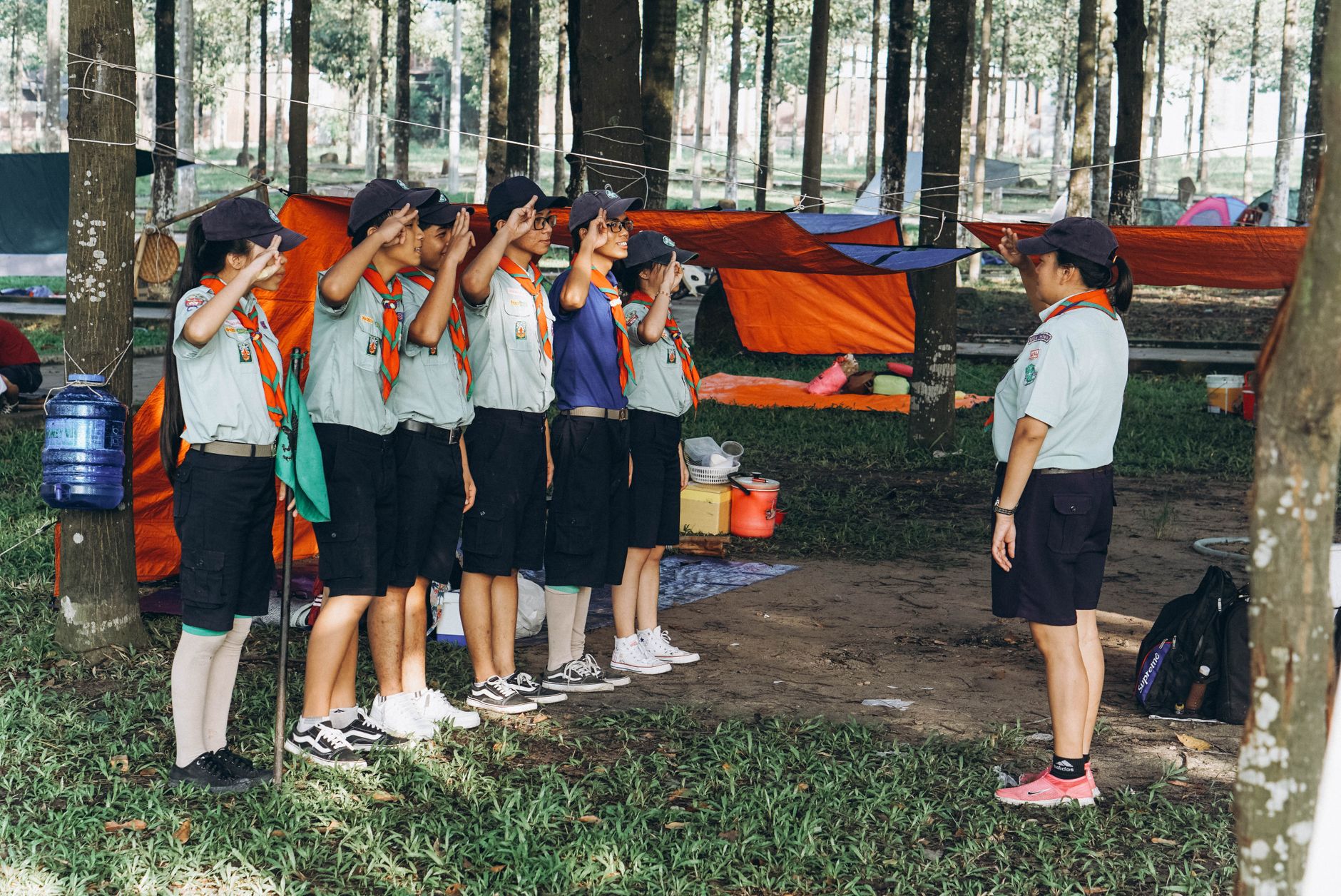
The Boy Who Earned the Campout
“The pastor, then.”
“Pastor Dave is Orrin’s cousin by marriage. He’d say a gentle word, Orrin would nod, and the only person who’d have a hard week would be Jonah.”
Brett rubbed his face with both hands. I did not have an answer for him. I stood there with the dishwasher running and looked through the door into the garage, at the shadow box on its shelf.
“What did the oath mean to you?” I said.
“What?”
“When you said it. At twelve. What did you think you were promising?”
He gave a short laugh, the kind a man gives when he has been caught off guard. “I thought it meant I had to be nice and not lie.”
“And the part about helping other people at all times?”
“That’s the whole thing, Trish. That’s what it’s for.” Then he stopped, and his hands went still on the table. “Orrin taught me that. A kid named Dewey got a blister the size of a half dollar, and Orrin made all of us stop for forty minutes to wrap one foot. He said the hike doesn’t end at the top. It ends when everybody’s down.”
I let that sit.
“Who else in town was a Scout?” I said.
I did not call a single mother. I did not post a word online. I asked the fathers one question, in the same words every time, and I asked each man alone.
Ross Bartel was first, Friday morning. He owned the hardware store on the square, and he was cutting a key for a woman when I came in. He had made Eagle in 1994, and the photograph of it still hung in his front office, a thin boy with a medal on a ribbon and the mayor’s hand on his shoulder.
I waited until the woman left.
“Ross, I’m trying to remember something, and you’d know. When you were in Scouts, what did the oath mean to you?”
He held the key blank and looked at me. He is not a man who cuts a conversation short, and he knew me well enough to hear what was underneath.
“Is this about Jonah?”
“I’m asking about you.”
He put the blank down and took off his glasses and wiped them on his shirttail. That is what Ross does when he is working out how much to say.
“I was the slow one,” he said. “Not on a bad foot, nothing like Jonah. I was a heavy kid, and I turned my ankle crossing a creek on a winter campout when I was thirteen. Mr. Pace, the scoutmaster before Orrin, he didn’t make a production of it. He just walked behind me. Two miles back to the cars, and he stayed about ten feet back the whole way.”
“That sounds kind.”
“It was kind. I hated it.” He said it without any heat. “Every kid in that line knew why the scoutmaster was in the back. Nobody asked me. I’d have said I wanted my buddy, Chad, and not a grown man breathing behind me. I think about that when somebody’s helping somebody. Ask first.”