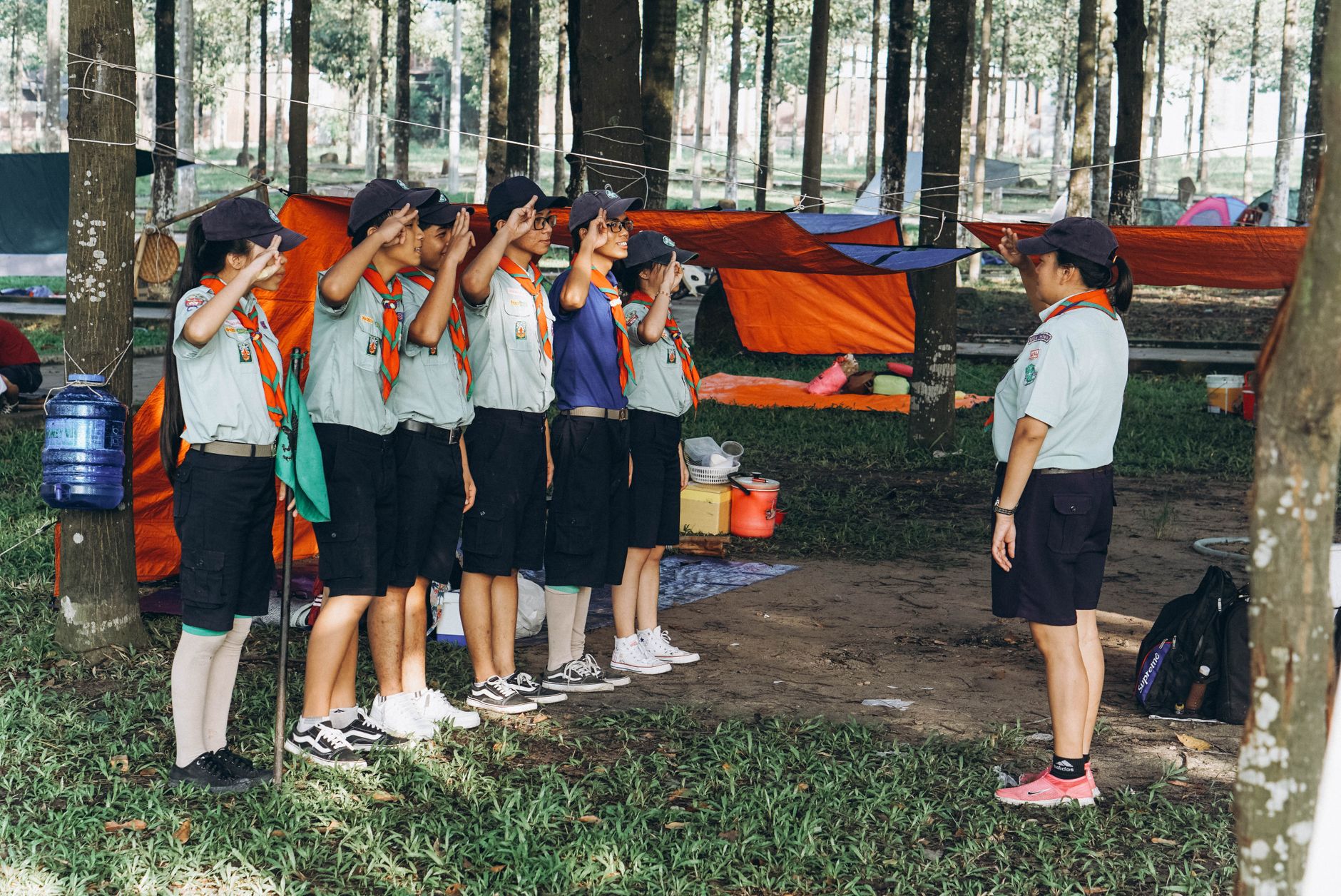
The Boy Who Earned the Campout
I crossed the grass to him. His face was perfectly calm.
“Mom. It’s okay.”
“It is not okay.”
“Please don’t make it a thing.” He shifted the sleeping bag. “Please don’t be the mom who makes it a thing.”
I looked at that bag. He had rolled it that afternoon, tight as a loaf, and tied it off with a square knot he had checked from both ends. He had been rolling and unrolling it for two weeks.
“Okay,” I said.
He put the bag in the back seat himself. Then he buckled up and looked out the windshield at the church sign, and we did not speak until we passed the Kwik Trip on Main.
“I paid him in cash,” Jonah said. “He wrote it on the list. I watched him.”
“I know you did.”
That was when I pulled over. I put the car in park on the gravel shoulder by the elevator scale and sat there with my hands on the wheel, and my son reached over and patted my sleeve, twice, the way I pat his shoulder at the dentist.
“It’s okay, Mom,” he said again.
A boy of 12 had just been told he would slow people down, and he was the one settling me.
Brett came in from the county highway shop at ten to eight, still in his orange vest, smelling of diesel and wet culvert. He was a Life Scout in that troop in 1996. He kept the shadow box on a shelf in the garage, with his merit badge sash and an Order of the Arrow pin and a photograph of a skinny kid with big ears.
I told him at the kitchen counter, quietly, because Jonah’s door was shut and Jonah hears more than people think.
Brett said nothing until I was done. He hung the vest on a chair. Then he took his truck keys off the hook.
“Where are you going?”
“To Orrin’s.”
“Brett.”
“He can’t do that to him.”
“He just did.” I put my hand flat over the keys. “And Jonah asked me not to make it a thing. He wants to be the boy who goes to the meetings. He doesn’t want to be the boy whose dad came over.”
“So we let it stand?”
“I didn’t say that.”
He sat. “Then what? Call the council?”
I had thought about that on the drive. The council office was in Wausau, ninety minutes away. A call would start a process. Orrin would get a letter, and so would the committee, and there might be a meeting with forms. And every Thursday through the winter Jonah would sit in that fellowship hall as the boy who got the scoutmaster in trouble, among boys whose fathers had opinions. Troop 114 was the only troop within thirty miles. It was the only place my son had ever belonged without being asked to explain himself.
“If we report him, Orrin digs in,” I said. “And Jonah carries it.”