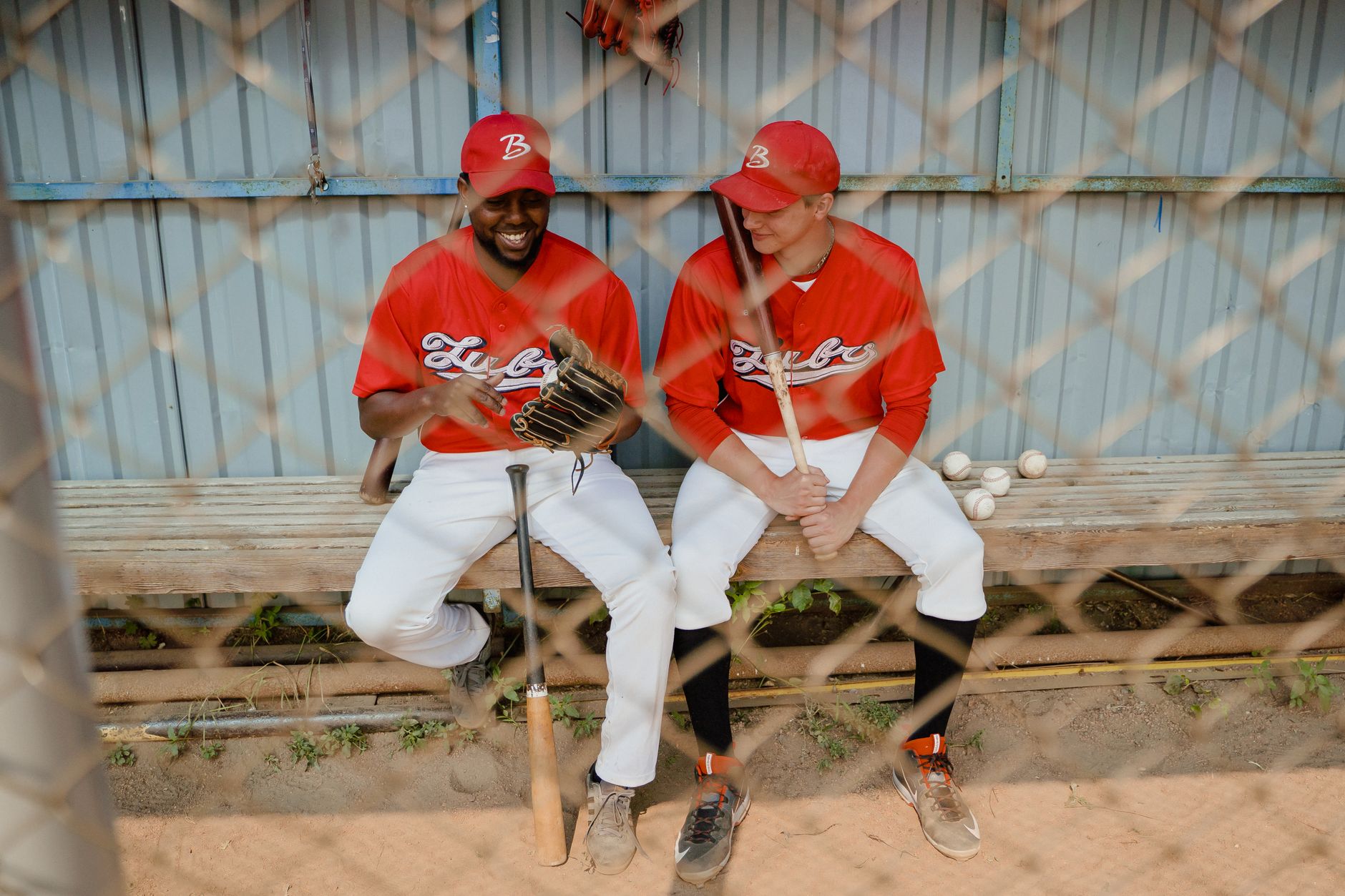
Sunday Dinner Behind the Dugout
Lyle backed his pickup up to the garage door. He had already loaded the folding table from the church basement, two folding chairs, the big orange water cooler, a cooler full of ice and pop and juice boxes, and his little generator.
“You’re bringing the generator?” I said.
“Crockpots have to plug into something,” he said. “You can’t run three of them off the truck. It’s the quiet one. Nobody will hear it behind the dugout.”
I had not thought about that at all. Thirty-four years of Sundays, and I had never once had to think about where the electricity came from.
Lyle had thought about it on Thursday and gone to the shop to fill the gas can.
We drove to Marshall with the crockpots in the back seat between us and the generator riding in the bed.
The corn on both sides of the highway was up past ankle height and very green, and the sky was the clear kind of June blue that makes you forgive the whole winter.
The complex in Marshall has four diamonds laid out like a pinwheel, with the concession stand in the middle. Carter’s game was on the field closest to the parking lot, and his team had the third-base dugout.
I found a flat spot of gravel behind the dugout and inside the fence, out of the walkway, about twenty feet from the bleachers.
Lyle unfolded the table, set up the generator on the far side by the light pole, and ran the cord under the table where nobody could trip on it.
I set the crockpots in a row. I set out the buns, a stack of paper plates, paper towels and the two pans of bars covered in foil. No sign, no jar, nothing anybody could mistake for selling.
It was about ten-thirty. The boys were warming up on the field, throwing long tosses along the foul line.
The smell of the barbecues started drifting out of the crockpots, and I watched three or four boys in the outfield lift their heads like bird dogs.
Nate came around the side of the dugout first. He was helping coach Carter’s team that summer, and he had his clipboard and his sunglasses and the face of a man who had not slept well in a motel bed.
“Mom,” he said. He looked at the table and the crockpots and his dad’s generator and the foil pans, and he took his sunglasses off. “Mom. What is all this?”
“Lunch,” I said. “For after the first game.”
“For who?”
“For whoever’s hungry,” I said. “Both teams. Their folks. Anybody.”
He stood there for a second with his clipboard against his chest. I could see him trying to figure out whether this was going to be a problem.
Whether he was going to have to stand between his wife and his mother at a ballpark in front of twenty-four families.
“Does Jenna know?” he asked.
“No,” I said. “And I’m not here to make a point. I’m here because those kids eat out of a paper boat all weekend, and I’ve got barbecues. That’s all it is, honey. I promise you that’s all it is.”
He looked at me a long time. Then he leaned down and hugged me, hard, and said into my hair, “Thanks, Mom,” and he went back to the field.
Jenna came in from the parking lot about fifteen minutes before game time. She had Maddie by the hand, a big bag over her shoulder, a folding chair under one arm, and her laptop under the other.