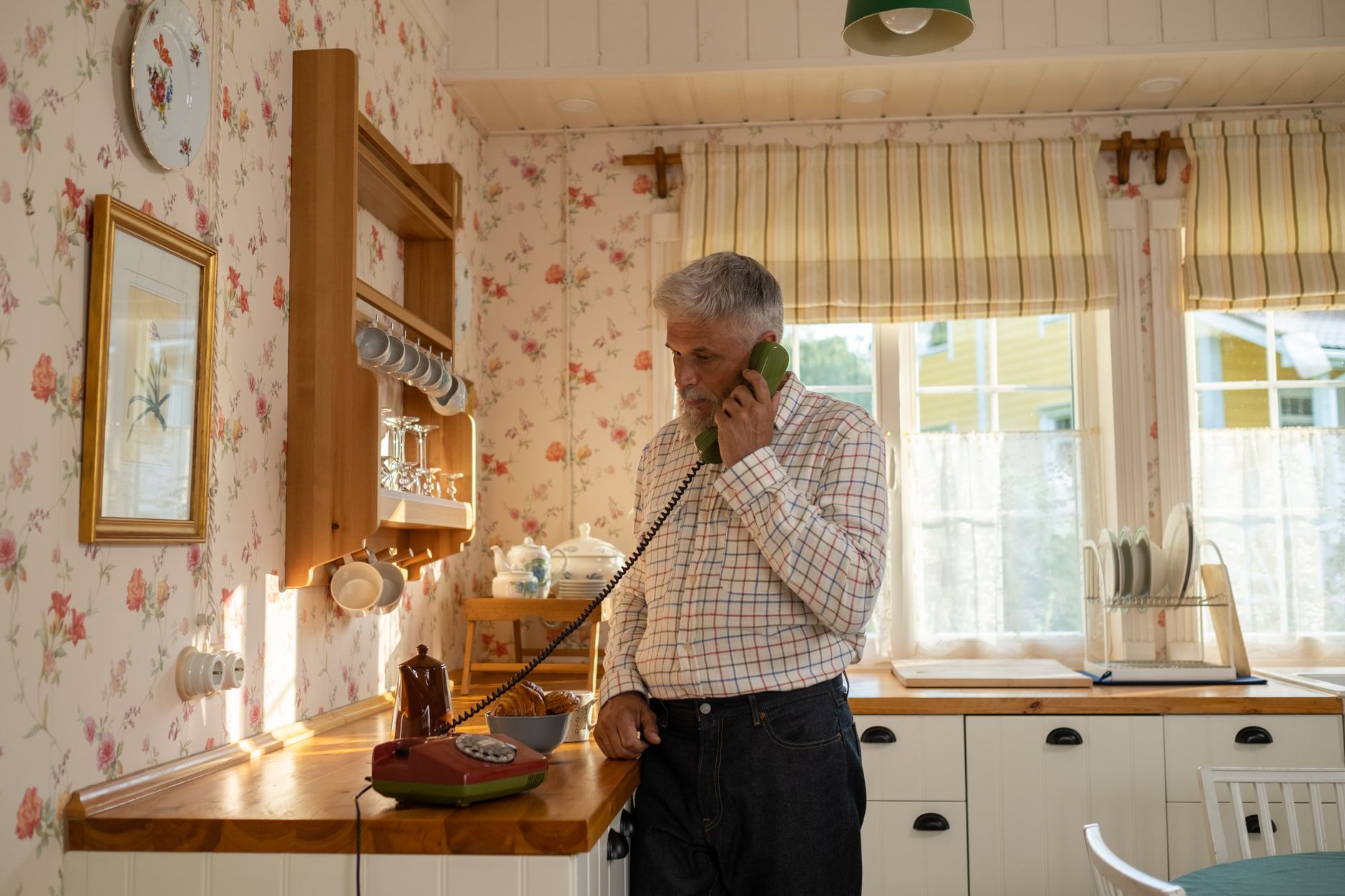
The Wrong Number That Called Every Sunday
I told her I lived in the farmhouse now. Her farmhouse. That the number she had been dialing was her childhood home, still ringing at the end of the same gravel road.
I told her that her sister Pearl had sold that house to my wife and me forty years ago, and had moved into town, and had lived out a good life, a loved life, with friends and a church and Sunday dinners.
I told her that my wife Nadine had been Pearl’s dearest friend for twenty five years, closer than a sister, there at the end, and that Pearl had not died alone or forgotten but held and mourned.
And I told her that Pearl had forgiven her. Long ago. Completely. That she had carried no bitterness to her grave, only a hope that Alma might someday come back.
Then I took out the letter, and I put it in her hands, and I let her read the front of it in Pearl’s own careful hand. For my sister Alma, if she ever comes.
Alma’s hands shook so badly she could not open it. She looked up at me and asked would I read it to her, her eyes were not good, and I said I would be honored.
So I opened my late friend’s letter, written who knows how many years ago, and I read it out loud to the sister it had waited a lifetime to reach.
I will not give you every word. Some of it belongs only to those two sisters and to God. But I will tell you the heart of it.
Pearl wrote that she had been a fool and a proud one, and that the man and the ring were not worth one hour of the sixty years they had lost, and that she had known it for most of those years and been too stubborn to say so.
She wrote that she thought about Alma every single day. That she could not sit in church without reaching for the empty space beside her where a twin should be.
She wrote that if Alma was reading this, then Pearl was most likely already gone, and that she did not want Alma to carry one ounce of guilt into whatever years she had left.
“We were born eleven minutes apart,” Pearl had written, “and I have spent my whole life being the older one, so let me be the older one in this too, and go first, and go holding no anger, so that you never have to wonder. You are forgiven, and you were always, always loved, and I will be watching for you on Sunday mornings for the rest of forever.”
When I finished, neither of us could speak for a while. The sun came through those big windows and fell across the blanket on Alma’s knees and across the photograph of two girls at Easter.
Finally Alma reached out and took my hand in both of hers, the way you take hold of something you are afraid will float away, and she said, “Sixty years I have been dialing in the dark. And the Lord had my answer sitting in a cedar chest the whole time, waiting on a kind man to pick up the phone.”