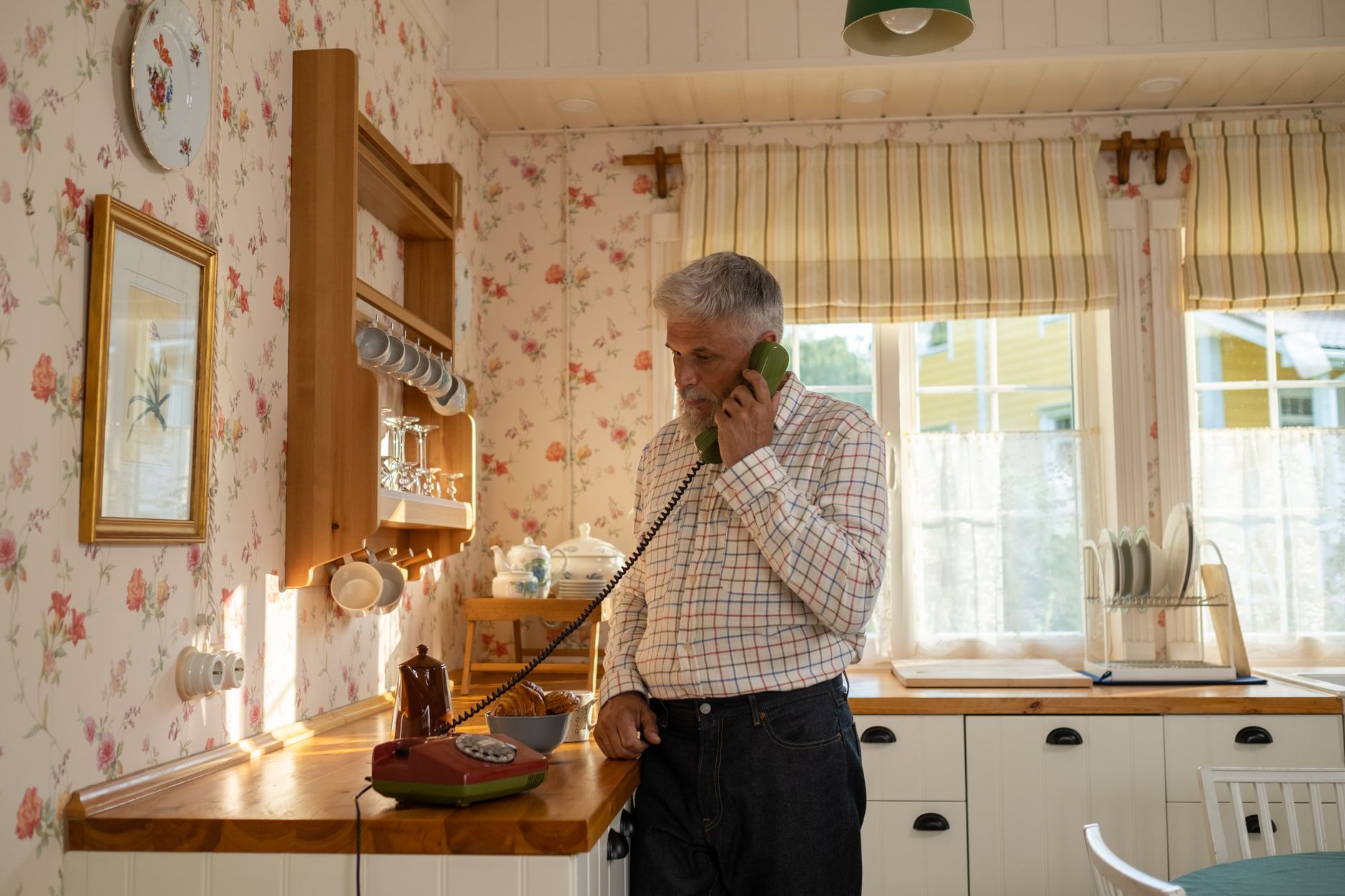
The Wrong Number That Called Every Sunday
She told me they had grown up out there, she and Pearl, two girls in a white farmhouse at the end of a gravel road, with a maple in the yard and a south fence where their mother grew tomatoes.
I had to sit down then, though I was already sitting. I put my hand flat on my own kitchen table, the table that had come with Nadine and me into this house, and I understood what I was hearing, and I could not yet say it out loud.
She was describing my house. She was describing the house I was sitting in. Alma and Pearl had grown up in this farmhouse.
The number she had been dialing every Sunday for a year was the only number she had ever had for the home of her childhood, scratched in an address book sixty years old, and that number had stayed with this house and this line all this time, and it rang now in my kitchen.
I did not tell her yet. I could not. My voice would not have held. I asked her, gentle as I could, what had happened between her and Pearl.
She told me. It was the oldest, saddest kind of story, the kind that only happens between people who love each other too much to bend.
There had been a man, once, when they were young, a man they both fancied, and Pearl married him and Alma did not forgive it, and words were said that could not be unsaid.
Then their mother died, and there was the matter of her ring, a thin gold band with a garnet, and each sister believed their mother had meant it for her, and that fight finished what the first one started.
Alma married her own man, a Dreyer, a good enough man, and moved off to the east, and Pearl stayed on at the farm. And the two of them, who had shared a bedroom and a heartbeat, did not speak again.
Sixty years, she said. Sixty years of Sundays. “We used to walk to church together on Sunday mornings,” she said. “Down that gravel road, the two of us, in our good shoes, at a quarter to noon. That is why I call at noon. That was our time.”
She said she had meant to call Pearl a thousand times over the years and lost her nerve every time. Pride, she said. The Dreyers were proud and the Hollisters were prouder.
But this past year, she said, she had felt her heart getting tired. The doctor had used careful words. And she had thought, I am going to go to my grave not having told my sister I am sorry, and I cannot do that.
So she had dug out the old address book and found the only number she had, the farm, and she had started dialing every Sunday at noon, their time, praying Pearl would pick up so she could say the words before it was too late.
“I know she is likely gone,” Alma said, so quiet I had to press the phone to my ear. “A body knows. But I thought, if I just keep calling at our time, maybe she will hear me somehow. Maybe the Lord will carry it.”