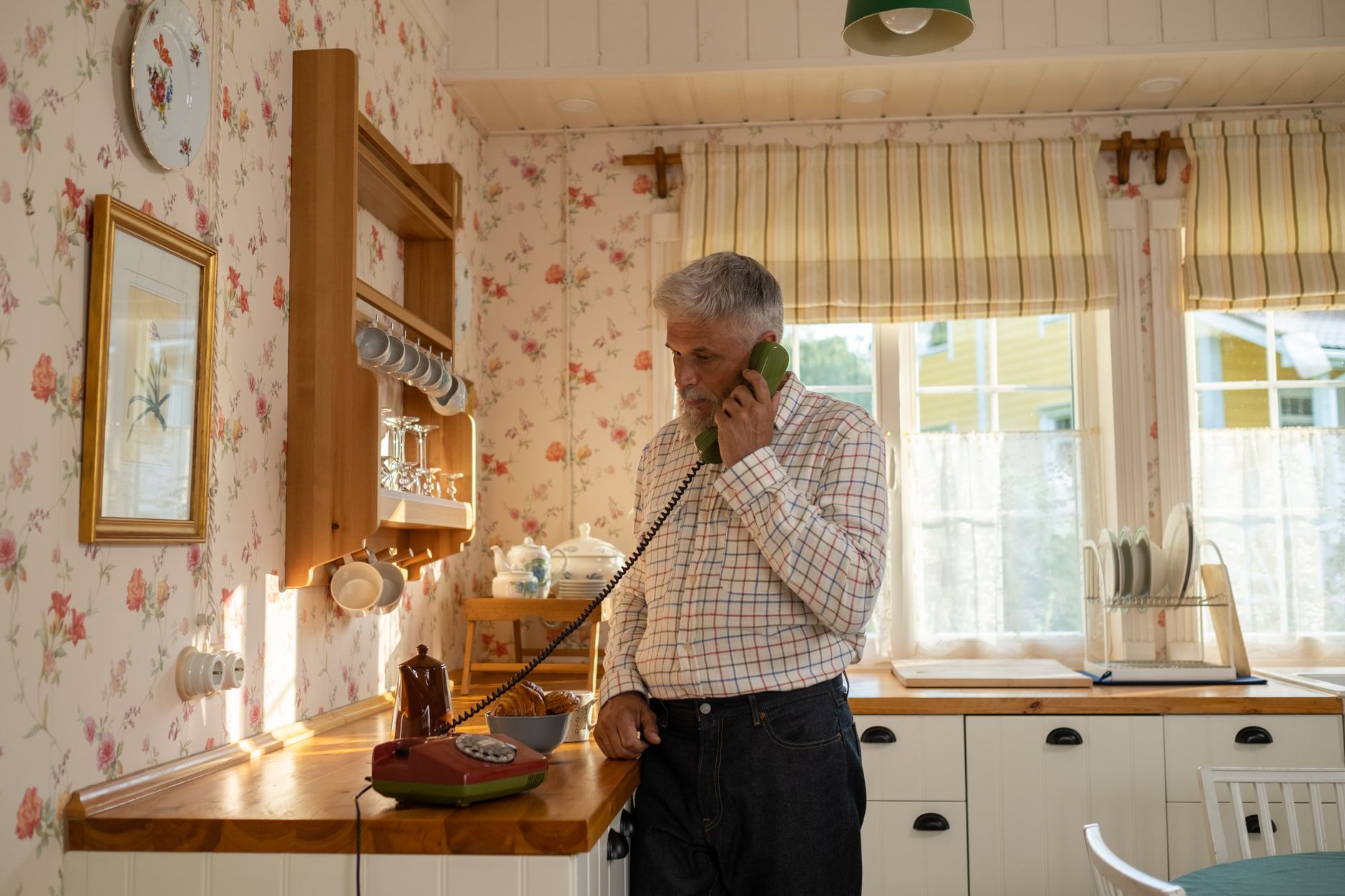
The Wrong Number That Called Every Sunday
So I did not wait for the next Sunday call. I could not. I got the directions to the Elmgrove Care Center in Brookfield, and the following Wednesday morning I put on my good shirt, the one I wear to church, and I put the photograph and the letter in my coat pocket, and I drove the two towns east.
I was more nervous than I had been on my own wedding day. I kept patting my coat pocket to make sure the letter was still there.
Elmgrove was a low brick building with a wheelchair ramp and a flag out front. Inside it smelled like every such place smells, like supper and medicine and too much cleaning.
A young woman at the desk, and I asked for Alma Dreyer, and said I was a friend. The young woman smiled and said, “Oh, Miss Alma will be glad. She does not get visitors.”
That near to undid me, standing at that desk. She does not get visitors. And every Sunday at noon she had been calling a wrong number just to hear a kind voice, and I had thought I was the lonely one.
They walked me down a hall to a common room with big windows, and there, in a chair by the glass, with a crocheted blanket over her knees and her white hair done up careful, sat a tiny old woman.
I knew her the instant I saw her, though I had never laid eyes on her, because I had seen her face before, young, in a scalloped edged photograph, standing in front of my house in a Sunday dress.
And I knew her because she had Pearl Hollister’s face. Older than I remembered Pearl, frailer, but the same good face, the same set of the jaw. Twins. The other half of her.
I came around in front of her chair and I crouched down, slow, these knees, so I would not be looming over her, and I said, “Alma. My name is Harlan. I am the man you have been calling.”
She looked at me. Her eyes went wide, and then they filled, and she put one thin hand up over her mouth, and she said, “The man by Pearl’s phone. You came. You came all this way.”
I said yes, I came, and I had something to bring her, something that had been waiting for her a long, long time, longer than she knew.
I took out the photograph first. I put it in her hands. She looked down at it and she made a sound I will hear for the rest of my life, a sound that was sixty years of grief and love coming out of one old woman at once.
“Easter,” she whispered. “That is Easter. Mama made us those dresses. That is our house. Oh. Oh, that is my Pearl.”
I let her hold it. I let her cry over it. A nurse by the door started toward us and I shook my head gently and she stopped and stepped back, and gave us the room.
When Alma could speak, she asked me, how. How did I have this. And so I told her.