The Town That Remembered Walt Kessler
I did not have a single word of comfort that would have improved on what she had already said herself, so I just held her arm a moment and let her stand there.
By ten o’clock, Hartman’s chapel, which seats forty on a generous day, held close to seventy people. Les had the thirty folding chairs in the center aisle and the borrowed ones added in the back, the back wall two deep in standing room, two wheelchairs parked along the side, and still a few people stood out on the steps in the cold October sun because there was simply no more room inside.
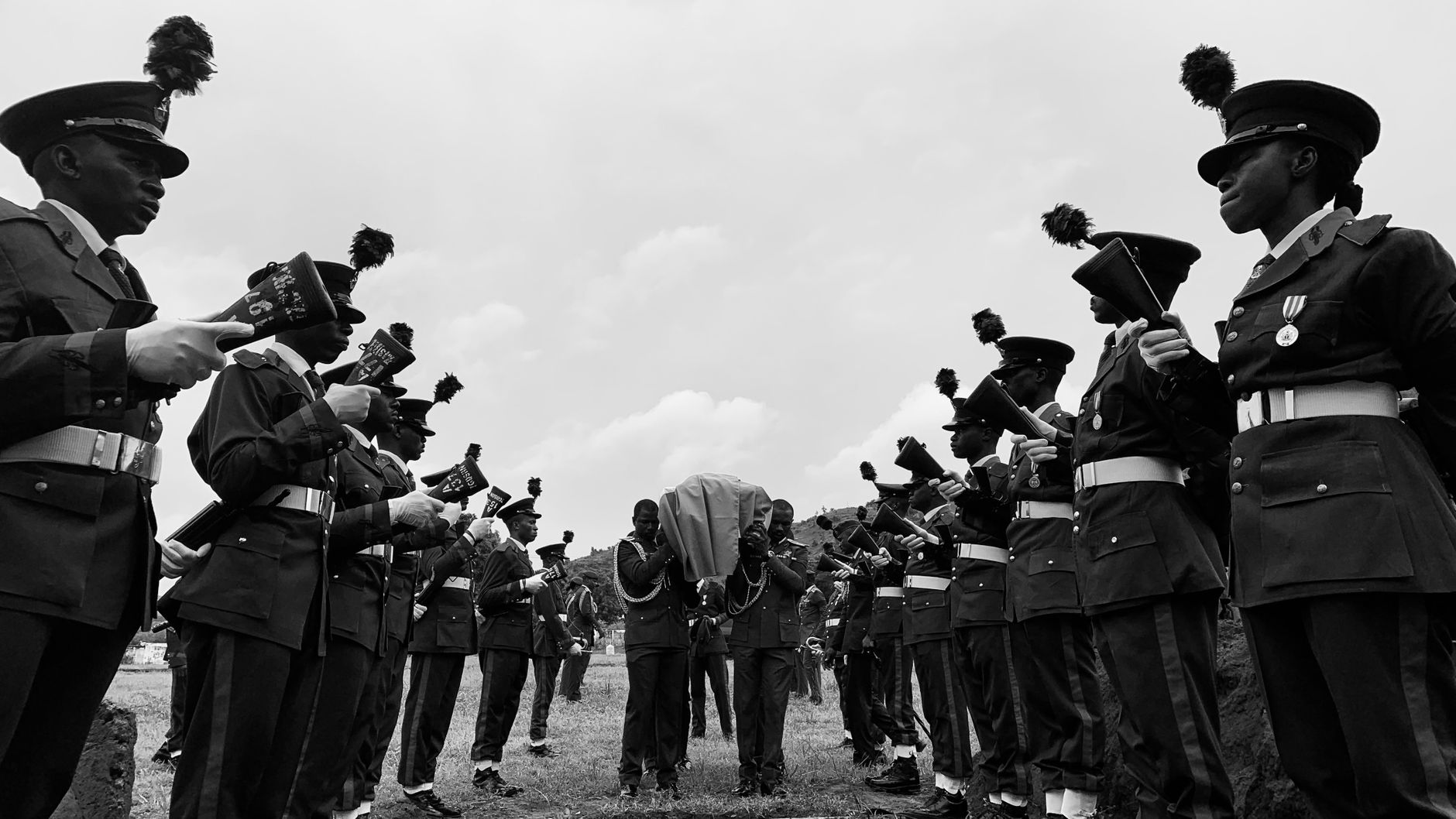
Sergeant Major Boone stood at rigid attention beside the flag-draped casket in his dress uniform, and behind him, seven riflemen stood in a line, pressed and still, veterans every one of them, volunteers every one of them, there because a woman they half knew had called and asked. A young bugler waited by the side door.
I heard a woman behind me whisper to her husband, “Is that the twenty one gun salute they’re going to do?”
Reuben, standing beside me, leaned over without raising his voice. “Seven rifles, three volleys, twenty one shots. Different thing entirely from a cannon salute, that’s for presidents and ships. This is a rifle detail, for one of our own.” The woman nodded, grateful, the way people usually are when you correct them gently and without any edge in it.
Pastor Lund stood and read what little we had been able to gather of Walt Kessler’s life, and there was not much of it. Korea, 1951 to 1953, with the Second Infantry Division. Forty one years behind the counter at the hardware store. A wife who had passed in 1991, and no children to carry the name forward. A quiet man. A man nobody in this chapel, save Harold Fenn, had known for more than a nodding hello on the sidewalk.
“And yet,” Pastor Lund said, looking out over a chapel that should have held four mourners and instead held seventy, “here you all are.”
Les caught my eye from the side door partway through the service, holding a composition notebook, the cheap marbled kind, worn soft at the corners, and he mouthed to me, you need to see this, but there was no room in that hour for anything but what was happening at the front of that chapel, so I gave him a small nod and turned back around, because the detail was starting.
Boone gave a small nod, and the seven riflemen filed out the side door to the lawn behind the chapel. Nobody inside moved.
Then, through the wall, three volleys, seven rifles each time, sharp and close together, twenty one shots in all, and in the quiet after the third volley you could have heard a hymnal drop two rows back.