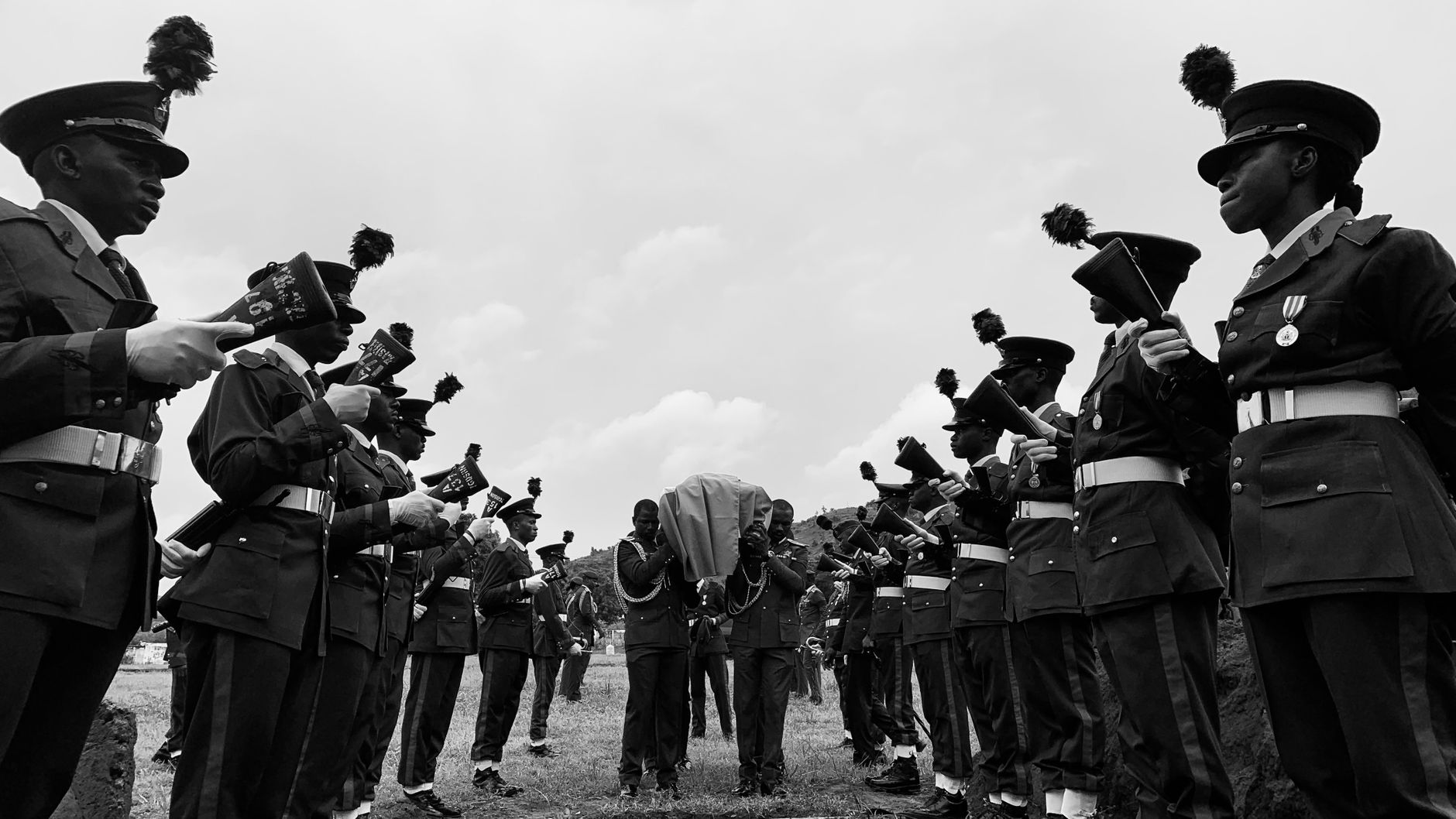
The Town That Remembered Walt Kessler
I want to say I had some grand plan sitting in Les’s office that Tuesday, but the truth is plainer than that. I went home, I made a pot of coffee, and I got out the church directory and the post roster and a yellow legal pad, and I started writing down every name I could think of that owed Walt Kessler nothing at all and might come anyway.
That is the thing nobody tells you about calling people for a dead man they never met. More than half the numbers I had were no good. The post roster listed eleven men from Walt’s own era, men who had served around the same years, and six of those numbers rang and rang with nobody picking up, because the men on the other end were already gone too, and nobody had struck their names off the list yet. I sat at my kitchen table with that roster in front of me and felt, for about ten minutes, exactly how big a hole ninety five years leaves behind it.
Then I called the five that were left.
“Dottie, is that you?” Harold Fenn said. He is eighty eight and has not driven after dark in six years. “What’s wrong?”
“Nothing’s wrong with me. It’s Walt Kessler. He passed. Service Saturday, and Harold, they’re expecting about four people.”
There was a long quiet on the line.
“Walt from the hardware store?”
“That’s him.”
“I didn’t even know he served.”
“Korea. Two years, rifle company.”
Another quiet. Then Harold said, “I’ll be there if my daughter can drive me.”
That was one.
I will tell you honestly, my husband Reuben thought I had lost a little sense that Tuesday night watching me work the phone at the kitchen table until nearly ten o’clock.
“You’re calling Dayton,” he said, reading the area code off my pad.
“I’m calling everybody.”
“Dottie, he’s not going to know the difference. The man’s gone.”
I set the phone down and looked at Reuben, and I want to be fair to him here, because Reuben is not a cold man. He drove four hours each way to his own brother’s funeral in a snowstorm the year his truck’s heater was broken, and he has never once complained about the gas money or the time the auxiliary takes out of our weekends. But he said what a lot of practical people would say, and he deserved an honest answer back.
“You’re right,” I said. “Walt won’t know. But the town will. And I have to live in this town knowing what I did or didn’t do when nobody was watching.”
Reuben was quiet a second. Then he picked up his own phone.
“Give me the post commander over in Springfield,” he said. “I know him from the hunting lodge.”