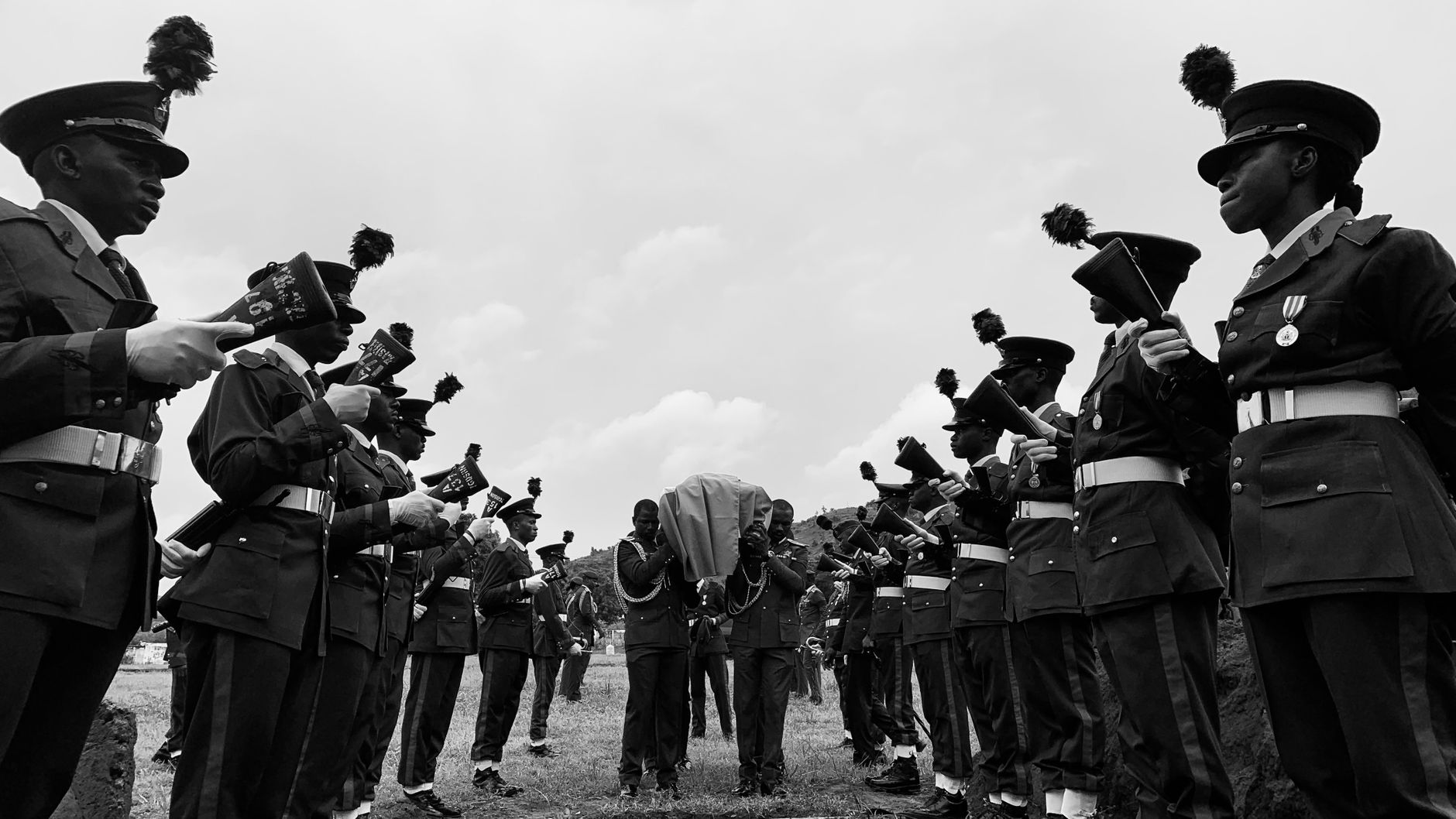
The Town That Remembered Walt Kessler
I called Lavonne Case at the Millbrook Courier, and she ran four lines in the community section: Korea veteran, no family, service Saturday ten a.m., all are welcome. I did not expect four lines in a weekly paper to move a town, and I will tell you plainly, four lines in a weekly paper did not move much of anything by themselves. What moved the town was everybody telling everybody else, the way word moves in a place of four thousand people where half of them are related to the other half by marriage or by the high school they went to.
I called the radio station in Springfield, WKRM, and the morning man, who I have known since he was in diapers because I taught his mother’s Sunday school class, read it on air Thursday morning between the weather and the livestock report.
I called the diner on Route 9, and the woman who owns it taped a handwritten card to her register that said Walt Kessler’s funeral, Saturday ten, Hartman’s, in case the rest of us aren’t enough.
That same afternoon I stopped by the hardware store Walt had worked behind the counter of for forty one years, now run by the original owner’s grandson, Darnell Petrie. Darnell is thirty four and never once worked alongside Walt, who retired when Darnell was still a toddler, but Darnell had grown up hearing his grandfather talk about him.
“My grandpa used to say Walt never missed a day in forty one years except the week his wife passed,” Darnell told me, leaning on the same counter Walt had stood behind for four decades. “Said Walt could tell you the exact bin for any bolt in this store blindfolded. Never raised his voice at a customer, not once, even the difficult ones. Grandpa used to say some men build a life loud and some men build it quiet, and Walt built his about as quiet as a man can build one and still leave something standing.”
“Will you come Saturday, Darnell?”
“Wouldn’t miss it. I’ll close the store for the morning. Least this counter owes him.”
Darnell closed Petrie Hardware from nine to eleven that Saturday morning, the first time in the company’s history it had closed for anything other than a holiday, and taped a handwritten sign to the glass that said closed to honor a good man. That sign, more than almost anything else that week, is the one that told me Millbrook had heard what I was asking it to hear.
I called Sergeant Major Boone.
Boone retired out of the Army after thirty years and runs the honor guard detail out of the post in Springfield now, the nearest one with a full firing party, a crew of volunteers, all veterans themselves, who show up for funerals in pressed dress uniform whether the deceased has four mourners or four hundred. I have worked with Boone’s detail a dozen times over the years and he has never once asked what a family could pay him, because the answer is always nothing, and he has never once asked twice.