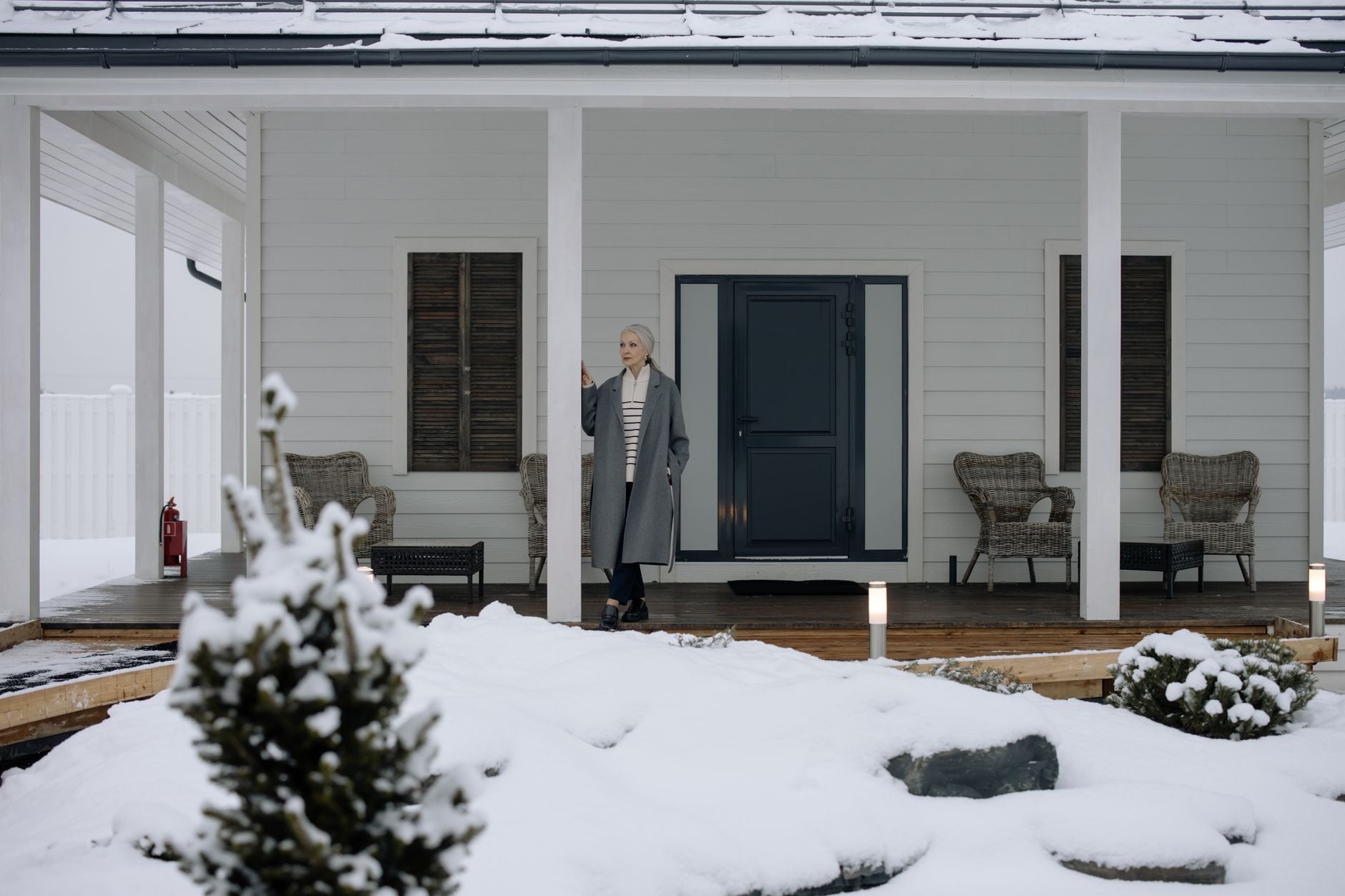
The Miller Place on the Courthouse Steps
“I don’t see what there is to be sore about,” he said. “We told you the truth. We said you were capable. Well, look.” He threw his hand out at the house. “Look at this. Was I wrong? Kim would’ve lost those boys’ roof. Jeff was going under. You two never needed a thing from anybody, and I was proud of it, and I said so. That card was the nicest thing I knew how to say.”
Nate looked at the ground. His ears were red.
I had not planned to say anything. I had thanked the man for the card two years before and meant to leave it there for good. But I had fallen asleep against a plaster wall the month before, and my husband had sold his boat, and there was tape on both my thumbs.
“Ron,” I said. “It was a nice thing to say. I know you meant it.” I kept my voice down. I did not want Opal hearing a quarrel in that house, of all houses. “But capable people get tired too. You just don’t hear about it, because we’re the ones who don’t call.”
He looked at me.
“I’m not asking you for anything,” I said. “I didn’t then and I’m not now. I only want you to know it cost something. It didn’t come easy because we’re us. It came hard, and we did it anyway. Those are two different things.”
Ron did not answer. He stood there with his jaw working. Then he went and got his mother, and helped her up into the truck, and they drove off, and he looked straight down the lane the whole way out.
Nate put his arm around me. “Well,” he said. “That’s said.”
“I shouldn’t have.”
“You should have said it at Easter two years ago. I should have.” He kissed the top of my head, which had sawdust in it. “Come hold the ladder.”
The next Saturday I was out there by seven, and Nate was already at it. At twenty minutes to seven, he told me, a truck had turned in at the lane.
It was his father’s. The bed was full. Sawhorses, a table saw under a tarp, two twenty-ton bottle jacks, a stack of cribbing blocks, the old worm-drive saw Nate had been forbidden to touch as a boy, and a four-foot level in a canvas sleeve.
Ron was under the porch on his back when I walked up. All I could see was his boots.
He slid out. He had cobwebs in his eyebrows. He stood up slowly, the way a man his size has to, and took his cap off.
“Emily,” he said. “I’d like to try that again, if you’ll let me. I’ve had a week to work on it and I had my mother helping, and she wasn’t gentle.”
“All right,” I said.
“My dad stood right over there in 1961 and watched them sell his plow.” He pointed with the cap, at the place in the grass where there was nothing. “Not one soul put a hand out. Not his brothers. Not the church. I was five, and I made up my mind standing there that if a child of mine was ever going under, I would be there with money in my hand before they had to ask.” He turned the cap around. “Kim was going under. Jeff was. Stacy had those loans. You two weren’t. So I thought I was done with you. I had it figured that help is for people who are drowning. It never came into my head that it’s for the ones swimming hard, too.”
He looked at the porch.
Great story with anbending.
I really like the stories. I like that I can read them all the way and not have to fight and lose the page. Keep on doing this. Thank you.
Loved this one so much ❤