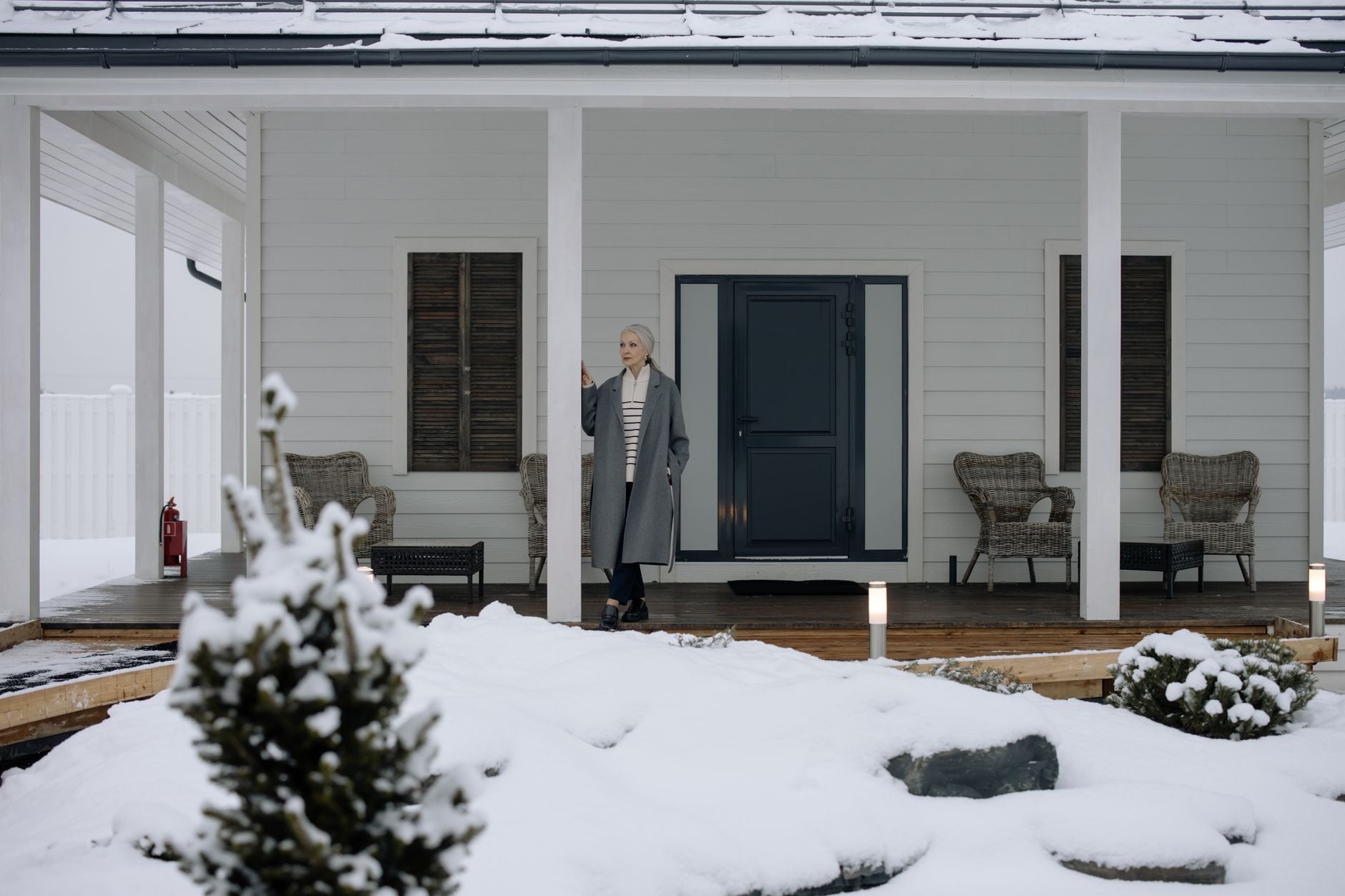
The Miller Place on the Courthouse Steps
And she began to cry. There was no noise in it. Her face did not even change much. The tears only ran, and she let them.
I had known that woman eleven years and I had never once seen her cry, not at her own husband’s graveside service, which the family still talked about.
“Opal,” I said. “What is it? Do you need to sit?”
She was running her thumb down the wood, feeling for something. About four feet off the floor it stopped.
“Emily,” she said. “Did nobody ever tell you whose house this was?”
“The Millers’,” I said. “Dale Miller’s.”
“The Millers bought it at a sale in the fall of 1961,” Opal said. “They got it for a good deal less than it was worth, and they were decent about it, and I never held it against them.” She took a breath. “Before that it was Henry Brandt’s. My father’s. He built that porch himself. I was born in that room right there, in March of 1937, with a neighbor woman for a midwife, because the roads were mud to the axles and the doctor could not get out.”
Nate had come to the kitchen door. He was standing there with his cap in his hand.
“Bring your light, Nathan,” she said. “Hold it here.”
He put his headlamp on the door frame where her thumb was.
There were pencil marks in the varnish. A whole ladder of them, short level lines, each with a date in a man’s square printing. I had scrubbed right past them. I had thought they were scratches.
“Opal, 6 yrs, 1943,” Nate read. His voice was not steady. “Opal, 9 yrs. Opal, 12.” He moved the light down, near the bottom. There was one more line, lower than the rest, and in a different hand, a woman’s. “Ronnie, 4 yrs, 1960.”
“I made that one,” Opal said. “The next year we were gone.”
She told it standing up. She would not sit until it was told.
Her father had died in 1957 and left the place to her and her husband, Walt Schafer, Nate’s grandfather, a hundred and sixty acres and this house. Walt was a hard worker and wanted to do better than his father-in-law had. He borrowed against the farm for a new tractor and a hog building. Then came two bad years, one right behind the other, and the sickness went through the hogs, and the bank called the note.
“They sold it right on the courthouse steps,” she said. “The same steps. Walt stood in the yard here the week after while they auctioned the machinery, and I stood in this kitchen so I would not have to watch, and Ronald was five years old and stood out there holding his father’s hand the entire time. I could see the two of them through that window.”
“Dad never said a thing,” Nate said. “Not one time. We drove this road every Sunday of my life to get to Aunt Carol’s.”
“Your father has not turned his head toward this house since he was five years old,” Opal said. “Watch him sometime. He looks at the other side of the road. Walt was the same until he died. They decided it was a shame and they buried it, and I let them, because a man’s pride was about all he had left to him then.”
She put her hand on the pencil marks again.
Great story with anbending.
I really like the stories. I like that I can read them all the way and not have to fight and lose the page. Keep on doing this. Thank you.
Loved this one so much ❤