The Art Room in the Old Depot
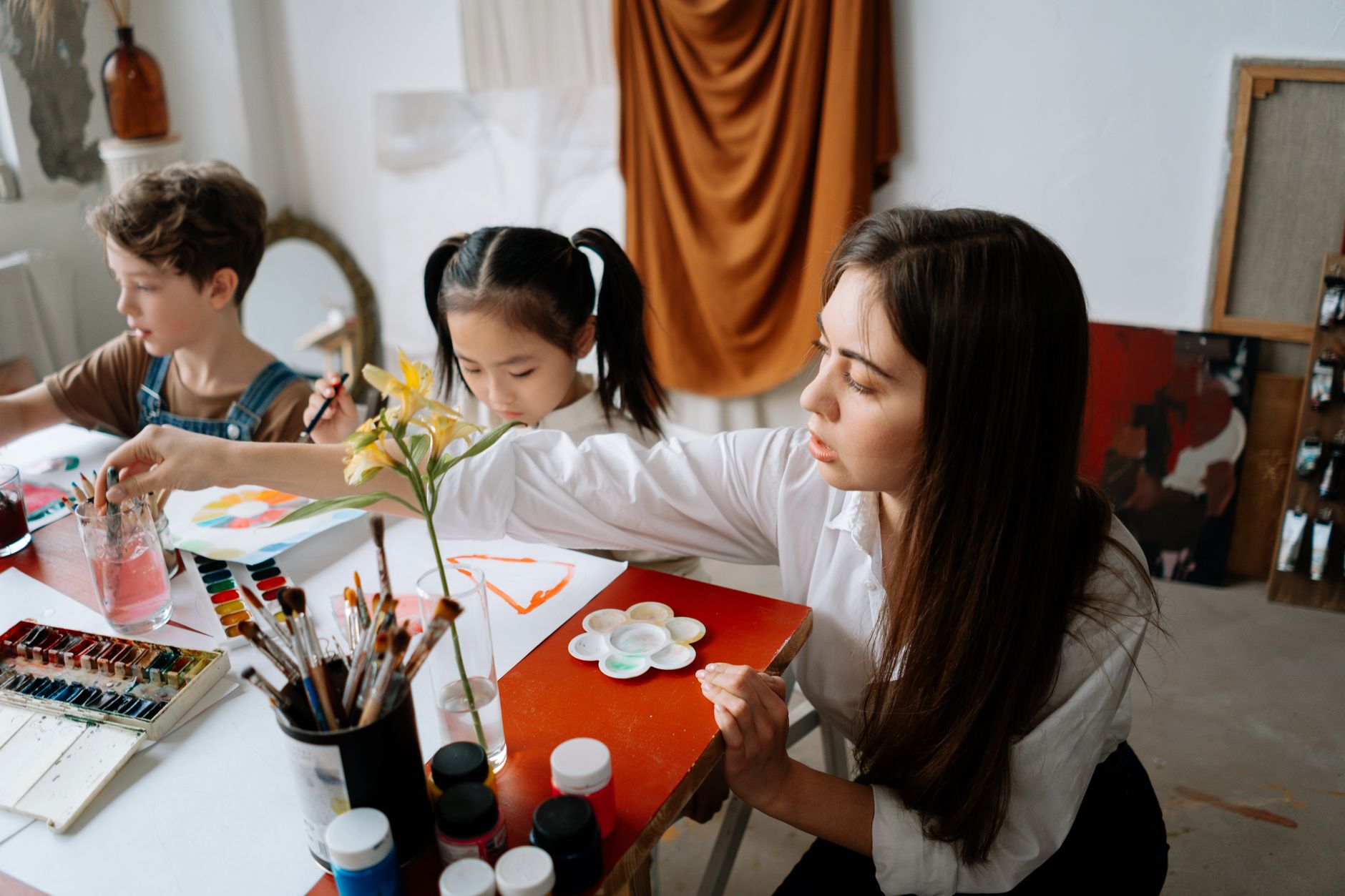
By nine-thirty I had children at every table and on every bench and sitting on the floor of the waiting room with drawing boards on their knees. I had kindergartners and I had eighth-grade boys taller than me who pretended they had only come to bring a sister. I ran out of brushes and sent a father to my house for the coffee can of old ones in the garage. A mother I had in fifth grade in 1996 tied on a garbage bag for a smock and took the whole clay table without being asked.
Around eleven Lyle got up and brought me the clipboard. He had numbered the lines down the left side, the way a conductor would.
“Sixty-one,” he said.
I looked at it. Sixty-one names, some in his capitals and some in fat crooked pencil. I knew fifty of them by their handwriting.
I had to go stand in the ticket office for a minute with the door shut.
When I came out, a kindergartner named Josie had climbed up on the bench next to Lyle’s chair and was showing him a painting that was mostly purple. “It’s a train,” she told him.
“I can see that,” Lyle said. “That’s a good one. That’s a Geep Seven. I rode behind one of those to Mason City more times than you’ve had breakfast.”
She leaned on his arm to hear the rest. And he told it.
That was how the Saturdays went after that.
I never asked a parent for anything, and they brought it anyway, the way people around here bring things. Paper towels, mostly. I have never in my life seen so many paper towels. Somebody left a case of them on the platform with no note. Old shirts for smocks. Egg cartons, coffee cans, a box of baby food jars from a grandmother who had been saving them since the Carter years for no reason she could name until now.
And soup. By the second Saturday a woman named Brenda from the Lutheran church showed up at eleven-thirty with a roaster of chicken noodle and a sleeve of paper cups, because, she said, you cannot send children home at noon with nothing in them. After that there was a soup list. I did not make the list. I do not know who did. But there was ham and bean, and chili, and one week a potato soup so good that Tom came down on his lunch from a job just to stand in the freight room and eat it.
When the mornings turned cool, Lyle started laying a fire in the stove before I got there. The children hung their jackets on the old iron hooks. I ran a clothesline across the waiting room and pinned the week’s paintings to it, so that the first thing you saw when you walked in was sixty pictures drying in the light.
And Lyle talked. I had known that man to nod to for thirty years and I do not believe I had heard him say forty words. Now there would be six or eight children sitting on the floor around the stove with their soup, and he would be telling them about the blizzard of 1975, when his train sat four days in a drift west of Algona and a farmer came out on a snowmobile with a dishpan of fried chicken for the crew. Or about throwing a switch at night by lantern. Or about the orders the agent used to hand up on a hoop to a moving train, right there, out that window.
“Right there?” they would say.
“Right there where you’re looking.”
Some of them drew what he told. I started to see trains on my clothesline. A great many trains.
Now I have to tell you about Darius.