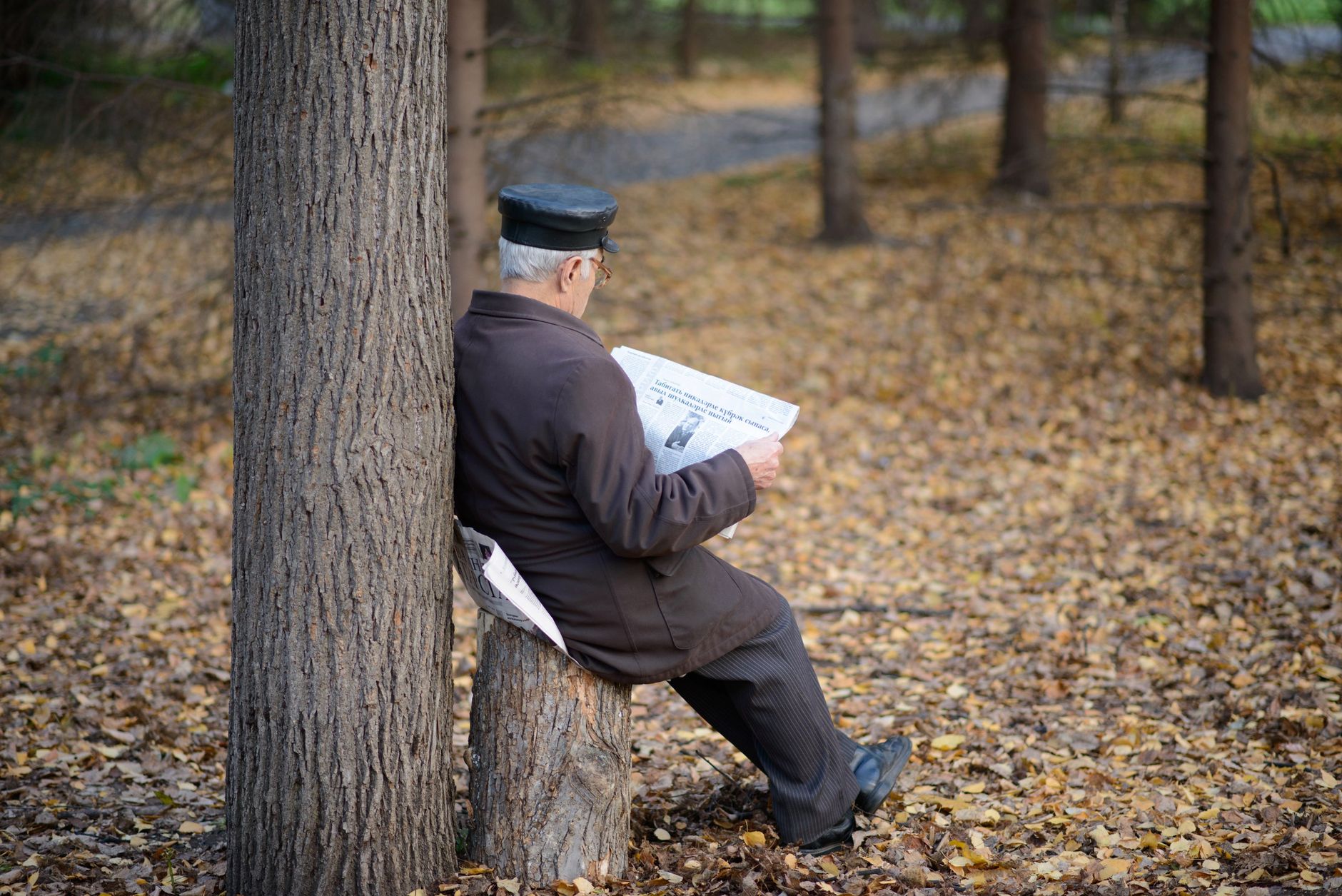
Forty Four Stumps on the Back Forty
Number twenty-three was my brother’s. I measured it exactly as I had measured the others, and I wrote it down exactly the same.
The grandchildren’s trees were the ones that got me. They were not big. Ben’s was not eleven inches across. There could not have been enough lumber in it to pay for the gas it took to cut it. They had taken it anyway, because they were taking everything, and a walnut is a walnut.
It took me until nearly dark. Forty-four stumps, eighty-eight measurements, four pages of my notebook. On the last page I drew the rows as best I could, little circles with numbers in them, and marked the gate and the creek and the draw.
I closed the gate behind me, and I latched it.
There is one man in our county who buys walnut, and that is Virgil Oakes. He has run the sawmill out on Route E for better than fifty years. He is eighty now, lean as a fence rail, with two fingers short on his left hand. He and my father were in the same class at the old high school and went into the service the same summer.
Pete read my four pages at the kitchen table that Friday night with his supper going cold. Then he said, “Take this to Virgil. He will know what it was worth, and he will tell you straight.”
“I thought about the sheriff,” I said.
“So did I.”
“It is not mine to report. If Mama wants the sheriff, Mama can call the sheriff. I am not going to have a deputy standing in her hospital room asking her questions about her own son before she even knows what he did.”
Pete nodded. “Then get her the facts and let her decide. That’s the right order.”
I was at the mill at seven Saturday morning. Virgil was in the office with the wood stove going.
“Renee Kessler,” he said. “How is your mother? I heard she was in Kirksville.”
“She is better. They think she can come home tomorrow.”
“That is good news.”
“Virgil, I need you to look at something.”
I laid the notebook on his counter, open to the first page.
He put on his glasses. He read down the page with his finger, slowly. He turned to the second page, and the third. He looked a long time at my drawing of the rows.
Then he turned back to the first page and read all of it again.
“This is Walt’s grove,” he said.
“Yes, sir.”
“These are stumps.”
“Yes, sir. All forty-four.”
He took his glasses off and set them on the counter very carefully. “Did Arlene sell them?”
“Arlene has been flat on her back on oxygen for nine days. My brother sold them. She does not know yet.”
Virgil did not say anything for a moment. The stove ticked.
“Who cut them?”
I told him the name Doug had given me. Randy Tolbert, an outfit from two counties south.
Something moved in Virgil’s jaw.
“He was here,” he said. “A week ago Thursday. He sold me a load of walnut sawlogs, nine of them, and I asked where they came off of, like I always ask. He told me it was an estate, down his way. The old folks had passed and the heirs wanted it cleared.”
“Would he have known it was not Doug’s to sell?”
“I’ll answer that after I’ve seen the ground. Let me get my hat.”