The Twelve Chairs I Carried Home
“Do you want to?”
A pause. “Are you making the dressing with the sausage in it?”
“I am.”
“Then yeah.” Another pause. “She borrowed card tables. Four of them. From the lady next door and from Dale. They’re all different heights.”
“How’s she doing?”
“She’s ironing a bedsheet to go over them. She’s kind of not talking.”
That hurt me worse than I expected. My girl, ironing a bedsheet at six o’clock the night before her first Thanksgiving in her own house.
“You be kind to her tonight,” I said. “And you ask her one more time, plain, whether she minds you coming. If she minds, you stay, and I’ll save you a plate of dressing the size of a hubcap.”
He called back in ten minutes. She had said to go. She had said, and he repeated it carefully, “Somebody from this family ought to be at that table.”
I went and picked him up myself, and he slept in his mother’s old room, and at five-thirty Thursday morning he was standing in my kitchen in his socks asking what he could peel.
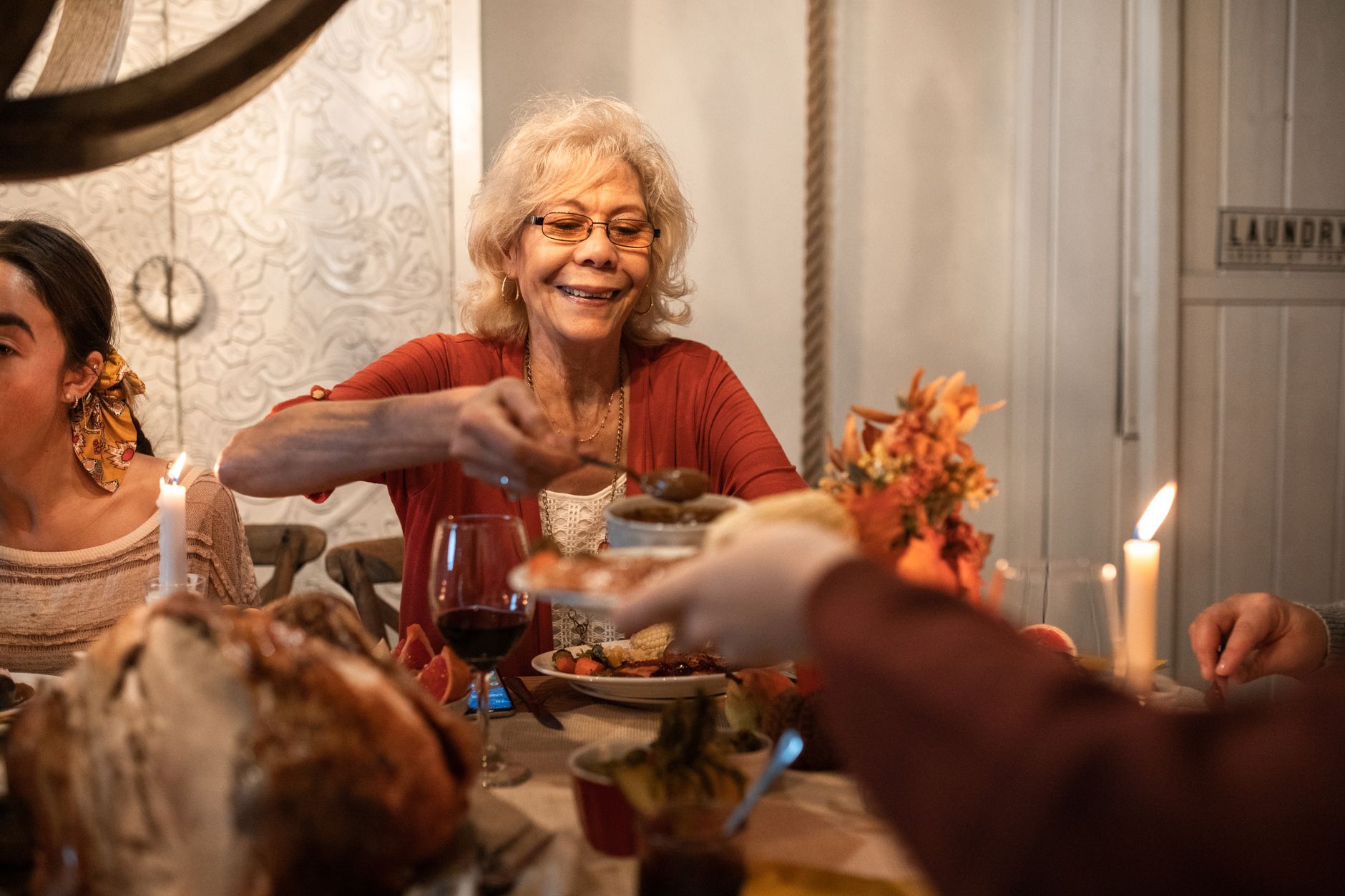
By the time it was done there were fourteen, at that same oak table, back in my own dining room with both leaves in.
Me and Dylan. Harold. Wayne and Donna. Pat and Jim, and Kim with her two boys, who were four and six and had been promised they could sit together. The young couple renting the house on my other side, Amber and Tyler, who had moved out from Ohio in August for his job at the hospital and did not know a soul to eat with, and who brought a baby and a store-bought pumpkin pie they kept apologizing for.
Miss Evelyn, who is ninety-one and taught third grade to half of Hastings, including my daughter, and whom Pat drives to church. And a sophomore from Hastings College named Ben, who mows Miss Evelyn’s yard and could not get home to Rawlins, Wyoming, because they had closed the interstate for wind, the way they do.
Twelve chairs and fourteen people. I put the two little boys on the piano bench at the corner, where they sat like a pair of sparrows on a wire. The baby went from lap to lap.
Harold came at a quarter past twelve, forty-five minutes early, in a brown suit and a tie with pheasants on it. He was carrying a Cool Whip tub in both hands like it might go off.
“It’s Lois’s cranberry relish,” he said at the door. “I found her card. I never made it before. I never made anything before.” He looked down at the tub. “Her handwriting got so shaky toward the end, I couldn’t tell if it said one orange or two. So I put two.”
“Two is right,” I said. I had no idea. “Lois always put two.”
He nodded hard, and came in, and I showed him to the chair on my right.
When everything was on, the turkey and the dressing and Donna’s sweet potatoes and seven kinds of everything else, I asked Harold if he would say grace. I thought it would be a kindness. I did not think it through.
He got as far as “Lord, we thank You for this food, and for those who” and then he just stopped. His mouth worked. Fourteen heads stayed bowed. You could hear the furnace come on.
Nobody rescued him and nobody hurried him. Miss Evelyn reached over with her spotted hand and laid it on his sleeve, and she left it there.