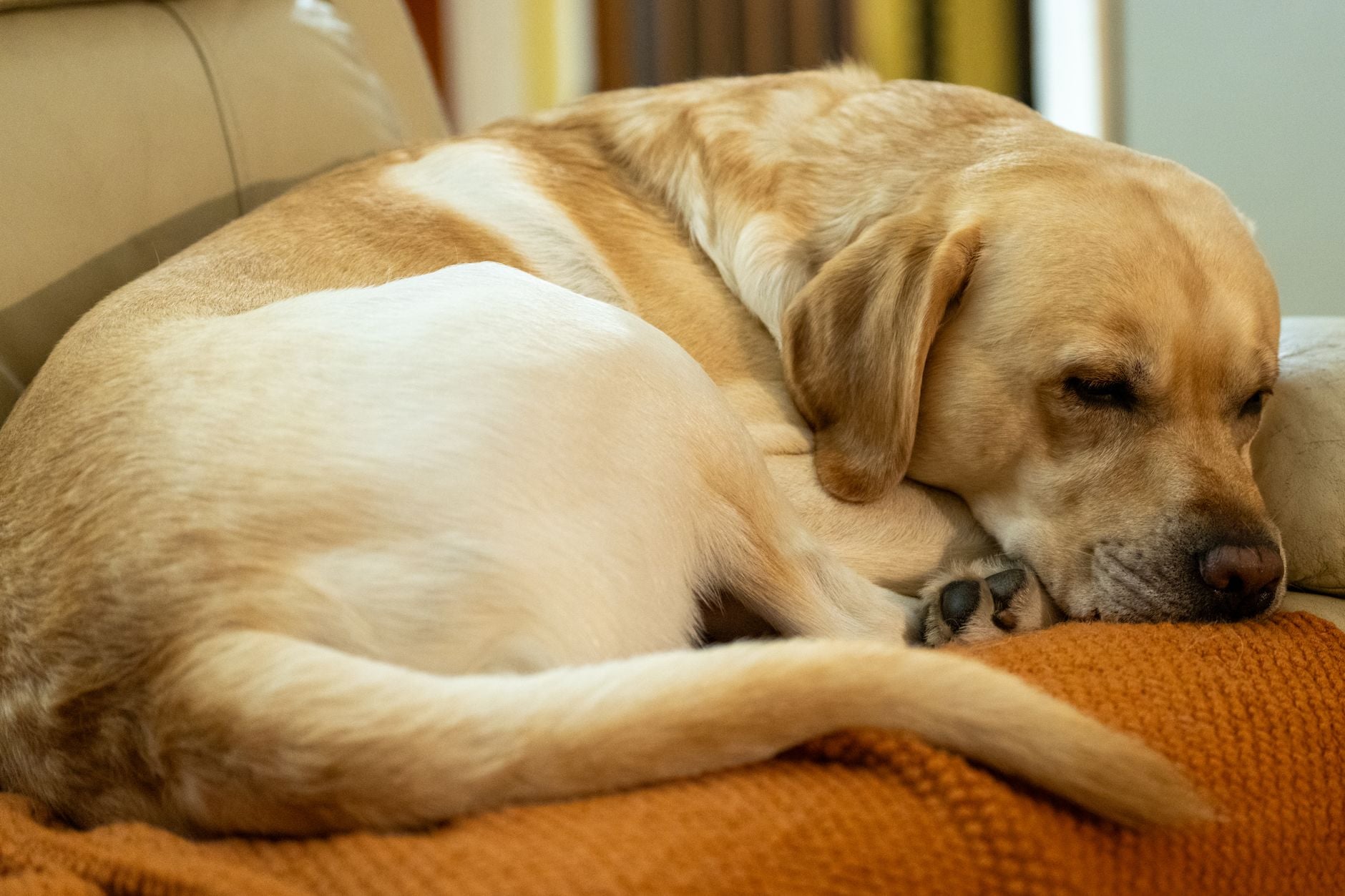
The Dog Who Would Not Eat
But a dog is not raised on Saturdays.
On the third day we had him, Duke quit eating. He just stopped. He lay in the laundry room with his nose between his paws and would not look at the bowl. I wrapped him in a towel and drove him to Dr. Vasek, who was a younger man then, and who looked him over and found a parasite that pups pick up, and gave me a medicine and told me to get food into him any way I could.
So I sat down on the laundry room floor in my work clothes. I poured warm water on his food and let it soften, and I held it out to him on the flat of my hand, a little at a time. It took an hour. I did it morning and night for eight days, sitting on that cold linoleum with my back against the dryer.
He got well. But he never forgot it.
For the rest of his life, that dog would stand over a full bowl and wait. He would look at the food, and then he would look at me, and he would not touch a bite until I had lowered myself down onto the kitchen floor beside him. Then he ate like a horse.
“You’ve ruined a perfectly good hunting dog,” Dennis used to say, stepping over the two of us on his way to the coffee pot.
“He hunts fine.”
“He’s got a woman sitting on the floor for him. He thinks he’s the king of England.”
I sat on that floor twice a day for ten years. I am fifty-eight years old. It got harder to get back up, and I did it anyway, and after a while I started taking my coffee down there with me in the mornings. It was not a chore. It was fifteen minutes when nobody needed anything from me except to be there.
And Duke slept on my side of the bed. Not on the bed, on the rug beside it, on my side, with his back pushed up against the frame so that when I put my feet down in the morning I had to feel for a place to put them.
Dennis got sick in March. It was in his lungs, and it had already gone other places by the time they found it. He came home on hospice the last week of August, and we put the hospital bed in the front room where he could see the street.
Duke moved in there with him. He lay alongside that bed for five weeks and got up only to go out.
He would not eat in the kitchen anymore. He would not leave Dennis long enough. So I carried his bowl into the front room, and I sat down on the carpet next to the hospital bed twice a day, and Duke ate there, with Dennis watching the pair of us over the rail.
One evening near the end, when Dennis did not have much voice left, he said, “Look at you two.”
“Don’t start,” I said.
“I’m not starting.” He let his hand hang down off the side of the bed, and Duke lifted his head and put it under that hand. “I paid for him,” Dennis said. “That’s about all I did. You did every other thing.”