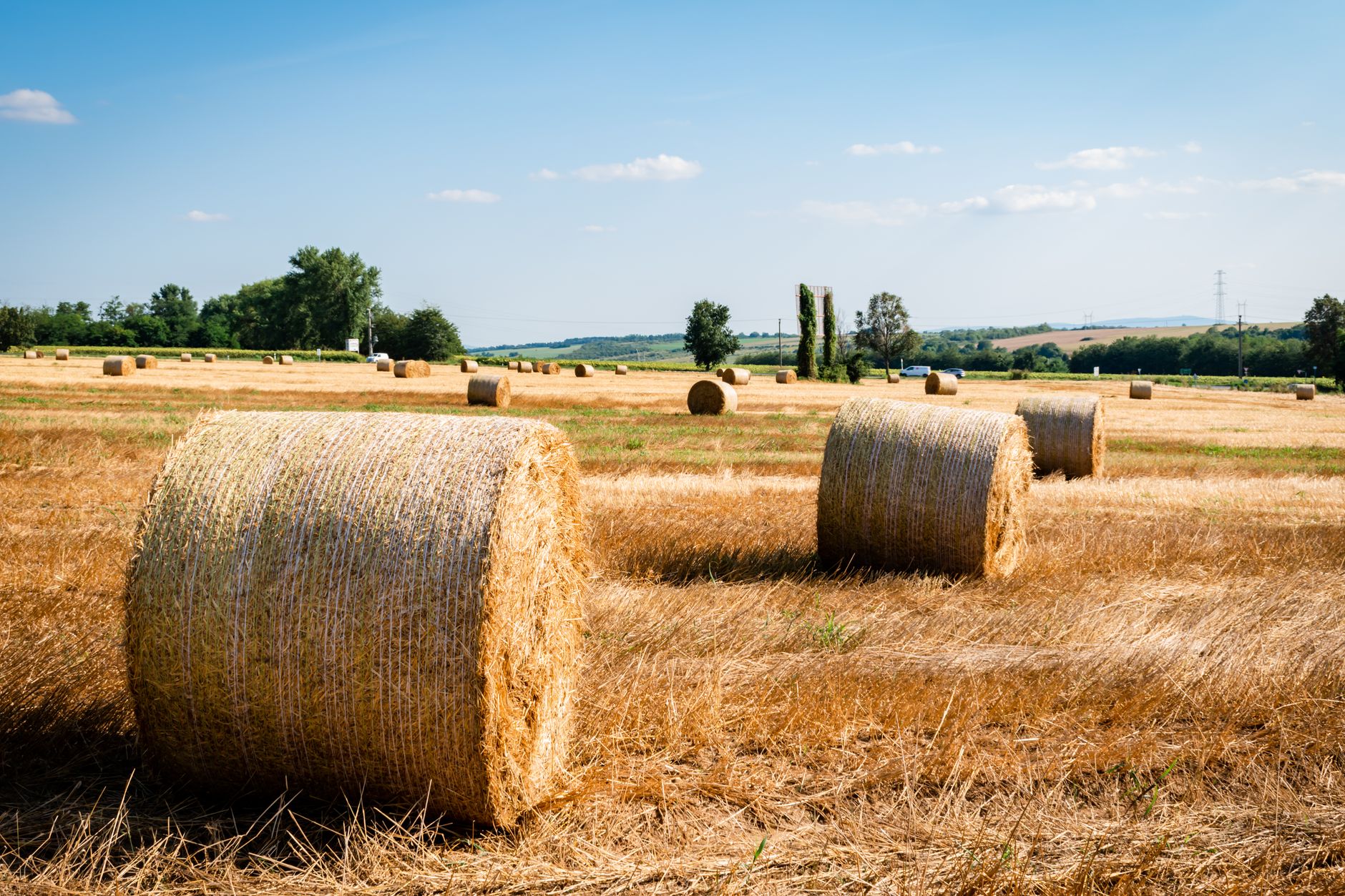
The Hay That Came Home Again
Three pies
I want to say plainly why I baked, because my sister thought it was foolishness and told me so on the telephone.
I was about to drive into three yards and tell three households that they had my hay and I wanted it back. Every one of them had paid for it. Every one of them thought they had done a kindness. You do not walk up to people like that empty-handed and start in. Not where I come from. You bring something, you sit down, and you tell it straight.
I made three rhubarb pies with lard crust, the way Tom’s mother taught me the first year we were married. I had them out of the oven by one in the morning. Ben came down at five and found me asleep in the chair with my apron on.
“You want me to come?” he said.
“I want you to grease the loader on the 4020 and make sure the bale spear’s on it,” I said. “And then I want you to wait.”
“Wait for what?”
“I don’t know yet.”
That was the truth too. I did not know if anybody was coming.
Arlen
Arlen’s place is two miles east of ours as the crow flies and four by road. His wife, Jean, passed six years ago, and he keeps the house just as she left it, down to the African violets on the washing machine.
He met me on the porch with his hat already in his hand.
“Karen,” he said. “You shouldn’t be bringing me food. It ought to go the other way this week.”
“It’s rhubarb,” I said. “Can I come in, Arlen? I need to tell you something and I’d rather do it sitting down.”
He cut two pieces and put the coffee on. I let him take a bite first.
Then I told him. I did not dress it up and I did not run Dwayne down. I said that I was not selling out. I said that I had never told anyone to clear that field. I said Dwayne had baled it without asking and sold it without asking, and that I had not seen one dollar and did not expect to. I said that hay was the last thing Tom ever did on this earth, and that without it I had no way to winter his cows.
“I’m not here to ask you for anything, Arlen,” I said. “You bought it honest. I only wanted you to hear the truth from me, at your own table, before you heard it some other way.”
Arlen set his fork down.
He looked at me for a long time. He has a face like a fence post that has stood in the weather, and I could not read one thing in it.
Then he stood up, took his hat off the nail by the door, and walked out of his own kitchen without a word.
I sat there with my hands in my lap. I thought, well, I have insulted him. I have come into an old man’s house and as good as called him a fool.
Then I heard his pickup turn over, and the rattle of safety chains.
By the time I got to the porch he had the dually backed up to his gooseneck flatbed and was down on one knee, seventy-eight years old, dropping the hitch.
“Arlen.”
“You said you weren’t asking,” he said, not looking up. “Good. Then I don’t have to be asked.”
“Arlen, you paid for that hay.”
“I paid eight dollars a bale for seventy-dollar hay and I told myself it was neighborly.” He got up by degrees, one hand on the trailer. “I knew better, Karen. Sunday afternoon, loading it, I knew something was wrong with it. Tom never left a field so much as a week before he had the bales lined up on that road fence. He was particular. And I thought, well, it isn’t my business to ask a grieving family their business.” He shook his head. “I stood at that man’s grave on Saturday. And on Sunday I hauled off his hay.”
“You didn’t know.”
“I didn’t ask. That’s a different thing, and I know which one it is.”
He pulled a handful of hay out of the nearest bale in his stackyard and held it under his nose, and then he held it out to me. It was still green. It smelled like June.
“That’s the last hay Tom ever laid down,” he said. “It ought to feed his cows.”
I am not ashamed to say I could not answer him.
“Eight to a load,” he said. “Ten loads. My grandson’s coming at noon. You tell Ben to have that loader ready.”
A great story! Loved every word of it! So sad when family takes advantage of each other!