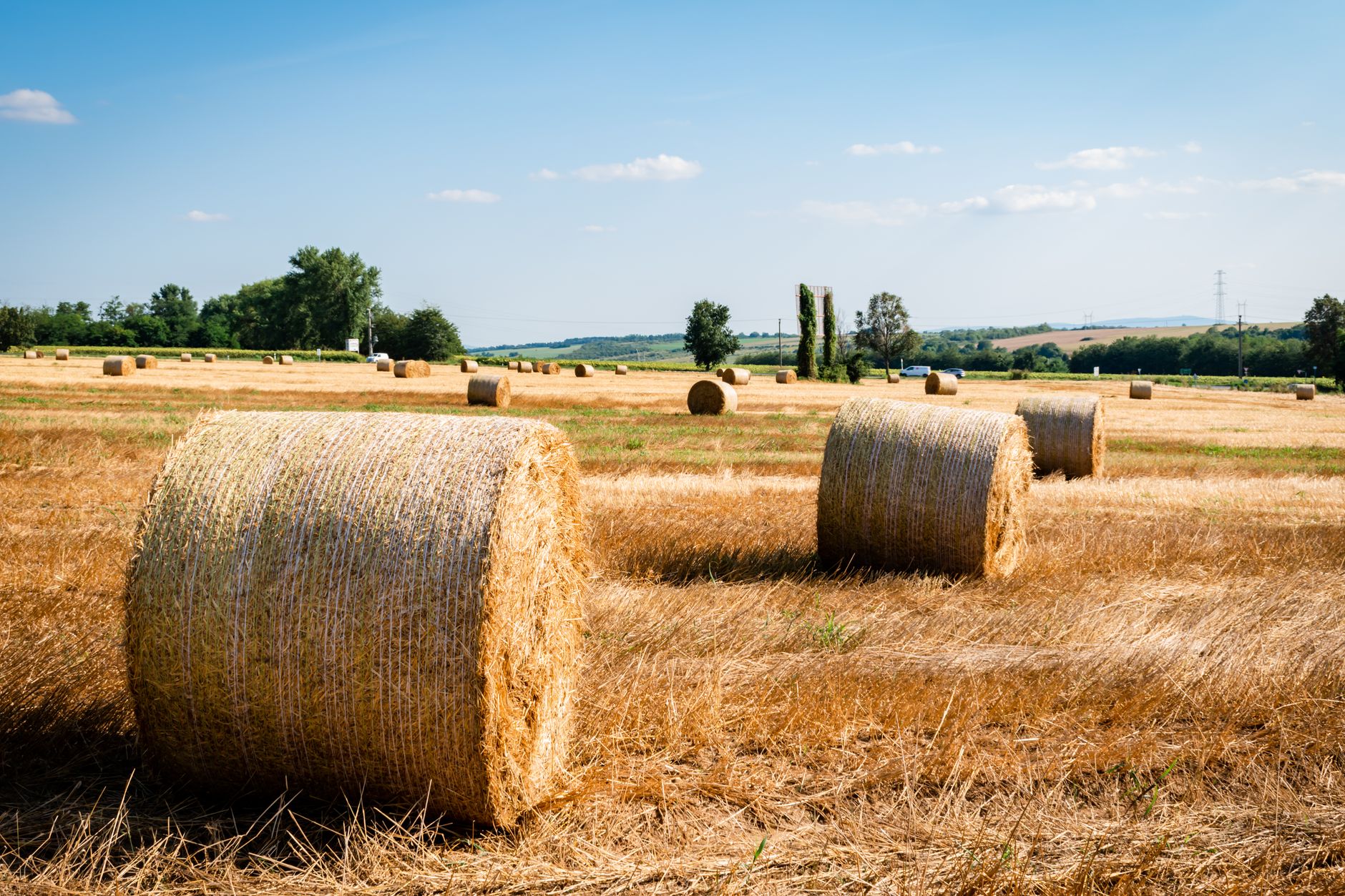
The Hay That Came Home Again
“A widow does not need hay, Karen.”
Dwayne said it at my kitchen table on a Tuesday morning, three days after we buried his brother. He said it the way a man tells you the price of diesel. He had his cap on his knee and a cup of my coffee in front of him, and behind him on the counter sat eleven casserole dishes with masking tape on the bottoms so I would know whose was whose.
I had just come in from the north eighty. My boots were still wet from the dew.
“Say that again,” I said. I did not say it loud.
“I said you don’t need it.” He turned the cup a quarter turn on the oilcloth. “I baled it Thursday night and Friday night, like I told you I would. Two hundred and twelve bales. Good hay, too. Tom laid it down pretty.”
“I know how many. I walked up there this morning to look at them.”
“Then you saw they’re gone.”
“I saw the twine ends and the tire tracks, Dwayne. That’s all I saw.”
He nodded as if I had agreed with him about something.
“I sold them,” he said. “All of it. Seventeen hundred dollars. And by the time I took out twine and fuel and two nights of my time, it about came out even. So there’s nothing to hand you, and I didn’t figure you’d want me making up a number.”
I am going to tell you what seventeen hundred dollars means, in case you have never bought hay. It means eight dollars a bale. That summer a big round bale of alfalfa and brome, twelve hundred pounds of it, was bringing seventy dollars anywhere in Custer County, and more if you could wait until January. Two hundred and twelve bales was close to fifteen thousand dollars standing in my field.
He had not sold my hay. He had gotten rid of it.
“Eight dollars a bale,” I said.
“I wanted it gone quick.” He finally looked at me. Dwayne has Tom’s eyes, the same pale gray, and that week I could hardly stand to see them in another face. “Karen, be sensible. You’ve got forty pairs on summer grass and a boy who’s still in high school. You are not going to feed cows through a Nebraska winter by yourself. You’ll have them at the sale barn by October, and you know it. And a woman with no cows does not need hay.”
“And when the cows are gone?”
“Then you’ll want to talk about the place.” He set his cap on his head. “When you do, you talk to me first. That’s Dad’s ground. It ought to stay with the name.”
So there it was, all of it, laid out on my table next to the sugar bowl.
No hay meant no cows. No cows meant no reason to keep a quarter section eleven miles out of Broken Bow. And a widow with no reason to stay will take the first offer from family, especially if family is the one who has been so much help.
I looked at the casserole dishes. I looked at Tom’s chore coat, still on its nail by the door, because I had not been able to make my hand take it down.
I did not scream. I have never been a screamer, and I was too tired that week to start.
“Well,” I said. “Thank you for the trouble, Dwayne.”
He blinked. I do not think it was what he had come braced for.
A great story! Loved every word of it! So sad when family takes advantage of each other!