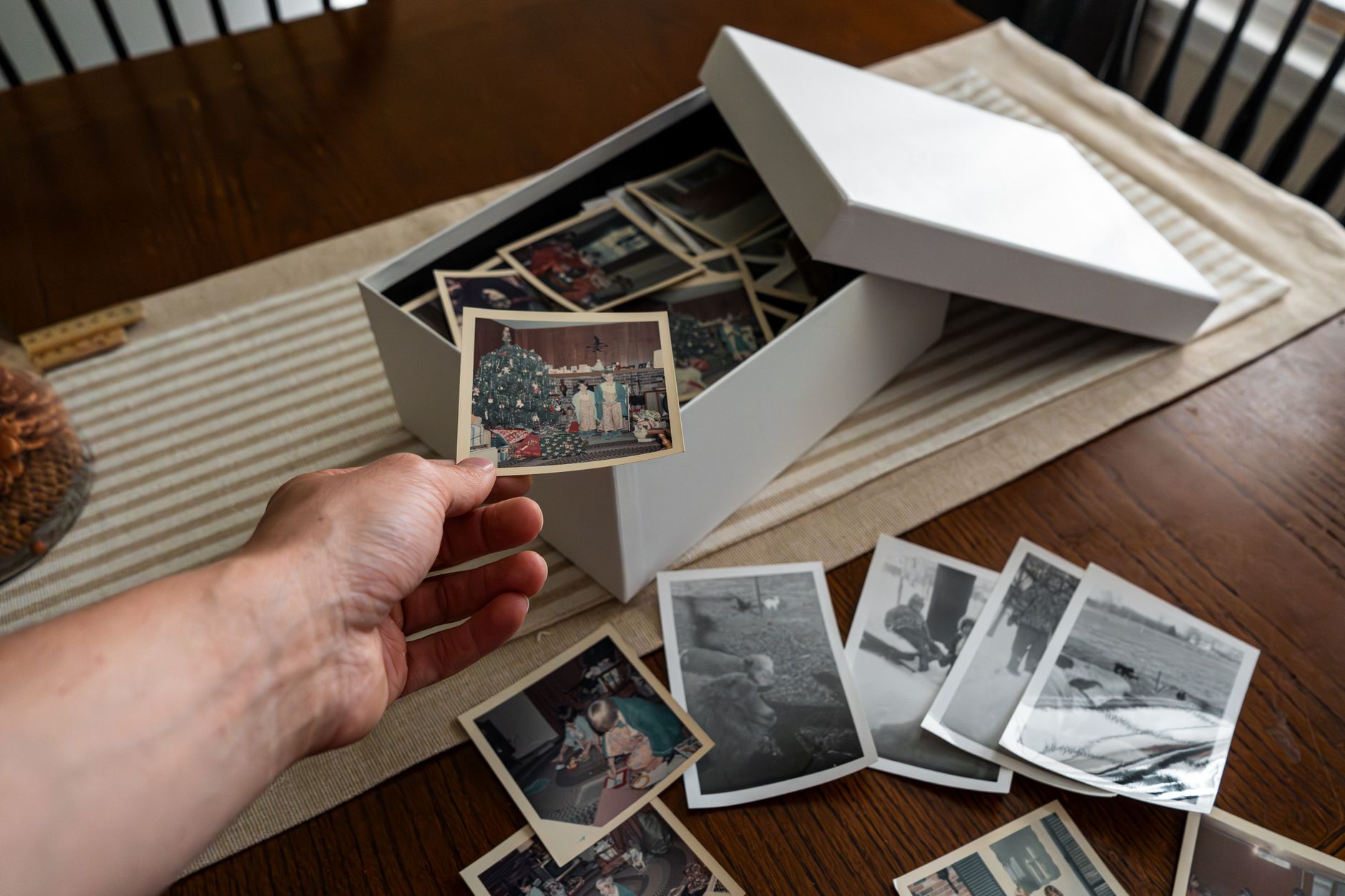
The Shoebox My Father Carried In
“I needed that, yes.” He turned all the way around to face her. “And you were my daughter and I took you to the fair. It was both. I won’t stand here and lie to you either, not today. It was both.”
“You never stayed for the fireworks,” she said.
He did not answer.
“Not one time. Every other family stayed. I used to beg you. You’d look at your watch on the Ferris wheel. You’d look at your watch in the hog barn. We always left while it was still light out and I could hear them going off behind us from the truck.” She laughed, and it was terrible. “I thought you had chores.”
“I couldn’t leave her out there after dark,” he said. “Not with just your mother.”
“I know that now.”
She looked at me then. My pretty, easy little sister, thirty-six years old, with her mouth shaking.
“I told those women you didn’t like crowds,” she said. “Ten minutes ago. Standing right there.”
“I heard you.”
“I’ve said it your whole life.”
“I know.”
She turned around and walked out of my gate, fast, and I heard her sandals on the driveway.
Jeff started after her. I put up a hand.
“Let me,” I said.
Leonard had sat down on the picnic bench, finally, all at once, like his legs had been waiting for permission. Amy had come around the table and was standing next to him, not touching him, just near, looking at the photographs. I saw her pick one up.
I took a different one off the table and went out the gate.
Jenny was in the front yard, leaning on the hood of their car with her arms wrapped around herself. She did not look up.
“Go back to your party,” she said.
“It’s my party. I can stand where I like.”
“Laura, I can’t. I cannot do this in front of the school secretaries.”
“Nobody’s out here but me.”
“I had him the whole time,” she said. “That’s what I always thought. You got Mama and I got Daddy, and I got the better end, and I let you know it. And I never had him. He was on that Ferris wheel with me and he was four miles away the whole ride, wondering if there was a blue truck on the lane.” She pressed her lips together. “I wasn’t the favorite. I was the errand.”
“That isn’t what he said.”
“It’s what I heard.”
I leaned on the car next to her. The hood was warm.
“Do you know what I’d have given,” I said, “to be the errand?”
She let out a breath that was half a sob.
“I told you he didn’t want you. I stood in the kitchen and told you he said you weren’t any fun.”
“You were six.”
“I was thirty-five last Christmas when I said you never did know how to enjoy yourself. In front of your daughter.” She shook her head. “I’m not six, Laura. I have been mean to you about this for thirty years because some part of me knew it wasn’t right, and if it was your fault then I didn’t have to look at it.”
“Look at this,” I said.
I handed her the photograph. It was the one marked Laura. 9. The year of the porch step.
“I’ve seen. They’re all of you.”
“Look at the glass.”
She held it up to the light. I watched her find it.