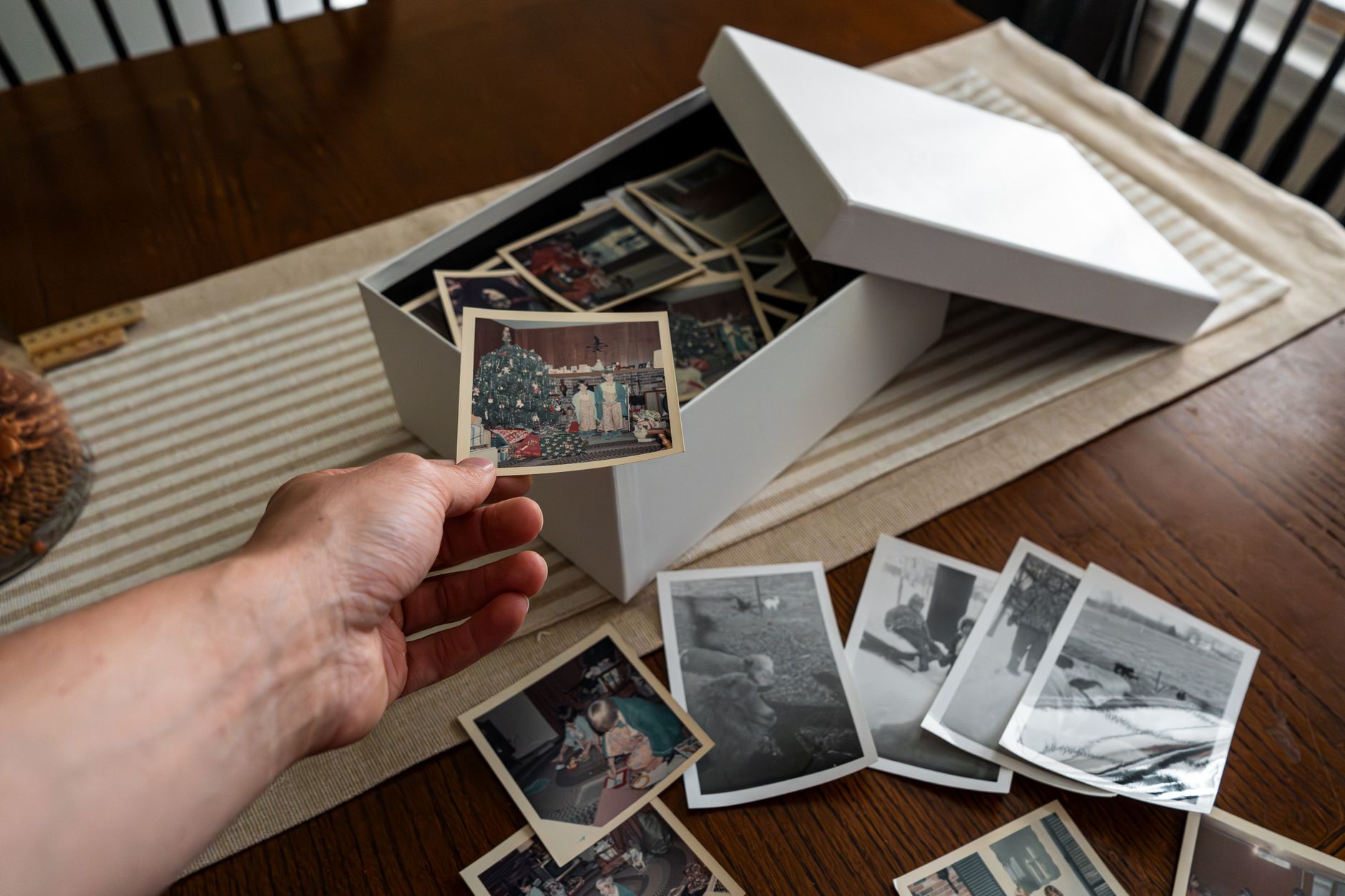
The Shoebox My Father Carried In
She went toward him with her arms out.
He walked past her.
He did not say a word to her. He just kept coming, across my grass, and my sister stood there in the middle of the yard with her arms still half open.
It was the first time in my life I ever saw that man walk past Jenny to get to me.
He stopped on the other side of the picnic table. The cake was between us.
“Laura,” he said.
“Leonard.”
His mouth worked. “I’d like a word with you. In the house, if you would.”
I looked at the box. The string had worn a groove in the cardboard.
“What is that?”
“Before I die,” he said, “you need to know why.”
“Why what?”
He looked at me. His eyes were red all the way around.
“You know why what,” he said.
I did. There was only ever the one why between us.
I set the knife down on the paper tablecloth. My hand was steady. I was surprised by that.
“No,” I said. “Not in the house.”
“Laura.” That was Jenny, behind him. “Don’t.”
“You took her to every crowd in three counties,” I said to him. I did not raise my voice. I said it the way I say things at the front desk at school, when I have to tell a parent their child is going home. “The fair. The lake. Every supper the church ever put on. And you left me on the porch. Eighteen years, Leonard. If you have finally got something to say to me, you can say it in front of people.”
I looked around my yard.
“I’ve got a crowd right here,” I said. “It is the first one you ever came to on my account.”
Nobody moved. Somewhere down the block a mower was running.
“For heaven’s sake,” Jenny said. “He is an old man and he’s upset. Do not make a scene at your own party.”
“I’m not making anything,” I said. “I’m standing in my yard.”
Leonard nodded slowly, three or four times.
“She’s right,” he said. “It ought to be out loud. I’ve done it quiet long enough.”
He set the shoebox down on the picnic table, next to my daughter’s leaning cake. His hands were shaking so badly he could not get hold of the string.
It was Doris Kemper who spoke, from a lawn chair under the maple with her cane across her knees.
“Leonard,” she said. “Is he dead?”
He did not turn around. “March.”
Doris shut her eyes. “Well,” she said. “Thank the Lord.”
“Is who dead?” I said.
Nobody answered me.
“Is who dead, Leonard?”
He got the knot loose. He wound the string around two fingers, careful, the way he used to wind baling twine, and he laid it on the table. Then he put both palms flat on the lid of the box and kept them there.
“Your father,” he said.
“You’re my father,” I said.
“I’m the one who raised you.” His voice cracked on it and he waited until it would hold. “I have been your daddy since you were twenty-two months old, and I’d fight any man who said different. But you are not mine by blood, Laura. Your mother was married before me.”
I put my hand on the edge of the table.
“His name was Wayne Tolliver,” Leonard said. “He was from over past Harrisburg, two counties up. Your mother married him at nineteen. He broke her wrist the winter you were born, and he broke it again the next spring, and the second time she put you in a laundry basket on the seat of her mother’s car and drove home to her people in the middle of the night.”