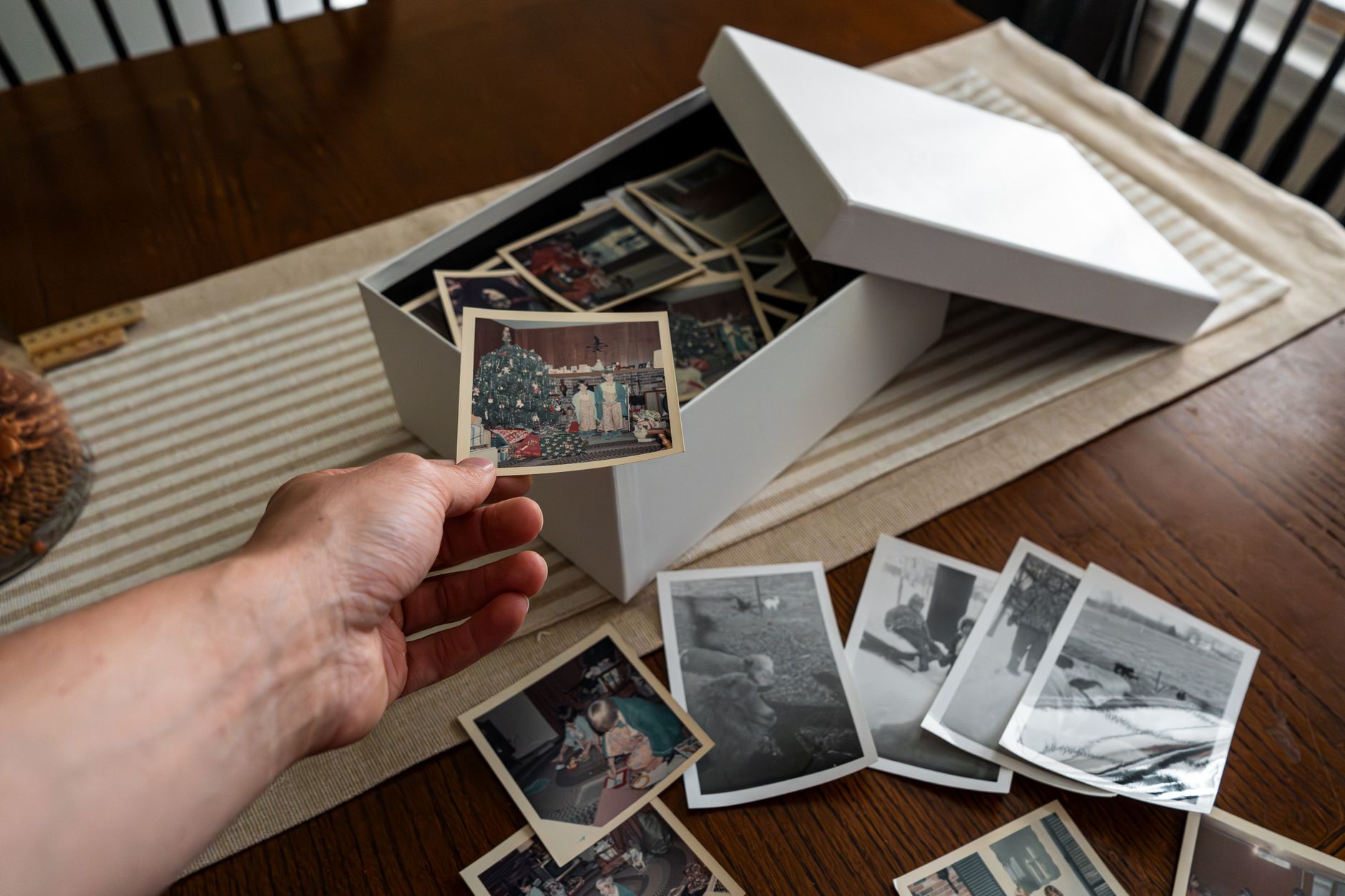
The Shoebox My Father Carried In
“There wasn’t a cloud in the sky. I sat down there for seven hours sorting canning jars. And you sat on the porch the entire day. I looked out the cellar window and I could see your boots. I thought you just did not want to be in the house with me.”
“I had the twelve gauge across my knees,” he said. “I wanted him to see it from the road. He left about dark.”
“Then your mother got sick,” he said. “And the last day, the very last, she had me by the wrist with what strength she had, and she said, Not while he’s breathing, Leonard. She’ll go to him. She’ll want to look him in the face, and he’ll be so nice to her. Promise me.”
He was crying again, without any sound.
“So I promised a second time. And then you were eighteen and you walked down the lane with your suitcase and you called me by my Christian name, and I let you. I had it coming. I’d have told you the day you left if I could. Instead I waited on a man to die for twenty-two more years.”
“How do you know he’s dead?”
“Doris’s nephew saw it in the Harrisburg paper. I didn’t trust the paper. I drove up there and stood in the back of the funeral home and looked in the casket myself.” “I wanted to be sure.”
“That was March,” I said. “This is June.”
“Yes.”
“You’ve known for three months.”
“I have driven past this house every evening since the eleventh of March,” he said. “I couldn’t figure how to get in your door. I’d get as far as the corner. Then I heard you were turning forty, and I thought, well, she’ll have the gate open.”
Leonard lifted the lid off the shoebox.
“I’m not asking you for anything,” he said. “I want that understood. I didn’t come for you to tell me it’s all right, because it wasn’t all right. I let a little girl believe her daddy was ashamed of her. I knew what I was doing to you and I did it every Saturday for eighteen years, because the other thing was worse. But you ought to have the box. That’s all. It’s yours.”
He turned it around on the table so it faced me.
On top was a ribbon. A red second-place ribbon from the fourth grade spelling bee, with my name on the back in a teacher’s handwriting. It had a brown stain on one corner.
“I threw this away,” I said.
“You threw them all away. The spring you were thirteen. You put every ribbon you had in the kitchen trash, under the coffee grounds, and went up to your room.”
“You got them out?”
“I washed them in the sink,” he said. “Your mother ironed them between two dish towels. Some of them the coffee wouldn’t come out of.”
They were all there. Field day. The science fair. The blue one from the county essay contest, the one my teacher had to carry back to me in an envelope because I was not allowed to go and read it out loud on the square.
Under the ribbons were my school pictures. Every one, kindergarten through my senior year, the little wallet size, held together with a rubber band that had gone soft with age.
And under those was a stack of photographs I had never seen before.